You are viewing a plain text version of this content. The canonical link for it is here.
Posted to notifications@skywalking.apache.org by GitBox <gi...@apache.org> on 2022/05/15 16:49:38 UTC
[GitHub] [skywalking] CollectBugs opened a new pull request, #9068: Website docs/8.5.0
CollectBugs opened a new pull request, #9068:
URL: https://github.com/apache/skywalking/pull/9068
Description @wallezhang
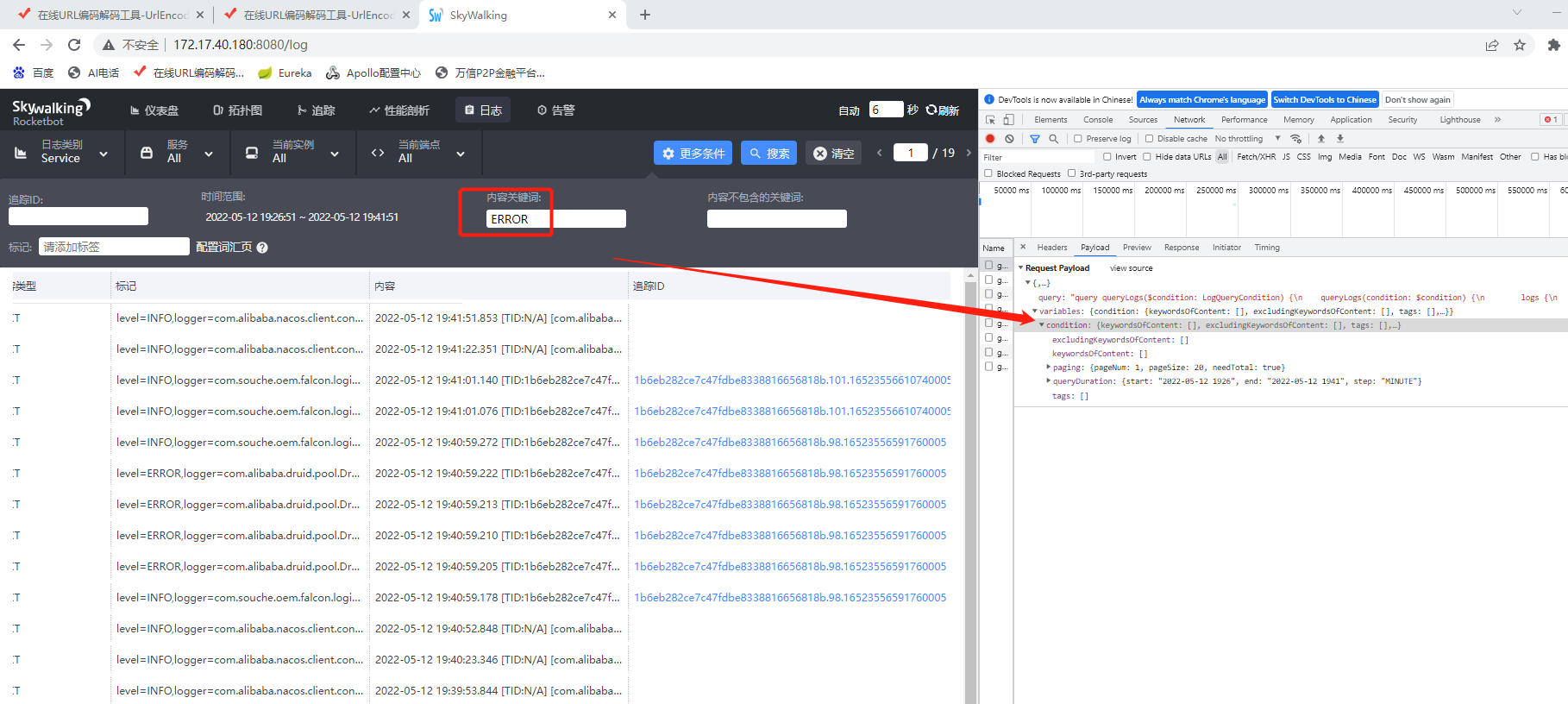
The Rocketbot search criteria are content keywords do not work
Screenshot shows:
--
This is an automated message from the Apache Git Service.
To respond to the message, please log on to GitHub and use the
URL above to go to the specific comment.
To unsubscribe, e-mail: notifications-unsubscribe@skywalking.apache.org
For queries about this service, please contact Infrastructure at:
users@infra.apache.org
[GitHub] [skywalking] wu-sheng closed pull request #9068: Website docs/8.5.0
Posted by GitBox <gi...@apache.org>.
wu-sheng closed pull request #9068: Website docs/8.5.0
URL: https://github.com/apache/skywalking/pull/9068


--
This is an automated message from the Apache Git Service.
To respond to the message, please log on to GitHub and use the
URL above to go to the specific comment.

To unsubscribe, e-mail: notifications-unsubscribe@skywalking.apache.org

For queries about this service, please contact Infrastructure at:
users@infra.apache.org
[GitHub] [skywalking] Superskyyy commented on pull request #9068: Website docs/8.5.0
Posted by GitBox <gi...@apache.org>.
Superskyyy commented on PR #9068:
URL: https://github.com/apache/skywalking/pull/9068#issuecomment-1126987058

   What are you trying to do? This is not how you make a pull request nor suggest changes.

   Anyway, RocketBot UI has been deprecated since v9; so it will not be maintained anymore.


--
This is an automated message from the Apache Git Service.
To respond to the message, please log on to GitHub and use the
URL above to go to the specific comment.

To unsubscribe, e-mail: notifications-unsubscribe@skywalking.apache.org

For queries about this service, please contact Infrastructure at:
users@infra.apache.org
[GitHub] [skywalking] CollectBugs commented on pull request #9068: Website docs/8.5.0
Posted by GitBox <gi...@apache.org>.
CollectBugs commented on PR #9068:
URL: https://github.com/apache/skywalking/pull/9068#issuecomment-1127133149

   Thank you, I‘m sorry,

   This is my first contact, I don't understand very much

   Anyway, RocketBot UI has been deprecated since v9; so it will not be maintained anymore

   Now, is  sykwalking UI need secondary development?


   在 2022-05-16 07:10:41,"吴晟 Wu Sheng" ***@***.***> 写道:

   Closed #9068.

   —
   Reply to this email directly, view it on GitHub, or unsubscribe.
   You are receiving this because you were mentioned.Message ID: ***@***.***>


--
This is an automated message from the Apache Git Service.
To respond to the message, please log on to GitHub and use the
URL above to go to the specific comment.

To unsubscribe, e-mail: notifications-unsubscribe@skywalking.apache.org

For queries about this service, please contact Infrastructure at:
users@infra.apache.org
[GitHub] [skywalking] Superskyyy commented on pull request #9068: Website docs/8.5.0
Posted by GitBox <gi...@apache.org>.
Superskyyy commented on PR #9068:
URL: https://github.com/apache/skywalking/pull/9068#issuecomment-1127134529

   >

   @CollectBugs Check out the new Booster UI for SkyWalking V9 here - https://github.com/apache/skywalking-booster-ui.


--
This is an automated message from the Apache Git Service.
To respond to the message, please log on to GitHub and use the
URL above to go to the specific comment.

To unsubscribe, e-mail: notifications-unsubscribe@skywalking.apache.org

For queries about this service, please contact Infrastructure at:
users@infra.apache.org
[GitHub] [skywalking] sonatype-lift[bot] commented on a diff in pull request #9068: Website docs/8.5.0
Posted by GitBox <gi...@apache.org>.
sonatype-lift[bot] commented on code in PR #9068:
URL: https://github.com/apache/skywalking/pull/9068#discussion_r873199174
##########
oap-server/server-tools/profile-exporter/tool-profile-snapshot-server-mock/pom.xml:
##########
@@ -21,13 +21,13 @@
<parent>
<artifactId>profile-exporter</artifactId>
<groupId>org.apache.skywalking</groupId>
- <version>8.5.0-SNAPSHOT</version>
+ <version>8.5.0</version>
</parent>
<modelVersion>4.0.0</modelVersion>
<groupId>org.apache.skywalking</groupId>
<artifactId>tool-profile-snapshot-server-mock</artifactId>
- <version>8.5.0-SNAPSHOT</version>
+ <version>8.5.0</version>
<dependencies>
<dependency>
Review Comment:
*Critical OSS Vulnerability:*
### pkg:maven/org.apache.skywalking/server-core@8.5.0
18 Critical, 17 Severe, 2 Moderate, 0 Unknown vulnerabilities have been found across 18 dependencies
<details>
<summary><b>Components</b></summary><br/>
<ul>
<details>
<summary><b>pkg:maven/org.apache.logging.log4j/log4j-core@2.9.0</b></summary>
<ul>
<details>
<summary><b>CRITICAL Vulnerabilities (3)</b></summary><br/>
<ul>
<details>
<summary>CVE-2021-44228</summary>
> #### [CVE-2021-44228] CWE-502: Deserialization of Untrusted Data
> Apache Log4j2 2.0-beta9 through 2.15.0 (excluding security releases 2.12.2, 2.12.3, and 2.3.1) JNDI features used in configuration, log messages, and parameters do not protect against attacker controlled LDAP and other JNDI related endpoints. An attacker who can control log messages or log message parameters can execute arbitrary code loaded from LDAP servers when message lookup substitution is enabled. From log4j 2.15.0, this behavior has been disabled by default. From version 2.16.0 (along with 2.12.2, 2.12.3, and 2.3.1), this functionality has been completely removed. Note that this vulnerability is specific to log4j-core and does not affect log4net, log4cxx, or other Apache Logging Services projects.
>
> **CVSS Score:** 10
>
> **CVSS Vector:** CVSS:3.1/AV:N/AC:L/PR:N/UI:N/S:C/C:H/I:H/A:H
>
> **CWE:** CWE-502
</details>
<details>
<summary>CVE-2021-45046</summary>
> #### [CVE-2021-45046] CWE-502: Deserialization of Untrusted Data
> It was found that the fix to address CVE-2021-44228 in Apache Log4j 2.15.0 was incomplete in certain non-default configurations. This could allows attackers with control over Thread Context Map (MDC) input data when the logging configuration uses a non-default Pattern Layout with either a Context Lookup (for example, $${ctx:loginId}) or a Thread Context Map pattern (%X, %mdc, or %MDC) to craft malicious input data using a JNDI Lookup pattern resulting in an information leak and remote code execution in some environments and local code execution in all environments. Log4j 2.16.0 (Java 8) and 2.12.2 (Java 7) fix this issue by removing support for message lookup patterns and disabling JNDI functionality by default.
>
> **CVSS Score:** 9
>
> **CVSS Vector:** CVSS:3.1/AV:N/AC:H/PR:N/UI:N/S:C/C:H/I:H/A:H
>
> **CWE:** CWE-502
</details>
<details>
<summary>sonatype-2021-4560</summary>
> #### [sonatype-2021-4560] CWE-200: Information Exposure
> log4j-core - Exposure of Sensitive Information
An information exposure is the intentional or unintentional disclosure of information to an actor that is not explicitly authorized to have access to that information.
>
> **CVSS Score:** 9
>
> **CVSS Vector:** CVSS:3.1/AV:N/AC:H/PR:N/UI:N/S:C/C:H/I:H/A:H
>
> **CWE:** CWE-200
</details>
</ul>
</details>
<details>
<summary><b>SEVERE Vulnerabilities (2)</b></summary><br/>
<ul>
<details>
<summary>CVE-2021-44832</summary>
> #### [CVE-2021-44832] CWE-20: Improper Input Validation
> Apache Log4j2 versions 2.0-beta7 through 2.17.0 (excluding security fix releases 2.3.2 and 2.12.4) are vulnerable to a remote code execution (RCE) attack when a configuration uses a JDBC Appender with a JNDI LDAP data source URI when an attacker has control of the target LDAP server. This issue is fixed by limiting JNDI data source names to the java protocol in Log4j2 versions 2.17.1, 2.12.4, and 2.3.2.
>
> **CVSS Score:** 6.6
>
> **CVSS Vector:** CVSS:3.1/AV:N/AC:H/PR:H/UI:N/S:U/C:H/I:H/A:H
>
> **CWE:** CWE-20
</details>
<details>
<summary>CVE-2021-45105</summary>
> #### [CVE-2021-45105] CWE-674: Uncontrolled Recursion
> Apache Log4j2 versions 2.0-alpha1 through 2.16.0 (excluding 2.12.3 and 2.3.1) did not protect from uncontrolled recursion from self-referential lookups. This allows an attacker with control over Thread Context Map data to cause a denial of service when a crafted string is interpreted. This issue was fixed in Log4j 2.17.0, 2.12.3, and 2.3.1.
>
> **CVSS Score:** 5.9
>
> **CVSS Vector:** CVSS:3.1/AV:N/AC:H/PR:N/UI:N/S:U/C:N/I:N/A:H
>
> **CWE:** CWE-674
</details>
</ul>
</details>
<details>
<summary><b>MODERATE Vulnerabilities (1)</b></summary><br/>
<ul>
> #### [CVE-2020-9488] CWE-295: Improper Certificate Validation
> Improper validation of certificate with host mismatch in Apache Log4j SMTP appender. This could allow an SMTPS connection to be intercepted by a man-in-the-middle attack which could leak any log messages sent through that appender. Fixed in Apache Log4j 2.12.3 and 2.13.1
>
> **CVSS Score:** 3.7
>
> **CVSS Vector:** CVSS:3.1/AV:N/AC:H/PR:N/UI:N/S:U/C:L/I:N/A:N
>
> **CWE:** CWE-295
</ul>
</details>
</ul>
</details>
<details>
<summary><b>pkg:maven/com.google.guava/guava@28.1-jre</b></summary>
<ul>
<details>
<summary><b>SEVERE Vulnerabilities (1)</b></summary><br/>
<ul>
> #### [sonatype-2020-0926] CWE-379: Creation of Temporary File in Directory with Incorrect Permissions
> guava - Creation of Temporary File in Directory with Insecure Permissions [CVE-2020-8908]
The software creates a temporary file in a directory whose permissions allow unintended actors to determine the file's existence or otherwise access that file.
>
> **CVSS Score:** 6.2
>
> **CVSS Vector:** CVSS:3.1/AV:L/AC:L/PR:N/UI:N/S:U/C:H/I:N/A:N
>
> **CWE:** CWE-379
</ul>
</details>
</ul>
</details>
<details>
<summary><b>pkg:maven/org.elasticsearch/elasticsearch@6.3.2</b></summary>
<ul>
<details>
<summary><b>CRITICAL Vulnerabilities (1)</b></summary><br/>
<ul>
> #### [CVE-2018-3831] CWE-200: Information Exposure
> Elasticsearch Alerting and Monitoring in versions before 6.4.1 or 5.6.12 have an information disclosure issue when secrets are configured via the API. The Elasticsearch _cluster/settings API, when queried, could leak sensitive configuration information such as passwords, tokens, or usernames. This could allow an authenticated Elasticsearch user to improperly view these details.
>
> **CVSS Score:** 8.8
>
> **CVSS Vector:** CVSS:3.1/AV:N/AC:L/PR:L/UI:N/S:U/C:H/I:H/A:H
>
> **CWE:** CWE-200
</ul>
</details>
<details>
<summary><b>SEVERE Vulnerabilities (1)</b></summary><br/>
<ul>
> #### [CVE-2019-7614] CWE-362: Concurrent Execution using Shared Resource with Improper Synchronization ('Race Condition')
> A race condition flaw was found in the response headers Elasticsearch versions before 7.2.1 and 6.8.2 returns to a request. On a system with multiple users submitting requests, it could be possible for an attacker to gain access to response header containing sensitive data from another user.
>
> **CVSS Score:** 5.9
>
> **CVSS Vector:** CVSS:3.0/AV:N/AC:H/PR:N/UI:N/S:U/C:H/I:N/A:N
>
> **CWE:** CWE-362
</ul>
</details>
</ul>
</details>
<details>
<summary><b>pkg:maven/org.apache.httpcomponents/httpclient@4.5.2</b></summary>
<ul>
<details>
<summary><b>CRITICAL Vulnerabilities (1)</b></summary><br/>
<ul>
> #### [sonatype-2017-0359] CWE-22: Improper Limitation of a Pathname to a Restricted Directory ('Path Traversal')
> org.apache.httpcomponents:httpclient - Directory Traversal
The software uses external input to construct a pathname that is intended to identify a file or directory that is located underneath a restricted parent directory, but the software does not properly neutralize special elements within the pathname that can cause the pathname to resolve to a location that is outside of the restricted directory.
>
> **CVSS Score:** 7.5
>
> **CVSS Vector:** CVSS:3.0/AV:N/AC:L/PR:N/UI:N/S:U/C:H/I:N/A:N
>
> **CWE:** CWE-22
</ul>
</details>
<details>
<summary><b>SEVERE Vulnerabilities (1)</b></summary><br/>
<ul>
> #### [CVE-2020-13956] CWE-20: Improper Input Validation
> Apache HttpClient versions prior to version 4.5.13 and 5.0.3 can misinterpret malformed authority component in request URIs passed to the library as java.net.URI object and pick the wrong target host for request execution.
>
> **CVSS Score:** 5.3
>
> **CVSS Vector:** CVSS:3.1/AV:N/AC:L/PR:N/UI:N/S:U/C:N/I:L/A:N
>
> **CWE:** CWE-20
</ul>
</details>
</ul>
</details>
<details>
<summary><b>pkg:maven/com.google.code.gson/gson@2.8.6</b></summary>
<ul>
<details>
<summary><b>CRITICAL Vulnerabilities (1)</b></summary><br/>
<ul>
> #### [sonatype-2021-1694] CWE-502: Deserialization of Untrusted Data
> gson - Deserialization of Untrusted Data
The application deserializes untrusted data without sufficiently verifying that the resulting data will be valid.
>
> **CVSS Score:** 7.5
>
> **CVSS Vector:** CVSS:3.1/AV:N/AC:L/PR:N/UI:N/S:U/C:N/I:N/A:H
>
> **CWE:** CWE-502
</ul>
</details>
</ul>
</details>
<details>
<summary><b>pkg:maven/io.netty/netty-codec-http@4.1.42.Final</b></summary>
<ul>
<details>
<summary><b>CRITICAL Vulnerabilities (4)</b></summary><br/>
<ul>
<details>
<summary>CVE-2019-20444</summary>
> #### [CVE-2019-20444] CWE-444: Inconsistent Interpretation of HTTP Requests ('HTTP Request Smuggling')
> HttpObjectDecoder.java in Netty before 4.1.44 allows an HTTP header that lacks a colon, which might be interpreted as a separate header with an incorrect syntax, or might be interpreted as an "invalid fold."
>
> **CVSS Score:** 9.1
>
> **CVSS Vector:** CVSS:3.1/AV:N/AC:L/PR:N/UI:N/S:U/C:H/I:H/A:N
>
> **CWE:** CWE-444
</details>
<details>
<summary>CVE-2019-20445</summary>
> #### [CVE-2019-20445] CWE-444: Inconsistent Interpretation of HTTP Requests ('HTTP Request Smuggling')
> HttpObjectDecoder.java in Netty before 4.1.44 allows a Content-Length header to be accompanied by a second Content-Length header, or by a Transfer-Encoding header.
>
> **CVSS Score:** 9.1
>
> **CVSS Vector:** CVSS:3.1/AV:N/AC:L/PR:N/UI:N/S:U/C:H/I:H/A:N
>
> **CWE:** CWE-444
</details>
<details>
<summary>CVE-2020-7238</summary>
> #### [CVE-2020-7238] CWE-444: Inconsistent Interpretation of HTTP Requests ('HTTP Request Smuggling')
> Netty 4.1.43.Final allows HTTP Request Smuggling because it mishandles Transfer-Encoding whitespace (such as a [space]Transfer-Encoding:chunked line) and a later Content-Length header. This issue exists because of an incomplete fix for CVE-2019-16869.
>
> **CVSS Score:** 7.5
>
> **CVSS Vector:** CVSS:3.1/AV:N/AC:L/PR:N/UI:N/S:U/C:N/I:H/A:N
>
> **CWE:** CWE-444
</details>
<details>
<summary>sonatype-2020-1031</summary>
> #### [sonatype-2020-1031] CWE-400: Uncontrolled Resource Consumption ('Resource Exhaustion')
> netty-codec-http - Denial of Service (DoS)
The software does not properly restrict the size or amount of resources that are requested or influenced by an actor, which can be used to consume more resources than intended.
>
> **CVSS Score:** 7.5
>
> **CVSS Vector:** CVSS:3.1/AV:N/AC:L/PR:N/UI:N/S:U/C:N/I:N/A:H
>
> **CWE:** CWE-400
</details>
</ul>
</details>
<details>
<summary><b>SEVERE Vulnerabilities (4)</b></summary><br/>
<ul>
<details>
<summary>CVE-2021-43797</summary>
> #### [CVE-2021-43797] CWE-444: Inconsistent Interpretation of HTTP Requests ('HTTP Request Smuggling')
> Netty is an asynchronous event-driven network application framework for rapid development of maintainable high performance protocol servers & clients. Netty prior to version 4.1.71.Final skips control chars when they are present at the beginning / end of the header name. It should instead fail fast as these are not allowed by the spec and could lead to HTTP request smuggling. Failing to do the validation might cause netty to "sanitize" header names before it forward these to another remote system when used as proxy. This remote system can't see the invalid usage anymore, and therefore does not do the validation itself. Users should upgrade to version 4.1.71.Final.
>
> **CVSS Score:** 6.5
>
> **CVSS Vector:** CVSS:3.1/AV:N/AC:L/PR:N/UI:R/S:U/C:N/I:H/A:N
>
> **CWE:** CWE-444
</details>
<details>
<summary>CVE-2021-21295</summary>
> #### [CVE-2021-21295] CWE-444: Inconsistent Interpretation of HTTP Requests ('HTTP Request Smuggling')
> Netty is an open-source, asynchronous event-driven network application framework for rapid development of maintainable high performance protocol servers & clients. In Netty (io.netty:netty-codec-http2) before version 4.1.60.Final there is a vulnerability that enables request smuggling. If a Content-Length header is present in the original HTTP/2 request, the field is not validated by `Http2MultiplexHandler` as it is propagated up. This is fine as long as the request is not proxied through as HTTP/1.1. If the request comes in as an HTTP/2 stream, gets converted into the HTTP/1.1 domain objects (`HttpRequest`, `HttpContent`, etc.) via `Http2StreamFrameToHttpObjectCodec `and then sent up to the child channel's pipeline and proxied through a remote peer as HTTP/1.1 this may result in request smuggling. In a proxy case, users may assume the content-length is validated somehow, which is not the case. If the request is forwarded to a backend channel that is a HTTP/1.1 connectio
n, the Content-Length now has meaning and needs to be checked. An attacker can smuggle requests inside the body as it gets downgraded from HTTP/2 to HTTP/1.1. For an example attack refer to the linked GitHub Advisory. Users are only affected if all of this is true: `HTTP2MultiplexCodec` or `Http2FrameCodec` is used, `Http2StreamFrameToHttpObjectCodec` is used to convert to HTTP/1.1 objects, and these HTTP/1.1 objects are forwarded to another remote peer. This has been patched in 4.1.60.Final As a workaround, the user can do the validation by themselves by implementing a custom `ChannelInboundHandler` that is put in the `ChannelPipeline` behind `Http2StreamFrameToHttpObjectCodec`.
>
> **CVSS Score:** 5.9
>
> **CVSS Vector:** CVSS:3.1/AV:N/AC:H/PR:N/UI:N/S:U/C:N/I:H/A:N
>
> **CWE:** CWE-444
</details>
<details>
<summary>CVE-2021-21290</summary>
> #### [CVE-2021-21290] CWE-378: Creation of Temporary File With Insecure Permissions
> Netty is an open-source, asynchronous event-driven network application framework for rapid development of maintainable high performance protocol servers & clients. In Netty before version 4.1.59.Final there is a vulnerability on Unix-like systems involving an insecure temp file. When netty's multipart decoders are used local information disclosure can occur via the local system temporary directory if temporary storing uploads on the disk is enabled. On unix-like systems, the temporary directory is shared between all user. As such, writing to this directory using APIs that do not explicitly set the file/directory permissions can lead to information disclosure. Of note, this does not impact modern MacOS Operating Systems. The method "File.createTempFile" on unix-like systems creates a random file, but, by default will create this file with the permissions "-rw-r--r--". Thus, if sensitive information is written to this file, other local users can read th
is information. This is the case in netty's "AbstractDiskHttpData" is vulnerable. This has been fixed in version 4.1.59.Final. As a workaround, one may specify your own "java.io.tmpdir" when you start the JVM or use "DefaultHttpDataFactory.setBaseDir(...)" to set the directory to something that is only readable by the current user.
>
> **CVSS Score:** 5.5
>
> **CVSS Vector:** CVSS:3.1/AV:L/AC:L/PR:L/UI:N/S:U/C:H/I:N/A:N
>
> **CWE:** CWE-378
</details>
<details>
<summary>sonatype-2020-0103</summary>
> #### [sonatype-2020-0103] CWE-400: Uncontrolled Resource Consumption ('Resource Exhaustion')
> netty-codec-http - Denial of Service (DoS)
The software does not properly restrict the size or amount of resources that are requested or influenced by an actor, which can be used to consume more resources than intended.
>
> **CVSS Score:** 5.3
>
> **CVSS Vector:** CVSS:3.1/AV:N/AC:L/PR:N/UI:N/S:U/C:N/I:N/A:L
>
> **CWE:** CWE-400
</details>
</ul>
</details>
</ul>
</details>
<details>
<summary><b>pkg:maven/commons-codec/commons-codec@1.11</b></summary>
<ul>
<details>
<summary><b>SEVERE Vulnerabilities (1)</b></summary><br/>
<ul>
> #### [sonatype-2012-0050] CWE-20: Improper Input Validation
> commons-codec - Base32 would decode some invalid Base32 encoded string into arbitrary value
The product does not validate or incorrectly validates input that can affect the control flow or data flow of a program.
>
> **CVSS Score:** 5.3
>
> **CVSS Vector:** CVSS:3.0/AV:N/AC:L/PR:N/UI:N/S:U/C:N/I:L/A:N
>
> **CWE:** CWE-20
</ul>
</details>
</ul>
</details>
<details>
<summary><b>pkg:maven/org.yaml/snakeyaml@1.18</b></summary>
<ul>
<details>
<summary><b>CRITICAL Vulnerabilities (1)</b></summary><br/>
<ul>
> #### [CVE-2017-18640] CWE-776: Improper Restriction of Recursive Entity References in DTDs ('XML Entity Expansion')
> The Alias feature in SnakeYAML 1.18 allows entity expansion during a load operation, a related issue to CVE-2003-1564.
>
> **CVSS Score:** 7.5
>
> **CVSS Vector:** CVSS:3.1/AV:N/AC:L/PR:N/UI:N/S:U/C:N/I:N/A:H
>
> **CWE:** CWE-776
</ul>
</details>
</ul>
</details>
<details>
<summary><b>pkg:maven/com.fasterxml.jackson.dataformat/jackson-dataformat-cbor@2.8.10</b></summary>
<ul>
<details>
<summary><b>CRITICAL Vulnerabilities (1)</b></summary><br/>
<ul>
> #### [CVE-2020-28491] CWE-770: Allocation of Resources Without Limits or Throttling
> This affects the package com.fasterxml.jackson.dataformat:jackson-dataformat-cbor from 0 and before 2.11.4, from 2.12.0-rc1 and before 2.12.1. Unchecked allocation of byte buffer can cause a java.lang.OutOfMemoryError exception.
>
> **CVSS Score:** 7.5
>
> **CVSS Vector:** CVSS:3.1/AV:N/AC:L/PR:N/UI:N/S:U/C:N/I:N/A:H
>
> **CWE:** CWE-770
</ul>
</details>
</ul>
</details>
<details>
<summary><b>pkg:maven/com.google.protobuf/protobuf-java@3.13.0</b></summary>
<ul>
<details>
<summary><b>SEVERE Vulnerabilities (1)</b></summary><br/>
<ul>
> #### [CVE-2021-22569] CWE-400: Uncontrolled Resource Consumption ('Resource Exhaustion')
> An issue in protobuf-java allowed the interleaving of com.google.protobuf.UnknownFieldSet fields in such a way that would be processed out of order. A small malicious payload can occupy the parser for several minutes by creating large numbers of short-lived objects that cause frequent, repeated pauses. We recommend upgrading libraries beyond the vulnerable versions.
>
> **CVSS Score:** 5.5
>
> **CVSS Vector:** CVSS:3.1/AV:L/AC:L/PR:N/UI:R/S:U/C:N/I:N/A:H
>
> **CWE:** CWE-400
</ul>
</details>
</ul>
</details>
<details>
<summary><b>pkg:maven/io.netty/netty-codec-http2@4.1.51.Final</b></summary>
<ul>
<details>
<summary><b>SEVERE Vulnerabilities (1)</b></summary><br/>
<ul>
> #### [CVE-2021-21295] CWE-444: Inconsistent Interpretation of HTTP Requests ('HTTP Request Smuggling')
> Netty is an open-source, asynchronous event-driven network application framework for rapid development of maintainable high performance protocol servers & clients. In Netty (io.netty:netty-codec-http2) before version 4.1.60.Final there is a vulnerability that enables request smuggling. If a Content-Length header is present in the original HTTP/2 request, the field is not validated by `Http2MultiplexHandler` as it is propagated up. This is fine as long as the request is not proxied through as HTTP/1.1. If the request comes in as an HTTP/2 stream, gets converted into the HTTP/1.1 domain objects (`HttpRequest`, `HttpContent`, etc.) via `Http2StreamFrameToHttpObjectCodec `and then sent up to the child channel's pipeline and proxied through a remote peer as HTTP/1.1 this may result in request smuggling. In a proxy case, users may assume the content-length is validated somehow, which is not the case. If the request is forwarded to a backend channel that is a HTTP/1.1 connectio
n, the Content-Length now has meaning and needs to be checked. An attacker can smuggle requests inside the body as it gets downgraded from HTTP/2 to HTTP/1.1. For an example attack refer to the linked GitHub Advisory. Users are only affected if all of this is true: `HTTP2MultiplexCodec` or `Http2FrameCodec` is used, `Http2StreamFrameToHttpObjectCodec` is used to convert to HTTP/1.1 objects, and these HTTP/1.1 objects are forwarded to another remote peer. This has been patched in 4.1.60.Final As a workaround, the user can do the validation by themselves by implementing a custom `ChannelInboundHandler` that is put in the `ChannelPipeline` behind `Http2StreamFrameToHttpObjectCodec`.
>
> **CVSS Score:** 5.9
>
> **CVSS Vector:** CVSS:3.1/AV:N/AC:H/PR:N/UI:N/S:U/C:N/I:H/A:N
>
> **CWE:** CWE-444
</ul>
</details>
</ul>
</details>
<details>
<summary><b>pkg:maven/io.netty/netty-common@4.1.51.Final</b></summary>
<ul>
<details>
<summary><b>SEVERE Vulnerabilities (1)</b></summary><br/>
<ul>
> #### [CVE-2021-21290] CWE-378: Creation of Temporary File With Insecure Permissions
> Netty is an open-source, asynchronous event-driven network application framework for rapid development of maintainable high performance protocol servers & clients. In Netty before version 4.1.59.Final there is a vulnerability on Unix-like systems involving an insecure temp file. When netty's multipart decoders are used local information disclosure can occur via the local system temporary directory if temporary storing uploads on the disk is enabled. On unix-like systems, the temporary directory is shared between all user. As such, writing to this directory using APIs that do not explicitly set the file/directory permissions can lead to information disclosure. Of note, this does not impact modern MacOS Operating Systems. The method "File.createTempFile" on unix-like systems creates a random file, but, by default will create this file with the permissions "-rw-r--r--". Thus, if sensitive information is written to this file, other local users can read th
is information. This is the case in netty's "AbstractDiskHttpData" is vulnerable. This has been fixed in version 4.1.59.Final. As a workaround, one may specify your own "java.io.tmpdir" when you start the JVM or use "DefaultHttpDataFactory.setBaseDir(...)" to set the directory to something that is only readable by the current user.
>
> **CVSS Score:** 5.5
>
> **CVSS Vector:** CVSS:3.1/AV:L/AC:L/PR:L/UI:N/S:U/C:H/I:N/A:N
>
> **CWE:** CWE-378
</ul>
</details>
</ul>
</details>
<details>
<summary><b>pkg:maven/org.eclipse.jetty/jetty-http@9.4.28.v20200408</b></summary>
<ul>
<details>
<summary><b>SEVERE Vulnerabilities (1)</b></summary><br/>
<ul>
> #### [CVE-2020-27223] CWE-400: Uncontrolled Resource Consumption ('Resource Exhaustion')
> In Eclipse Jetty 9.4.6.v20170531 to 9.4.36.v20210114 (inclusive), 10.0.0, and 11.0.0 when Jetty handles a request containing multiple Accept headers with a large number of âqualityâ (i.e. q) parameters, the server may enter a denial of service (DoS) state due to high CPU usage processing those quality values, resulting in minutes of CPU time exhausted processing those quality values.
>
> **CVSS Score:** 5.3
>
> **CVSS Vector:** CVSS:3.1/AV:N/AC:L/PR:N/UI:N/S:U/C:N/I:N/A:L
>
> **CWE:** CWE-400
</ul>
</details>
</ul>
</details>
<details>
<summary><b>pkg:maven/commons-dbcp/commons-dbcp@1.4</b></summary>
<ul>
<details>
<summary><b>CRITICAL Vulnerabilities (1)</b></summary><br/>
<ul>
> #### [sonatype-2020-1349] CWE-522: Insufficiently Protected Credentials
> Apache Commons DBCP - Insufficiently Protected Credentials
This weakness occurs when the application transmits or stores authentication credentials and uses an insecure method that is susceptible to unauthorized interception and/or retrieval.
>
> **CVSS Score:** 7.5
>
> **CVSS Vector:** CVSS:3.1/AV:N/AC:L/PR:N/UI:N/S:U/C:H/I:N/A:N
>
> **CWE:** CWE-522
</ul>
</details>
</ul>
</details>
<details>
<summary><b>pkg:maven/org.eclipse.jetty/jetty-io@9.4.28.v20200408</b></summary>
<ul>
<details>
<summary><b>CRITICAL Vulnerabilities (1)</b></summary><br/>
<ul>
> #### [CVE-2021-28165] CWE-400: Uncontrolled Resource Consumption ('Resource Exhaustion')
> In Eclipse Jetty 7.2.2 to 9.4.38, 10.0.0.alpha0 to 10.0.1, and 11.0.0.alpha0 to 11.0.1, CPU usage can reach 100% upon receiving a large invalid TLS frame.
>
> **CVSS Score:** 7.5
>
> **CVSS Vector:** CVSS:3.1/AV:N/AC:L/PR:N/UI:N/S:U/C:N/I:N/A:H
>
> **CWE:** CWE-400
</ul>
</details>
</ul>
</details>
<details>
<summary><b>pkg:maven/io.netty/netty-handler@4.1.42.Final</b></summary>
<ul>
<details>
<summary><b>SEVERE Vulnerabilities (2)</b></summary><br/>
<ul>
<details>
<summary>sonatype-2020-0026</summary>
> #### [sonatype-2020-0026] CWE-300: Channel Accessible by Non-Endpoint ('Man-in-the-Middle')
> netty-handler - Improper Certificate Validation
The product does not adequately verify the identity of actors at both ends of a communication channel, or does not adequately ensure the integrity of the channel, in a way that allows the channel to be accessed or influenced by an actor that is not an endpoint.
>
> **CVSS Score:** 6.5
>
> **CVSS Vector:** CVSS:3.1/AV:N/AC:H/PR:N/UI:N/S:U/C:H/I:L/A:N
>
> **CWE:** CWE-300
</details>
<details>
<summary>CVE-2021-21290</summary>
> #### [CVE-2021-21290] CWE-378: Creation of Temporary File With Insecure Permissions
> Netty is an open-source, asynchronous event-driven network application framework for rapid development of maintainable high performance protocol servers & clients. In Netty before version 4.1.59.Final there is a vulnerability on Unix-like systems involving an insecure temp file. When netty's multipart decoders are used local information disclosure can occur via the local system temporary directory if temporary storing uploads on the disk is enabled. On unix-like systems, the temporary directory is shared between all user. As such, writing to this directory using APIs that do not explicitly set the file/directory permissions can lead to information disclosure. Of note, this does not impact modern MacOS Operating Systems. The method "File.createTempFile" on unix-like systems creates a random file, but, by default will create this file with the permissions "-rw-r--r--". Thus, if sensitive information is written to this file, other local users can read th
is information. This is the case in netty's "AbstractDiskHttpData" is vulnerable. This has been fixed in version 4.1.59.Final. As a workaround, one may specify your own "java.io.tmpdir" when you start the JVM or use "DefaultHttpDataFactory.setBaseDir(...)" to set the directory to something that is only readable by the current user.
>
> **CVSS Score:** 5.5
>
> **CVSS Vector:** CVSS:3.1/AV:L/AC:L/PR:L/UI:N/S:U/C:H/I:N/A:N
>
> **CWE:** CWE-378
</details>
</ul>
</details>
</ul>
</details>
<details>
<summary><b>pkg:maven/org.eclipse.jetty/jetty-server@9.4.28.v20200408</b></summary>
<ul>
<details>
<summary><b>CRITICAL Vulnerabilities (1)</b></summary><br/>
<ul>
> #### [CVE-2019-17638] CWE-672: Operation on a Resource after Expiration or Release
> In Eclipse Jetty, versions 9.4.27.v20200227 to 9.4.29.v20200521, in case of too large response headers, Jetty throws an exception to produce an HTTP 431 error. When this happens, the ByteBuffer containing the HTTP response headers is released back to the ByteBufferPool twice. Because of this double release, two threads can acquire the same ByteBuffer from the pool and while thread1 is about to use the ByteBuffer to write response1 data, thread2 fills the ByteBuffer with other data. Thread1 then proceeds to write the buffer that now contains different data. This results in client1, which issued request1 seeing data from another request or response which could contain sensitive data belonging to client2 (HTTP session ids, authentication credentials, etc.). If the Jetty version cannot be upgraded, the vulnerability can be significantly reduced by configuring a responseHeaderSize significantly larger than the requestHeaderSize (12KB responseHeaderSize and 8KB requestHeaderSize).
>
> **CVSS Score:** 9.4
>
> **CVSS Vector:** CVSS:3.1/AV:N/AC:L/PR:N/UI:N/S:U/C:H/I:H/A:L
>
> **CWE:** CWE-672
</ul>
</details>
<details>
<summary><b>SEVERE Vulnerabilities (1)</b></summary><br/>
<ul>
> #### [CVE-2020-27218] CWE-226: Sensitive Information Uncleared Before Release
> In Eclipse Jetty version 9.4.0.RC0 to 9.4.34.v20201102, 10.0.0.alpha0 to 10.0.0.beta2, and 11.0.0.alpha0 to 11.0.0.beta2, if GZIP request body inflation is enabled and requests from different clients are multiplexed onto a single connection, and if an attacker can send a request with a body that is received entirely but not consumed by the application, then a subsequent request on the same connection will see that body prepended to its body. The attacker will not see any data but may inject data into the body of the subsequent request.
>
> **CVSS Score:** 4.8
>
> **CVSS Vector:** CVSS:3.1/AV:N/AC:H/PR:N/UI:N/S:U/C:N/I:L/A:L
>
> **CWE:** CWE-226
</ul>
</details>
<details>
<summary><b>MODERATE Vulnerabilities (1)</b></summary><br/>
<ul>
> #### [CVE-2021-34428] CWE-613: Insufficient Session Expiration
> For Eclipse Jetty versions <= 9.4.40, <= 10.0.2, <= 11.0.2, if an exception is thrown from the SessionListener#sessionDestroyed() method, then the session ID is not invalidated in the session ID manager. On deployments with clustered sessions and multiple contexts this can result in a session not being invalidated. This can result in an application used on a shared computer being left logged in.
>
> **CVSS Score:** 3.5
>
> **CVSS Vector:** CVSS:3.1/AV:P/AC:L/PR:N/UI:N/S:U/C:L/I:L/A:N
>
> **CWE:** CWE-613
</ul>
</details>
</ul>
</details>
<details>
<summary><b>pkg:maven/io.netty/netty-codec@4.1.51.Final</b></summary>
<ul>
<details>
<summary><b>CRITICAL Vulnerabilities (3)</b></summary><br/>
<ul>
<details>
<summary>sonatype-2021-0789</summary>
> #### [sonatype-2021-0789] CWE-119: Improper Restriction of Operations within the Bounds of a Memory Buffer
> netty-codec - Buffer Overflow
The software performs operations on a memory buffer, but it can read from or write to a memory location that is outside of the intended boundary of the buffer.
>
> **CVSS Score:** 8.4
>
> **CVSS Vector:** CVSS:3.1/AV:L/AC:L/PR:N/UI:N/S:U/C:H/I:H/A:H
>
> **CWE:** CWE-119
</details>
<details>
<summary>CVE-2021-37136</summary>
> #### [CVE-2021-37136] CWE-400: Uncontrolled Resource Consumption ('Resource Exhaustion')
> The Bzip2 decompression decoder function doesn't allow setting size restrictions on the decompressed output data (which affects the allocation size used during decompression). All users of Bzip2Decoder are affected. The malicious input can trigger an OOME and so a DoS attack
>
> **CVSS Score:** 7.5
>
> **CVSS Vector:** CVSS:3.1/AV:N/AC:L/PR:N/UI:N/S:U/C:N/I:N/A:H
>
> **CWE:** CWE-400
</details>
<details>
<summary>CVE-2021-37137</summary>
> #### [CVE-2021-37137] CWE-400: Uncontrolled Resource Consumption ('Resource Exhaustion')
> The Snappy frame decoder function doesn't restrict the chunk length which may lead to excessive memory usage. Beside this it also may buffer reserved skippable chunks until the whole chunk was received which may lead to excessive memory usage as well. This vulnerability can be triggered by supplying malicious input that decompresses to a very big size (via a network stream or a file) or by sending a huge skippable chunk.
>
> **CVSS Score:** 7.5
>
> **CVSS Vector:** CVSS:3.1/AV:N/AC:L/PR:N/UI:N/S:U/C:N/I:N/A:H
>
> **CWE:** CWE-400
</details>
</ul>
</details>
</ul>
</details>
</ul>
</details>
(at-me [in a reply](https://help.sonatype.com/lift/talking-to-lift) with `help` or `ignore`)
---
Was this a good recommendation?
[ [🙁 Not relevant](https://www.sonatype.com/lift-comment-rating?comment=210373290&lift_comment_rating=1) ] - [ [😕 Won't fix](https://www.sonatype.com/lift-comment-rating?comment=210373290&lift_comment_rating=2) ] - [ [😑 Not critical, will fix](https://www.sonatype.com/lift-comment-rating?comment=210373290&lift_comment_rating=3) ] - [ [🙂 Critical, will fix](https://www.sonatype.com/lift-comment-rating?comment=210373290&lift_comment_rating=4) ] - [ [😊 Critical, fixing now](https://www.sonatype.com/lift-comment-rating?comment=210373290&lift_comment_rating=5) ]
##########
oap-server/server-tools/profile-exporter/tool-profile-snapshot-bootstrap/pom.xml:
##########
@@ -21,13 +21,13 @@
<parent>
<artifactId>profile-exporter</artifactId>
<groupId>org.apache.skywalking</groupId>
- <version>8.5.0-SNAPSHOT</version>
+ <version>8.5.0</version>
</parent>
<modelVersion>4.0.0</modelVersion>
<groupId>org.apache.skywalking</groupId>
<artifactId>tool-profile-snapshot-bootstrap</artifactId>
- <version>8.5.0-SNAPSHOT</version>
+ <version>8.5.0</version>
<dependencies>
<dependency>
Review Comment:
*Critical OSS Vulnerability:*
### pkg:maven/org.apache.skywalking/server-bootstrap@8.5.0
50 Critical, 31 Severe, 4 Moderate, 0 Unknown vulnerabilities have been found across 34 dependencies
<details>
<summary><b>Components</b></summary><br/>
<ul>
<details>
<summary><b>pkg:maven/io.kubernetes/client-java@10.0.0</b></summary>
<ul>
<details>
<summary><b>CRITICAL Vulnerabilities (1)</b></summary><br/>
<ul>
> #### [CVE-2020-8570] CWE-22: Improper Limitation of a Pathname to a Restricted Directory ('Path Traversal')
> Kubernetes Java client libraries in version 10.0.0 and versions prior to 9.0.1 allow writes to paths outside of the current directory when copying multiple files from a remote pod which sends a maliciously crafted archive. This can potentially overwrite any files on the system of the process executing the client code.
>
> **CVSS Score:** 7.5
>
> **CVSS Vector:** CVSS:3.1/AV:N/AC:L/PR:N/UI:N/S:U/C:N/I:H/A:N
>
> **CWE:** CWE-22
</ul>
</details>
<details>
<summary><b>SEVERE Vulnerabilities (1)</b></summary><br/>
<ul>
> #### [CVE-2021-25738] CWE-20: Improper Input Validation
> Loading specially-crafted yaml with the Kubernetes Java Client library can lead to code execution.
>
> **CVSS Score:** 6.7
>
> **CVSS Vector:** CVSS:3.1/AV:L/AC:L/PR:H/UI:N/S:U/C:H/I:H/A:H
>
> **CWE:** CWE-20
</ul>
</details>
</ul>
</details>
<details>
<summary><b>pkg:maven/org.bouncycastle/bcprov-ext-jdk15on@1.66</b></summary>
<ul>
<details>
<summary><b>CRITICAL Vulnerabilities (1)</b></summary><br/>
<ul>
> #### [CVE-2020-28052] CWE-287: Improper Authentication
> An issue was discovered in Legion of the Bouncy Castle BC Java 1.65 and 1.66. The OpenBSDBCrypt.checkPassword utility method compared incorrect data when checking the password, allowing incorrect passwords to indicate they were matching with previously hashed ones that were different.
>
> **CVSS Score:** 8.1
>
> **CVSS Vector:** CVSS:3.1/AV:N/AC:H/PR:N/UI:N/S:U/C:H/I:H/A:H
>
> **CWE:** CWE-287
</ul>
</details>
<details>
<summary><b>SEVERE Vulnerabilities (2)</b></summary><br/>
<ul>
<details>
<summary>CVE-2020-0187</summary>
> #### [CVE-2020-0187] In engineSetMode of BaseBlockCipher.java, there is a possible incorrect cryptographic algorithm chosen due to an incomplete comparison. This could lead to local information disclosure with no additional execution privileges needed. User interaction is not needed for exploitation.Product: AndroidVersions: Android-10Android ID: A-148517383
> In engineSetMode of BaseBlockCipher.java, there is a possible incorrect cryptographic algorithm chosen due to an incomplete comparison. This could lead to local information disclosure with no additional execution privileges needed. User interaction is not needed for exploitation.Product: AndroidVersions: Android-10Android ID: A-148517383
>
> **CVSS Score:** 5.5
>
> **CVSS Vector:** CVSS:3.1/AV:L/AC:L/PR:L/UI:N/S:U/C:H/I:N/A:N
>
> **CWE:** CWE-310
</details>
<details>
<summary>sonatype-2020-0770</summary>
> #### [sonatype-2020-0770] Unknown
> Bouncy Castle - Cryptographic Issues
>
> **CVSS Score:** 5.5
>
> **CVSS Vector:** CVSS:3.1/AV:L/AC:L/PR:L/UI:N/S:U/C:H/I:N/A:N
>
> **CWE:** CWE-310
</details>
</ul>
</details>
<details>
<summary><b>MODERATE Vulnerabilities (1)</b></summary><br/>
<ul>
> #### [sonatype-2019-0673] CWE-400: Uncontrolled Resource Consumption ('Resource Exhaustion')
> BouncyCastle - Denial of Service (DoS)
The software does not properly restrict the size or amount of resources that are requested or influenced by an actor, which can be used to consume more resources than intended.
>
> **CVSS Score:** 3.7
>
> **CVSS Vector:** CVSS:3.1/AV:N/AC:H/PR:N/UI:N/S:U/C:N/I:N/A:L
>
> **CWE:** CWE-400
</ul>
</details>
</ul>
</details>
<details>
<summary><b>pkg:maven/org.elasticsearch/elasticsearch@6.3.2</b></summary>
<ul>
<details>
<summary><b>CRITICAL Vulnerabilities (1)</b></summary><br/>
<ul>
> #### [CVE-2018-3831] CWE-200: Information Exposure
> Elasticsearch Alerting and Monitoring in versions before 6.4.1 or 5.6.12 have an information disclosure issue when secrets are configured via the API. The Elasticsearch _cluster/settings API, when queried, could leak sensitive configuration information such as passwords, tokens, or usernames. This could allow an authenticated Elasticsearch user to improperly view these details.
>
> **CVSS Score:** 8.8
>
> **CVSS Vector:** CVSS:3.1/AV:N/AC:L/PR:L/UI:N/S:U/C:H/I:H/A:H
>
> **CWE:** CWE-200
</ul>
</details>
<details>
<summary><b>SEVERE Vulnerabilities (1)</b></summary><br/>
<ul>
> #### [CVE-2019-7614] CWE-362: Concurrent Execution using Shared Resource with Improper Synchronization ('Race Condition')
> A race condition flaw was found in the response headers Elasticsearch versions before 7.2.1 and 6.8.2 returns to a request. On a system with multiple users submitting requests, it could be possible for an attacker to gain access to response header containing sensitive data from another user.
>
> **CVSS Score:** 5.9
>
> **CVSS Vector:** CVSS:3.0/AV:N/AC:H/PR:N/UI:N/S:U/C:H/I:N/A:N
>
> **CWE:** CWE-362
</ul>
</details>
</ul>
</details>
<details>
<summary><b>pkg:maven/org.apache.httpcomponents/httpclient@4.5.2</b></summary>
<ul>
<details>
<summary><b>CRITICAL Vulnerabilities (1)</b></summary><br/>
<ul>
> #### [sonatype-2017-0359] CWE-22: Improper Limitation of a Pathname to a Restricted Directory ('Path Traversal')
> org.apache.httpcomponents:httpclient - Directory Traversal
The software uses external input to construct a pathname that is intended to identify a file or directory that is located underneath a restricted parent directory, but the software does not properly neutralize special elements within the pathname that can cause the pathname to resolve to a location that is outside of the restricted directory.
>
> **CVSS Score:** 7.5
>
> **CVSS Vector:** CVSS:3.0/AV:N/AC:L/PR:N/UI:N/S:U/C:H/I:N/A:N
>
> **CWE:** CWE-22
</ul>
</details>
<details>
<summary><b>SEVERE Vulnerabilities (1)</b></summary><br/>
<ul>
> #### [CVE-2020-13956] CWE-20: Improper Input Validation
> Apache HttpClient versions prior to version 4.5.13 and 5.0.3 can misinterpret malformed authority component in request URIs passed to the library as java.net.URI object and pick the wrong target host for request execution.
>
> **CVSS Score:** 5.3
>
> **CVSS Vector:** CVSS:3.1/AV:N/AC:L/PR:N/UI:N/S:U/C:N/I:L/A:N
>
> **CWE:** CWE-20
</ul>
</details>
</ul>
</details>
<details>
<summary><b>pkg:maven/log4j/log4j@1.2.16</b></summary>
<ul>
<details>
<summary><b>CRITICAL Vulnerabilities (6)</b></summary><br/>
<ul>
<details>
<summary>CVE-2019-17571</summary>
> #### [CVE-2019-17571] CWE-502: Deserialization of Untrusted Data
> Included in Log4j 1.2 is a SocketServer class that is vulnerable to deserialization of untrusted data which can be exploited to remotely execute arbitrary code when combined with a deserialization gadget when listening to untrusted network traffic for log data. This affects Log4j versions up to 1.2 up to 1.2.17.
>
> **CVSS Score:** 9.8
>
> **CVSS Vector:** CVSS:3.1/AV:N/AC:L/PR:N/UI:N/S:U/C:H/I:H/A:H
>
> **CWE:** CWE-502
</details>
<details>
<summary>CVE-2022-23305</summary>
> #### [CVE-2022-23305] CWE-89: Improper Neutralization of Special Elements used in an SQL Command ('SQL Injection')
> By design, the JDBCAppender in Log4j 1.2.x accepts an SQL statement as a configuration parameter where the values to be inserted are converters from PatternLayout. The message converter, %m, is likely to always be included. This allows attackers to manipulate the SQL by entering crafted strings into input fields or headers of an application that are logged allowing unintended SQL queries to be executed. Note this issue only affects Log4j 1.x when specifically configured to use the JDBCAppender, which is not the default. Beginning in version 2.0-beta8, the JDBCAppender was re-introduced with proper support for parameterized SQL queries and further customization over the columns written to in logs. Apache Log4j 1.2 reached end of life in August 2015. Users should upgrade to Log4j 2 as it addresses numerous other issues from the previous versions.
>
> **CVSS Score:** 9.8
>
> **CVSS Vector:** CVSS:3.1/AV:N/AC:L/PR:N/UI:N/S:U/C:H/I:H/A:H
>
> **CWE:** CWE-89
</details>
<details>
<summary>CVE-2022-23302</summary>
> #### [CVE-2022-23302] CWE-502: Deserialization of Untrusted Data
> JMSSink in all versions of Log4j 1.x is vulnerable to deserialization of untrusted data when the attacker has write access to the Log4j configuration or if the configuration references an LDAP service the attacker has access to. The attacker can provide a TopicConnectionFactoryBindingName configuration causing JMSSink to perform JNDI requests that result in remote code execution in a similar fashion to CVE-2021-4104. Note this issue only affects Log4j 1.x when specifically configured to use JMSSink, which is not the default. Apache Log4j 1.2 reached end of life in August 2015. Users should upgrade to Log4j 2 as it addresses numerous other issues from the previous versions.
>
> **CVSS Score:** 8.8
>
> **CVSS Vector:** CVSS:3.1/AV:N/AC:L/PR:L/UI:N/S:U/C:H/I:H/A:H
>
> **CWE:** CWE-502
</details>
<details>
<summary>CVE-2022-23307</summary>
> #### [CVE-2022-23307] CWE-502: Deserialization of Untrusted Data
> CVE-2020-9493 identified a deserialization issue that was present in Apache Chainsaw. Prior to Chainsaw V2.0 Chainsaw was a component of Apache Log4j 1.2.x where the same issue exists.
>
> **CVSS Score:** 8.8
>
> **CVSS Vector:** CVSS:3.1/AV:N/AC:L/PR:L/UI:N/S:U/C:H/I:H/A:H
>
> **CWE:** CWE-502
</details>
<details>
<summary>sonatype-2010-0053</summary>
> #### [sonatype-2010-0053] CWE-426: Untrusted Search Path
> log4j - Dynamic-link Library (DLL) Preloading
The application searches for critical resources using an externally-supplied search path that can point to resources that are not under the application's direct control.
>
> **CVSS Score:** 7.8
>
> **CVSS Vector:** CVSS:3.1/AV:L/AC:L/PR:L/UI:N/S:U/C:H/I:H/A:H
>
> **CWE:** CWE-426
</details>
<details>
<summary>CVE-2021-4104</summary>
> #### [CVE-2021-4104] CWE-502: Deserialization of Untrusted Data
> JMSAppender in Log4j 1.2 is vulnerable to deserialization of untrusted data when the attacker has write access to the Log4j configuration. The attacker can provide TopicBindingName and TopicConnectionFactoryBindingName configurations causing JMSAppender to perform JNDI requests that result in remote code execution in a similar fashion to CVE-2021-44228. Note this issue only affects Log4j 1.2 when specifically configured to use JMSAppender, which is not the default. Apache Log4j 1.2 reached end of life in August 2015. Users should upgrade to Log4j 2 as it addresses numerous other issues from the previous versions.
>
> **CVSS Score:** 7.5
>
> **CVSS Vector:** CVSS:3.1/AV:N/AC:H/PR:L/UI:N/S:U/C:H/I:H/A:H
>
> **CWE:** CWE-502
</details>
</ul>
</details>
</ul>
</details>
<details>
<summary><b>pkg:maven/io.netty/netty@3.10.5.Final</b></summary>
<ul>
<details>
<summary><b>CRITICAL Vulnerabilities (4)</b></summary><br/>
<ul>
<details>
<summary>CVE-2019-20444</summary>
> #### [CVE-2019-20444] CWE-444: Inconsistent Interpretation of HTTP Requests ('HTTP Request Smuggling')
> HttpObjectDecoder.java in Netty before 4.1.44 allows an HTTP header that lacks a colon, which might be interpreted as a separate header with an incorrect syntax, or might be interpreted as an "invalid fold."
>
> **CVSS Score:** 9.1
>
> **CVSS Vector:** CVSS:3.1/AV:N/AC:L/PR:N/UI:N/S:U/C:H/I:H/A:N
>
> **CWE:** CWE-444
</details>
<details>
<summary>CVE-2019-20445</summary>
> #### [CVE-2019-20445] CWE-444: Inconsistent Interpretation of HTTP Requests ('HTTP Request Smuggling')
> HttpObjectDecoder.java in Netty before 4.1.44 allows a Content-Length header to be accompanied by a second Content-Length header, or by a Transfer-Encoding header.
>
> **CVSS Score:** 9.1
>
> **CVSS Vector:** CVSS:3.1/AV:N/AC:L/PR:N/UI:N/S:U/C:H/I:H/A:N
>
> **CWE:** CWE-444
</details>
<details>
<summary>CVE-2019-16869</summary>
> #### [CVE-2019-16869] CWE-444: Inconsistent Interpretation of HTTP Requests ('HTTP Request Smuggling')
> Netty before 4.1.42.Final mishandles whitespace before the colon in HTTP headers (such as a "Transfer-Encoding : chunked" line), which leads to HTTP request smuggling.
>
> **CVSS Score:** 7.5
>
> **CVSS Vector:** CVSS:3.1/AV:N/AC:L/PR:N/UI:N/S:U/C:N/I:H/A:N
>
> **CWE:** CWE-444
</details>
<details>
<summary>sonatype-2020-0029</summary>
> #### [sonatype-2020-0029] CWE-789: Uncontrolled Memory Allocation
> netty-codec - Denial of Service (DoS) via Memory Exhaustion [CVE-2020-11612]
The product allocates memory based on an untrusted size value, but it does not validate or incorrectly validates the size, allowing arbitrary amounts of memory to be allocated.
>
> **CVSS Score:** 7.5
>
> **CVSS Vector:** CVSS:3.1/AV:N/AC:L/PR:N/UI:N/S:U/C:N/I:N/A:H
>
> **CWE:** CWE-789
</details>
</ul>
</details>
<details>
<summary><b>SEVERE Vulnerabilities (2)</b></summary><br/>
<ul>
<details>
<summary>CVE-2021-43797</summary>
> #### [CVE-2021-43797] CWE-444: Inconsistent Interpretation of HTTP Requests ('HTTP Request Smuggling')
> Netty is an asynchronous event-driven network application framework for rapid development of maintainable high performance protocol servers & clients. Netty prior to version 4.1.71.Final skips control chars when they are present at the beginning / end of the header name. It should instead fail fast as these are not allowed by the spec and could lead to HTTP request smuggling. Failing to do the validation might cause netty to "sanitize" header names before it forward these to another remote system when used as proxy. This remote system can't see the invalid usage anymore, and therefore does not do the validation itself. Users should upgrade to version 4.1.71.Final.
>
> **CVSS Score:** 6.5
>
> **CVSS Vector:** CVSS:3.1/AV:N/AC:L/PR:N/UI:R/S:U/C:N/I:H/A:N
>
> **CWE:** CWE-444
</details>
<details>
<summary>sonatype-2020-0103</summary>
> #### [sonatype-2020-0103] CWE-400: Uncontrolled Resource Consumption ('Resource Exhaustion')
> netty-codec-http - Denial of Service (DoS)
The software does not properly restrict the size or amount of resources that are requested or influenced by an actor, which can be used to consume more resources than intended.
>
> **CVSS Score:** 5.3
>
> **CVSS Vector:** CVSS:3.1/AV:N/AC:L/PR:N/UI:N/S:U/C:N/I:N/A:L
>
> **CWE:** CWE-400
</details>
</ul>
</details>
</ul>
</details>
<details>
<summary><b>pkg:maven/org.codehaus.groovy/groovy@3.0.3</b></summary>
<ul>
<details>
<summary><b>SEVERE Vulnerabilities (1)</b></summary><br/>
<ul>
> #### [CVE-2020-17521] CWE-379: Creation of Temporary File in Directory with Incorrect Permissions
> Apache Groovy provides extension methods to aid with creating temporary directories. Prior to this fix, Groovy's implementation of those extension methods was using a now superseded Java JDK method call that is potentially not secure on some operating systems in some contexts. Users not using the extension methods mentioned in the advisory are not affected, but may wish to read the advisory for further details. Versions Affected: 2.0 to 2.4.20, 2.5.0 to 2.5.13, 3.0.0 to 3.0.6, and 4.0.0-alpha-1. Fixed in versions 2.4.21, 2.5.14, 3.0.7, 4.0.0-alpha-2.
>
> **CVSS Score:** 5.5
>
> **CVSS Vector:** CVSS:3.1/AV:L/AC:L/PR:L/UI:N/S:U/C:H/I:N/A:N
>
> **CWE:** CWE-379
</ul>
</details>
</ul>
</details>
<details>
<summary><b>pkg:maven/com.google.code.gson/gson@2.8.6</b></summary>
<ul>
<details>
<summary><b>CRITICAL Vulnerabilities (1)</b></summary><br/>
<ul>
> #### [sonatype-2021-1694] CWE-502: Deserialization of Untrusted Data
> gson - Deserialization of Untrusted Data
The application deserializes untrusted data without sufficiently verifying that the resulting data will be valid.
>
> **CVSS Score:** 7.5
>
> **CVSS Vector:** CVSS:3.1/AV:N/AC:L/PR:N/UI:N/S:U/C:N/I:N/A:H
>
> **CWE:** CWE-502
</ul>
</details>
</ul>
</details>
<details>
<summary><b>pkg:maven/org.freemarker/freemarker@2.3.28</b></summary>
<ul>
<details>
<summary><b>CRITICAL Vulnerabilities (1)</b></summary><br/>
<ul>
> #### [sonatype-2019-0870] CWE-94: Improper Control of Generation of Code ('Code Injection')
> Apache FreeMarker - Code Injection
The software constructs all or part of a code segment using externally-influenced input from an upstream component, but it does not neutralize or incorrectly neutralizes special elements that could modify the syntax or behavior of the intended code segment.
>
> **CVSS Score:** 7.7
>
> **CVSS Vector:** CVSS:3.1/AV:N/AC:H/PR:H/UI:N/S:C/C:H/I:H/A:N
>
> **CWE:** CWE-94
</ul>
</details>
</ul>
</details>
<details>
<summary><b>pkg:maven/org.apache.zookeeper/zookeeper@3.4.10</b></summary>
<ul>
<details>
<summary><b>SEVERE Vulnerabilities (1)</b></summary><br/>
<ul>
> #### [CVE-2019-0201] CWE-862: Missing Authorization
> An issue is present in Apache ZooKeeper 1.0.0 to 3.4.13 and 3.5.0-alpha to 3.5.4-beta. ZooKeeperâs getACL() command doesnât check any permission when retrieves the ACLs of the requested node and returns all information contained in the ACL Id field as plaintext string. DigestAuthenticationProvider overloads the Id field with the hash value that is used for user authentication. As a consequence, if Digest Authentication is in use, the unsalted hash value will be disclosed by getACL() request for unauthenticated or unprivileged users.
>
> **CVSS Score:** 5.9
>
> **CVSS Vector:** CVSS:3.1/AV:N/AC:H/PR:N/UI:N/S:U/C:H/I:N/A:N
>
> **CWE:** CWE-862
</ul>
</details>
</ul>
</details>
<details>
<summary><b>pkg:maven/org.eclipse.jetty/jetty-http@9.4.28.v20200408</b></summary>
<ul>
<details>
<summary><b>SEVERE Vulnerabilities (1)</b></summary><br/>
<ul>
> #### [CVE-2020-27223] CWE-400: Uncontrolled Resource Consumption ('Resource Exhaustion')
> In Eclipse Jetty 9.4.6.v20170531 to 9.4.36.v20210114 (inclusive), 10.0.0, and 11.0.0 when Jetty handles a request containing multiple Accept headers with a large number of âqualityâ (i.e. q) parameters, the server may enter a denial of service (DoS) state due to high CPU usage processing those quality values, resulting in minutes of CPU time exhausted processing those quality values.
>
> **CVSS Score:** 5.3
>
> **CVSS Vector:** CVSS:3.1/AV:N/AC:L/PR:N/UI:N/S:U/C:N/I:N/A:L
>
> **CWE:** CWE-400
</ul>
</details>
</ul>
</details>
<details>
<summary><b>pkg:maven/org.bouncycastle/bcprov-jdk15on@1.66</b></summary>
<ul>
<details>
<summary><b>CRITICAL Vulnerabilities (1)</b></summary><br/>
<ul>
> #### [CVE-2020-28052] CWE-287: Improper Authentication
> An issue was discovered in Legion of the Bouncy Castle BC Java 1.65 and 1.66. The OpenBSDBCrypt.checkPassword utility method compared incorrect data when checking the password, allowing incorrect passwords to indicate they were matching with previously hashed ones that were different.
>
> **CVSS Score:** 8.1
>
> **CVSS Vector:** CVSS:3.1/AV:N/AC:H/PR:N/UI:N/S:U/C:H/I:H/A:H
>
> **CWE:** CWE-287
</ul>
</details>
<details>
<summary><b>SEVERE Vulnerabilities (3)</b></summary><br/>
<ul>
<details>
<summary>CVE-2020-0187</summary>
> #### [CVE-2020-0187] In engineSetMode of BaseBlockCipher.java, there is a possible incorrect cryptographic algorithm chosen due to an incomplete comparison. This could lead to local information disclosure with no additional execution privileges needed. User interaction is not needed for exploitation.Product: AndroidVersions: Android-10Android ID: A-148517383
> In engineSetMode of BaseBlockCipher.java, there is a possible incorrect cryptographic algorithm chosen due to an incomplete comparison. This could lead to local information disclosure with no additional execution privileges needed. User interaction is not needed for exploitation.Product: AndroidVersions: Android-10Android ID: A-148517383
>
> **CVSS Score:** 5.5
>
> **CVSS Vector:** CVSS:3.1/AV:L/AC:L/PR:L/UI:N/S:U/C:H/I:N/A:N
>
> **CWE:** CWE-310
</details>
<details>
<summary>sonatype-2020-0770</summary>
> #### [sonatype-2020-0770] Unknown
> Bouncy Castle - Cryptographic Issues
>
> **CVSS Score:** 5.5
>
> **CVSS Vector:** CVSS:3.1/AV:L/AC:L/PR:L/UI:N/S:U/C:H/I:N/A:N
>
> **CWE:** CWE-310
</details>
<details>
<summary>sonatype-2021-4916</summary>
> #### [sonatype-2021-4916] CWE-327: Use of a Broken or Risky Cryptographic Algorithm
> bouncycastle - Use of a Broken or Risky Cryptographic Algorithm
The use of a broken or risky cryptographic algorithm is an unnecessary risk that may result in the exposure of sensitive information.
>
> **CVSS Score:** 5.3
>
> **CVSS Vector:** CVSS:3.1/AV:N/AC:L/PR:N/UI:N/S:U/C:N/I:L/A:N
>
> **CWE:** CWE-327
</details>
</ul>
</details>
<details>
<summary><b>MODERATE Vulnerabilities (1)</b></summary><br/>
<ul>
> #### [sonatype-2019-0673] CWE-400: Uncontrolled Resource Consumption ('Resource Exhaustion')
> BouncyCastle - Denial of Service (DoS)
The software does not properly restrict the size or amount of resources that are requested or influenced by an actor, which can be used to consume more resources than intended.
>
> **CVSS Score:** 3.7
>
> **CVSS Vector:** CVSS:3.1/AV:N/AC:H/PR:N/UI:N/S:U/C:N/I:N/A:L
>
> **CWE:** CWE-400
</ul>
</details>
</ul>
</details>
<details>
<summary><b>pkg:maven/org.eclipse.jetty/jetty-server@9.4.28.v20200408</b></summary>
<ul>
<details>
<summary><b>CRITICAL Vulnerabilities (1)</b></summary><br/>
<ul>
> #### [CVE-2019-17638] CWE-672: Operation on a Resource after Expiration or Release
> In Eclipse Jetty, versions 9.4.27.v20200227 to 9.4.29.v20200521, in case of too large response headers, Jetty throws an exception to produce an HTTP 431 error. When this happens, the ByteBuffer containing the HTTP response headers is released back to the ByteBufferPool twice. Because of this double release, two threads can acquire the same ByteBuffer from the pool and while thread1 is about to use the ByteBuffer to write response1 data, thread2 fills the ByteBuffer with other data. Thread1 then proceeds to write the buffer that now contains different data. This results in client1, which issued request1 seeing data from another request or response which could contain sensitive data belonging to client2 (HTTP session ids, authentication credentials, etc.). If the Jetty version cannot be upgraded, the vulnerability can be significantly reduced by configuring a responseHeaderSize significantly larger than the requestHeaderSize (12KB responseHeaderSize and 8KB requestHeaderSize).
>
> **CVSS Score:** 9.4
>
> **CVSS Vector:** CVSS:3.1/AV:N/AC:L/PR:N/UI:N/S:U/C:H/I:H/A:L
>
> **CWE:** CWE-672
</ul>
</details>
<details>
<summary><b>SEVERE Vulnerabilities (1)</b></summary><br/>
<ul>
> #### [CVE-2020-27218] CWE-226: Sensitive Information Uncleared Before Release
> In Eclipse Jetty version 9.4.0.RC0 to 9.4.34.v20201102, 10.0.0.alpha0 to 10.0.0.beta2, and 11.0.0.alpha0 to 11.0.0.beta2, if GZIP request body inflation is enabled and requests from different clients are multiplexed onto a single connection, and if an attacker can send a request with a body that is received entirely but not consumed by the application, then a subsequent request on the same connection will see that body prepended to its body. The attacker will not see any data but may inject data into the body of the subsequent request.
>
> **CVSS Score:** 4.8
>
> **CVSS Vector:** CVSS:3.1/AV:N/AC:H/PR:N/UI:N/S:U/C:N/I:L/A:L
>
> **CWE:** CWE-226
</ul>
</details>
<details>
<summary><b>MODERATE Vulnerabilities (1)</b></summary><br/>
<ul>
> #### [CVE-2021-34428] CWE-613: Insufficient Session Expiration
> For Eclipse Jetty versions <= 9.4.40, <= 10.0.2, <= 11.0.2, if an exception is thrown from the SessionListener#sessionDestroyed() method, then the session ID is not invalidated in the session ID manager. On deployments with clustered sessions and multiple contexts this can result in a session not being invalidated. This can result in an application used on a shared computer being left logged in.
>
> **CVSS Score:** 3.5
>
> **CVSS Vector:** CVSS:3.1/AV:P/AC:L/PR:N/UI:N/S:U/C:L/I:L/A:N
>
> **CWE:** CWE-613
</ul>
</details>
</ul>
</details>
<details>
<summary><b>pkg:maven/io.netty/netty-handler@4.1.42.Final</b></summary>
<ul>
<details>
<summary><b>SEVERE Vulnerabilities (2)</b></summary><br/>
<ul>
<details>
<summary>sonatype-2020-0026</summary>
> #### [sonatype-2020-0026] CWE-300: Channel Accessible by Non-Endpoint ('Man-in-the-Middle')
> netty-handler - Improper Certificate Validation
The product does not adequately verify the identity of actors at both ends of a communication channel, or does not adequately ensure the integrity of the channel, in a way that allows the channel to be accessed or influenced by an actor that is not an endpoint.
>
> **CVSS Score:** 6.5
>
> **CVSS Vector:** CVSS:3.1/AV:N/AC:H/PR:N/UI:N/S:U/C:H/I:L/A:N
>
> **CWE:** CWE-300
</details>
<details>
<summary>CVE-2021-21290</summary>
> #### [CVE-2021-21290] CWE-378: Creation of Temporary File With Insecure Permissions
> Netty is an open-source, asynchronous event-driven network application framework for rapid development of maintainable high performance protocol servers & clients. In Netty before version 4.1.59.Final there is a vulnerability on Unix-like systems involving an insecure temp file. When netty's multipart decoders are used local information disclosure can occur via the local system temporary directory if temporary storing uploads on the disk is enabled. On unix-like systems, the temporary directory is shared between all user. As such, writing to this directory using APIs that do not explicitly set the file/directory permissions can lead to information disclosure. Of note, this does not impact modern MacOS Operating Systems. The method "File.createTempFile" on unix-like systems creates a random file, but, by default will create this file with the permissions "-rw-r--r--". Thus, if sensitive information is written to this file, other local users can read th
is information. This is the case in netty's "AbstractDiskHttpData" is vulnerable. This has been fixed in version 4.1.59.Final. As a workaround, one may specify your own "java.io.tmpdir" when you start the JVM or use "DefaultHttpDataFactory.setBaseDir(...)" to set the directory to something that is only readable by the current user.
>
> **CVSS Score:** 5.5
>
> **CVSS Vector:** CVSS:3.1/AV:L/AC:L/PR:L/UI:N/S:U/C:H/I:N/A:N
>
> **CWE:** CWE-378
</details>
</ul>
</details>
</ul>
</details>
<details>
<summary><b>pkg:maven/com.fasterxml.jackson.core/jackson-databind@2.9.5</b></summary>
<ul>
<details>
<summary><b>CRITICAL Vulnerabilities (5)</b></summary><br/>
<ul>
<details>
<summary>CVE-2018-11307</summary>
> #### [CVE-2018-11307] CWE-502: Deserialization of Untrusted Data
> An issue was discovered in FasterXML jackson-databind 2.0.0 through 2.9.5. Use of Jackson default typing along with a gadget class from iBatis allows exfiltration of content. Fixed in 2.7.9.4, 2.8.11.2, and 2.9.6.
>
> **CVSS Score:** 9.8
>
> **CVSS Vector:** CVSS:3.1/AV:N/AC:L/PR:N/UI:N/S:U/C:H/I:H/A:H
>
> **CWE:** CWE-502
</details>
<details>
<summary>CVE-2018-12022</summary>
> #### [CVE-2018-12022] CWE-502: Deserialization of Untrusted Data
> An issue was discovered in FasterXML jackson-databind prior to 2.7.9.4, 2.8.11.2, and 2.9.6. When Default Typing is enabled (either globally or for a specific property), the service has the Jodd-db jar (for database access for the Jodd framework) in the classpath, and an attacker can provide an LDAP service to access, it is possible to make the service execute a malicious payload.
>
> **CVSS Score:** 7.5
>
> **CVSS Vector:** CVSS:3.0/AV:N/AC:H/PR:N/UI:R/S:U/C:H/I:H/A:H
>
> **CWE:** CWE-502
</details>
<details>
<summary>CVE-2018-12023</summary>
> #### [CVE-2018-12023] CWE-502: Deserialization of Untrusted Data
> An issue was discovered in FasterXML jackson-databind prior to 2.7.9.4, 2.8.11.2, and 2.9.6. When Default Typing is enabled (either globally or for a specific property), the service has the Oracle JDBC jar in the classpath, and an attacker can provide an LDAP service to access, it is possible to make the service execute a malicious payload.
>
> **CVSS Score:** 7.5
>
> **CVSS Vector:** CVSS:3.0/AV:N/AC:H/PR:N/UI:R/S:U/C:H/I:H/A:H
>
> **CWE:** CWE-502
</details>
<details>
<summary>CVE-2020-25649</summary>
> #### [CVE-2020-25649] CWE-611: Improper Restriction of XML External Entity Reference ('XXE')
> A flaw was found in FasterXML Jackson Databind, where it did not have entity expansion secured properly. This flaw allows vulnerability to XML external entity (XXE) attacks. The highest threat from this vulnerability is data integrity.
>
> **CVSS Score:** 7.5
>
> **CVSS Vector:** CVSS:3.1/AV:N/AC:L/PR:N/UI:N/S:U/C:N/I:H/A:N
>
> **CWE:** CWE-611
</details>
<details>
<summary>CVE-2020-36518</summary>
> #### [CVE-2020-36518] CWE-787: Out-of-bounds Write
> jackson-databind before 2.13.0 allows a Java StackOverflow exception and denial of service via a large depth of nested objects.
>
> **CVSS Score:** 7.5
>
> **CVSS Vector:** CVSS:3.1/AV:N/AC:L/PR:N/UI:N/S:U/C:N/I:N/A:H
>
> **CWE:** CWE-787
</details>
</ul>
</details>
</ul>
</details>
<details>
<summary><b>pkg:maven/org.postgresql/postgresql@42.2.18</b></summary>
<ul>
<details>
<summary><b>CRITICAL Vulnerabilities (2)</b></summary><br/>
<ul>
<details>
<summary>CVE-2022-21724</summary>
> #### [CVE-2022-21724] CWE-665: Improper Initialization
> pgjdbc is the offical PostgreSQL JDBC Driver. A security hole was found in the jdbc driver for postgresql database while doing security research. The system using the postgresql library will be attacked when attacker control the jdbc url or properties. pgjdbc instantiates plugin instances based on class names provided via `authenticationPluginClassName`, `sslhostnameverifier`, `socketFactory`, `sslfactory`, `sslpasswordcallback` connection properties. However, the driver did not verify if the class implements the expected interface before instantiating the class. This can lead to code execution loaded via arbitrary classes. Users using plugins are advised to upgrade. There are no known workarounds for this issue.
>
> **CVSS Score:** 9.8
>
> **CVSS Vector:** CVSS:3.1/AV:N/AC:L/PR:N/UI:N/S:U/C:H/I:H/A:H
>
> **CWE:** CWE-665
</details>
<details>
<summary>CVE-2022-26520</summary>
> #### [CVE-2022-26520] CWE-20: Improper Input Validation
> ** DISPUTED ** In pgjdbc before 42.3.3, an attacker (who controls the jdbc URL or properties) can call java.util.logging.FileHandler to write to arbitrary files through the loggerFile and loggerLevel connection properties. An example situation is that an attacker could create an executable JSP file under a Tomcat web root. NOTE: the vendor's position is that there is no pgjdbc vulnerability; instead, it is a vulnerability for any application to use the pgjdbc driver with untrusted connection properties.
>
> **CVSS Score:** 9.8
>
> **CVSS Vector:** CVSS:3.1/AV:N/AC:L/PR:N/UI:N/S:U/C:H/I:H/A:H
>
> **CWE:** CWE-20
</details>
</ul>
</details>
</ul>
</details>
<details>
<summary><b>pkg:maven/org.apache.logging.log4j/log4j-core@2.9.0</b></summary>
<ul>
<details>
<summary><b>CRITICAL Vulnerabilities (3)</b></summary><br/>
<ul>
<details>
<summary>CVE-2021-44228</summary>
> #### [CVE-2021-44228] CWE-502: Deserialization of Untrusted Data
> Apache Log4j2 2.0-beta9 through 2.15.0 (excluding security releases 2.12.2, 2.12.3, and 2.3.1) JNDI features used in configuration, log messages, and parameters do not protect against attacker controlled LDAP and other JNDI related endpoints. An attacker who can control log messages or log message parameters can execute arbitrary code loaded from LDAP servers when message lookup substitution is enabled. From log4j 2.15.0, this behavior has been disabled by default. From version 2.16.0 (along with 2.12.2, 2.12.3, and 2.3.1), this functionality has been completely removed. Note that this vulnerability is specific to log4j-core and does not affect log4net, log4cxx, or other Apache Logging Services projects.
>
> **CVSS Score:** 10
>
> **CVSS Vector:** CVSS:3.1/AV:N/AC:L/PR:N/UI:N/S:C/C:H/I:H/A:H
>
> **CWE:** CWE-502
</details>
<details>
<summary>CVE-2021-45046</summary>
> #### [CVE-2021-45046] CWE-502: Deserialization of Untrusted Data
> It was found that the fix to address CVE-2021-44228 in Apache Log4j 2.15.0 was incomplete in certain non-default configurations. This could allows attackers with control over Thread Context Map (MDC) input data when the logging configuration uses a non-default Pattern Layout with either a Context Lookup (for example, $${ctx:loginId}) or a Thread Context Map pattern (%X, %mdc, or %MDC) to craft malicious input data using a JNDI Lookup pattern resulting in an information leak and remote code execution in some environments and local code execution in all environments. Log4j 2.16.0 (Java 8) and 2.12.2 (Java 7) fix this issue by removing support for message lookup patterns and disabling JNDI functionality by default.
>
> **CVSS Score:** 9
>
> **CVSS Vector:** CVSS:3.1/AV:N/AC:H/PR:N/UI:N/S:C/C:H/I:H/A:H
>
> **CWE:** CWE-502
</details>
<details>
<summary>sonatype-2021-4560</summary>
> #### [sonatype-2021-4560] CWE-200: Information Exposure
> log4j-core - Exposure of Sensitive Information
An information exposure is the intentional or unintentional disclosure of information to an actor that is not explicitly authorized to have access to that information.
>
> **CVSS Score:** 9
>
> **CVSS Vector:** CVSS:3.1/AV:N/AC:H/PR:N/UI:N/S:C/C:H/I:H/A:H
>
> **CWE:** CWE-200
</details>
</ul>
</details>
<details>
<summary><b>SEVERE Vulnerabilities (2)</b></summary><br/>
<ul>
<details>
<summary>CVE-2021-44832</summary>
> #### [CVE-2021-44832] CWE-20: Improper Input Validation
> Apache Log4j2 versions 2.0-beta7 through 2.17.0 (excluding security fix releases 2.3.2 and 2.12.4) are vulnerable to a remote code execution (RCE) attack when a configuration uses a JDBC Appender with a JNDI LDAP data source URI when an attacker has control of the target LDAP server. This issue is fixed by limiting JNDI data source names to the java protocol in Log4j2 versions 2.17.1, 2.12.4, and 2.3.2.
>
> **CVSS Score:** 6.6
>
> **CVSS Vector:** CVSS:3.1/AV:N/AC:H/PR:H/UI:N/S:U/C:H/I:H/A:H
>
> **CWE:** CWE-20
</details>
<details>
<summary>CVE-2021-45105</summary>
> #### [CVE-2021-45105] CWE-674: Uncontrolled Recursion
> Apache Log4j2 versions 2.0-alpha1 through 2.16.0 (excluding 2.12.3 and 2.3.1) did not protect from uncontrolled recursion from self-referential lookups. This allows an attacker with control over Thread Context Map data to cause a denial of service when a crafted string is interpreted. This issue was fixed in Log4j 2.17.0, 2.12.3, and 2.3.1.
>
> **CVSS Score:** 5.9
>
> **CVSS Vector:** CVSS:3.1/AV:N/AC:H/PR:N/UI:N/S:U/C:N/I:N/A:H
>
> **CWE:** CWE-674
</details>
</ul>
</details>
<details>
<summary><b>MODERATE Vulnerabilities (1)</b></summary><br/>
<ul>
> #### [CVE-2020-9488] CWE-295: Improper Certificate Validation
> Improper validation of certificate with host mismatch in Apache Log4j SMTP appender. This could allow an SMTPS connection to be intercepted by a man-in-the-middle attack which could leak any log messages sent through that appender. Fixed in Apache Log4j 2.12.3 and 2.13.1
>
> **CVSS Score:** 3.7
>
> **CVSS Vector:** CVSS:3.1/AV:N/AC:H/PR:N/UI:N/S:U/C:L/I:N/A:N
>
> **CWE:** CWE-295
</ul>
</details>
</ul>
</details>
<details>
<summary><b>pkg:maven/com.google.guava/guava@28.1-jre</b></summary>
<ul>
<details>
<summary><b>SEVERE Vulnerabilities (1)</b></summary><br/>
<ul>
> #### [sonatype-2020-0926] CWE-379: Creation of Temporary File in Directory with Incorrect Permissions
> guava - Creation of Temporary File in Directory with Insecure Permissions [CVE-2020-8908]
The software creates a temporary file in a directory whose permissions allow unintended actors to determine the file's existence or otherwise access that file.
>
> **CVSS Score:** 6.2
>
> **CVSS Vector:** CVSS:3.1/AV:L/AC:L/PR:N/UI:N/S:U/C:H/I:N/A:N
>
> **CWE:** CWE-379
</ul>
</details>
</ul>
</details>
<details>
<summary><b>pkg:maven/org.apache.commons/commons-compress@1.20</b></summary>
<ul>
<details>
<summary><b>CRITICAL Vulnerabilities (4)</b></summary><br/>
<ul>
<details>
<summary>CVE-2021-35515</summary>
> #### [CVE-2021-35515] CWE-835: Loop with Unreachable Exit Condition ('Infinite Loop')
> When reading a specially crafted 7Z archive, the construction of the list of codecs that decompress an entry can result in an infinite loop. This could be used to mount a denial of service attack against services that use Compress' sevenz package.
>
> **CVSS Score:** 7.5
>
> **CVSS Vector:** CVSS:3.1/AV:N/AC:L/PR:N/UI:N/S:U/C:N/I:N/A:H
>
> **CWE:** CWE-835
</details>
<details>
<summary>CVE-2021-35516</summary>
> #### [CVE-2021-35516] CWE-770: Allocation of Resources Without Limits or Throttling
> When reading a specially crafted 7Z archive, Compress can be made to allocate large amounts of memory that finally leads to an out of memory error even for very small inputs. This could be used to mount a denial of service attack against services that use Compress' sevenz package.
>
> **CVSS Score:** 7.5
>
> **CVSS Vector:** CVSS:3.1/AV:N/AC:L/PR:N/UI:N/S:U/C:N/I:N/A:H
>
> **CWE:** CWE-770
</details>
<details>
<summary>CVE-2021-35517</summary>
> #### [CVE-2021-35517] CWE-770: Allocation of Resources Without Limits or Throttling
> When reading a specially crafted TAR archive, Compress can be made to allocate large amounts of memory that finally leads to an out of memory error even for very small inputs. This could be used to mount a denial of service attack against services that use Compress' tar package.
>
> **CVSS Score:** 7.5
>
> **CVSS Vector:** CVSS:3.1/AV:N/AC:L/PR:N/UI:N/S:U/C:N/I:N/A:H
>
> **CWE:** CWE-770
</details>
<details>
<summary>CVE-2021-36090</summary>
> #### [CVE-2021-36090] CWE-130: Improper Handling of Length Parameter Inconsistency
> When reading a specially crafted ZIP archive, Compress can be made to allocate large amounts of memory that finally leads to an out of memory error even for very small inputs. This could be used to mount a denial of service attack against services that use Compress' zip package.
>
> **CVSS Score:** 7.5
>
> **CVSS Vector:** CVSS:3.1/AV:N/AC:L/PR:N/UI:N/S:U/C:N/I:N/A:H
>
> **CWE:** CWE-130
</details>
</ul>
</details>
</ul>
</details>
<details>
<summary><b>pkg:maven/commons-io/commons-io@2.6</b></summary>
<ul>
<details>
<summary><b>SEVERE Vulnerabilities (1)</b></summary><br/>
<ul>
> #### [sonatype-2018-0705] CWE-22: Improper Limitation of a Pathname to a Restricted Directory ('Path Traversal')
> commons-io - Path Traversal [CVE-2021-29425]
The software uses external input to construct a pathname that is intended to identify a file or directory that is located underneath a restricted parent directory, but the software does not properly neutralize special elements within the pathname that can cause the pathname to resolve to a location that is outside of the restricted directory.
>
> **CVSS Score:** 5.3
>
> **CVSS Vector:** CVSS:3.1/AV:N/AC:L/PR:N/UI:N/S:U/C:L/I:N/A:N
>
> **CWE:** CWE-22
</ul>
</details>
</ul>
</details>
<details>
<summary><b>pkg:maven/com.squareup.okhttp3/okhttp@3.9.0</b></summary>
<ul>
<details>
<summary><b>CRITICAL Vulnerabilities (1)</b></summary><br/>
<ul>
> #### [CVE-2021-0341] CWE-295: Improper Certificate Validation
> In verifyHostName of OkHostnameVerifier.java, there is a possible way to accept a certificate for the wrong domain due to improperly used crypto. This could lead to remote information disclosure with no additional execution privileges needed. User interaction is not needed for exploitation.Product: AndroidVersions: Android-8.1 Android-9 Android-10 Android-11Android ID: A-171980069
>
> **CVSS Score:** 7.5
>
> **CVSS Vector:** CVSS:3.1/AV:N/AC:L/PR:N/UI:N/S:U/C:H/I:N/A:N
>
> **CWE:** CWE-295
</ul>
</details>
<details>
<summary><b>SEVERE Vulnerabilities (1)</b></summary><br/>
<ul>
> #### [CVE-2018-20200] CWE-295: Improper Certificate Validation
> ** DISPUTED ** CertificatePinner.java in OkHttp 3.x through 3.12.0 allows man-in-the-middle attackers to bypass certificate pinning by changing SSLContext and the boolean values while hooking the application. NOTE: This id is disputed because some parties don't consider this is a vulnerability. Their rationale can be found in https://github.com/square/okhttp/issues/4967.
>
> **CVSS Score:** 5.9
>
> **CVSS Vector:** CVSS:3.0/AV:N/AC:H/PR:N/UI:N/S:U/C:H/I:N/A:N
>
> **CWE:** CWE-295
</ul>
</details>
</ul>
</details>
<details>
<summary><b>pkg:maven/io.netty/netty-codec-http@4.1.42.Final</b></summary>
<ul>
<details>
<summary><b>CRITICAL Vulnerabilities (4)</b></summary><br/>
<ul>
<details>
<summary>CVE-2019-20444</summary>
> #### [CVE-2019-20444] CWE-444: Inconsistent Interpretation of HTTP Requests ('HTTP Request Smuggling')
> HttpObjectDecoder.java in Netty before 4.1.44 allows an HTTP header that lacks a colon, which might be interpreted as a separate header with an incorrect syntax, or might be interpreted as an "invalid fold."
>
> **CVSS Score:** 9.1
>
> **CVSS Vector:** CVSS:3.1/AV:N/AC:L/PR:N/UI:N/S:U/C:H/I:H/A:N
>
> **CWE:** CWE-444
</details>
<details>
<summary>CVE-2019-20445</summary>
> #### [CVE-2019-20445] CWE-444: Inconsistent Interpretation of HTTP Requests ('HTTP Request Smuggling')
> HttpObjectDecoder.java in Netty before 4.1.44 allows a Content-Length header to be accompanied by a second Content-Length header, or by a Transfer-Encoding header.
>
> **CVSS Score:** 9.1
>
> **CVSS Vector:** CVSS:3.1/AV:N/AC:L/PR:N/UI:N/S:U/C:H/I:H/A:N
>
> **CWE:** CWE-444
</details>
<details>
<summary>CVE-2020-7238</summary>
> #### [CVE-2020-7238] CWE-444: Inconsistent Interpretation of HTTP Requests ('HTTP Request Smuggling')
> Netty 4.1.43.Final allows HTTP Request Smuggling because it mishandles Transfer-Encoding whitespace (such as a [space]Transfer-Encoding:chunked line) and a later Content-Length header. This issue exists because of an incomplete fix for CVE-2019-16869.
>
> **CVSS Score:** 7.5
>
> **CVSS Vector:** CVSS:3.1/AV:N/AC:L/PR:N/UI:N/S:U/C:N/I:H/A:N
>
> **CWE:** CWE-444
</details>
<details>
<summary>sonatype-2020-1031</summary>
> #### [sonatype-2020-1031] CWE-400: Uncontrolled Resource Consumption ('Resource Exhaustion')
> netty-codec-http - Denial of Service (DoS)
The software does not properly restrict the size or amount of resources that are requested or influenced by an actor, which can be used to consume more resources than intended.
>
> **CVSS Score:** 7.5
>
> **CVSS Vector:** CVSS:3.1/AV:N/AC:L/PR:N/UI:N/S:U/C:N/I:N/A:H
>
> **CWE:** CWE-400
</details>
</ul>
</details>
<details>
<summary><b>SEVERE Vulnerabilities (4)</b></summary><br/>
<ul>
<details>
<summary>CVE-2021-43797</summary>
> #### [CVE-2021-43797] CWE-444: Inconsistent Interpretation of HTTP Requests ('HTTP Request Smuggling')
> Netty is an asynchronous event-driven network application framework for rapid development of maintainable high performance protocol servers & clients. Netty prior to version 4.1.71.Final skips control chars when they are present at the beginning / end of the header name. It should instead fail fast as these are not allowed by the spec and could lead to HTTP request smuggling. Failing to do the validation might cause netty to "sanitize" header names before it forward these to another remote system when used as proxy. This remote system can't see the invalid usage anymore, and therefore does not do the validation itself. Users should upgrade to version 4.1.71.Final.
>
> **CVSS Score:** 6.5
>
> **CVSS Vector:** CVSS:3.1/AV:N/AC:L/PR:N/UI:R/S:U/C:N/I:H/A:N
>
> **CWE:** CWE-444
</details>
<details>
<summary>CVE-2021-21295</summary>
> #### [CVE-2021-21295] CWE-444: Inconsistent Interpretation of HTTP Requests ('HTTP Request Smuggling')
> Netty is an open-source, asynchronous event-driven network application framework for rapid development of maintainable high performance protocol servers & clients. In Netty (io.netty:netty-codec-http2) before version 4.1.60.Final there is a vulnerability that enables request smuggling. If a Content-Length header is present in the original HTTP/2 request, the field is not validated by `Http2MultiplexHandler` as it is propagated up. This is fine as long as the request is not proxied through as HTTP/1.1. If the request comes in as an HTTP/2 stream, gets converted into the HTTP/1.1 domain objects (`HttpRequest`, `HttpContent`, etc.) via `Http2StreamFrameToHttpObjectCodec `and then sent up to the child channel's pipeline and proxied through a remote peer as HTTP/1.1 this may result in request smuggling. In a proxy case, users may assume the content-length is validated somehow, which is not the case. If the request is forwarded to a backend channel that is a HTTP/1.1 connectio
n, the Content-Length now has meaning and needs to be checked. An attacker can smuggle requests inside the body as it gets downgraded from HTTP/2 to HTTP/1.1. For an example attack refer to the linked GitHub Advisory. Users are only affected if all of this is true: `HTTP2MultiplexCodec` or `Http2FrameCodec` is used, `Http2StreamFrameToHttpObjectCodec` is used to convert to HTTP/1.1 objects, and these HTTP/1.1 objects are forwarded to another remote peer. This has been patched in 4.1.60.Final As a workaround, the user can do the validation by themselves by implementing a custom `ChannelInboundHandler` that is put in the `ChannelPipeline` behind `Http2StreamFrameToHttpObjectCodec`.
>
> **CVSS Score:** 5.9
>
> **CVSS Vector:** CVSS:3.1/AV:N/AC:H/PR:N/UI:N/S:U/C:N/I:H/A:N
>
> **CWE:** CWE-444
</details>
<details>
<summary>CVE-2021-21290</summary>
> #### [CVE-2021-21290] CWE-378: Creation of Temporary File With Insecure Permissions
> Netty is an open-source, asynchronous event-driven network application framework for rapid development of maintainable high performance protocol servers & clients. In Netty before version 4.1.59.Final there is a vulnerability on Unix-like systems involving an insecure temp file. When netty's multipart decoders are used local information disclosure can occur via the local system temporary directory if temporary storing uploads on the disk is enabled. On unix-like systems, the temporary directory is shared between all user. As such, writing to this directory using APIs that do not explicitly set the file/directory permissions can lead to information disclosure. Of note, this does not impact modern MacOS Operating Systems. The method "File.createTempFile" on unix-like systems creates a random file, but, by default will create this file with the permissions "-rw-r--r--". Thus, if sensitive information is written to this file, other local users can read th
is information. This is the case in netty's "AbstractDiskHttpData" is vulnerable. This has been fixed in version 4.1.59.Final. As a workaround, one may specify your own "java.io.tmpdir" when you start the JVM or use "DefaultHttpDataFactory.setBaseDir(...)" to set the directory to something that is only readable by the current user.
>
> **CVSS Score:** 5.5
>
> **CVSS Vector:** CVSS:3.1/AV:L/AC:L/PR:L/UI:N/S:U/C:H/I:N/A:N
>
> **CWE:** CWE-378
</details>
<details>
<summary>sonatype-2020-0103</summary>
> #### [sonatype-2020-0103] CWE-400: Uncontrolled Resource Consumption ('Resource Exhaustion')
> netty-codec-http - Denial of Service (DoS)
The software does not properly restrict the size or amount of resources that are requested or influenced by an actor, which can be used to consume more resources than intended.
>
> **CVSS Score:** 5.3
>
> **CVSS Vector:** CVSS:3.1/AV:N/AC:L/PR:N/UI:N/S:U/C:N/I:N/A:L
>
> **CWE:** CWE-400
</details>
</ul>
</details>
</ul>
</details>
<details>
<summary><b>pkg:maven/commons-codec/commons-codec@1.11</b></summary>
<ul>
<details>
<summary><b>SEVERE Vulnerabilities (1)</b></summary><br/>
<ul>
> #### [sonatype-2012-0050] CWE-20: Improper Input Validation
> commons-codec - Base32 would decode some invalid Base32 encoded string into arbitrary value
The product does not validate or incorrectly validates input that can affect the control flow or data flow of a program.
>
> **CVSS Score:** 5.3
>
> **CVSS Vector:** CVSS:3.0/AV:N/AC:L/PR:N/UI:N/S:U/C:N/I:L/A:N
>
> **CWE:** CWE-20
</ul>
</details>
</ul>
</details>
<details>
<summary><b>pkg:maven/org.yaml/snakeyaml@1.18</b></summary>
<ul>
<details>
<summary><b>CRITICAL Vulnerabilities (1)</b></summary><br/>
<ul>
> #### [CVE-2017-18640] CWE-776: Improper Restriction of Recursive Entity References in DTDs ('XML Entity Expansion')
> The Alias feature in SnakeYAML 1.18 allows entity expansion during a load operation, a related issue to CVE-2003-1564.
>
> **CVSS Score:** 7.5
>
> **CVSS Vector:** CVSS:3.1/AV:N/AC:L/PR:N/UI:N/S:U/C:N/I:N/A:H
>
> **CWE:** CWE-776
</ul>
</details>
</ul>
</details>
<details>
<summary><b>pkg:maven/com.fasterxml.jackson.dataformat/jackson-dataformat-cbor@2.8.10</b></summary>
<ul>
<details>
<summary><b>CRITICAL Vulnerabilities (1)</b></summary><br/>
<ul>
> #### [CVE-2020-28491] CWE-770: Allocation of Resources Without Limits or Throttling
> This affects the package com.fasterxml.jackson.dataformat:jackson-dataformat-cbor from 0 and before 2.11.4, from 2.12.0-rc1 and before 2.12.1. Unchecked allocation of byte buffer can cause a java.lang.OutOfMemoryError exception.
>
> **CVSS Score:** 7.5
>
> **CVSS Vector:** CVSS:3.1/AV:N/AC:L/PR:N/UI:N/S:U/C:N/I:N/A:H
>
> **CWE:** CWE-770
</ul>
</details>
</ul>
</details>
<details>
<summary><b>pkg:maven/com.google.protobuf/protobuf-java@3.13.0</b></summary>
<ul>
<details>
<summary><b>SEVERE Vulnerabilities (1)</b></summary><br/>
<ul>
> #### [CVE-2021-22569] CWE-400: Uncontrolled Resource Consumption ('Resource Exhaustion')
> An issue in protobuf-java allowed the interleaving of com.google.protobuf.UnknownFieldSet fields in such a way that would be processed out of order. A small malicious payload can occupy the parser for several minutes by creating large numbers of short-lived objects that cause frequent, repeated pauses. We recommend upgrading libraries beyond the vulnerable versions.
>
> **CVSS Score:** 5.5
>
> **CVSS Vector:** CVSS:3.1/AV:L/AC:L/PR:N/UI:R/S:U/C:N/I:N/A:H
>
> **CWE:** CWE-400
</ul>
</details>
</ul>
</details>
<details>
<summary><b>pkg:maven/io.netty/netty-codec@4.1.42.Final</b></summary>
<ul>
<details>
<summary><b>CRITICAL Vulnerabilities (4)</b></summary><br/>
<ul>
<details>
<summary>sonatype-2021-0789</summary>
> #### [sonatype-2021-0789] CWE-119: Improper Restriction of Operations within the Bounds of a Memory Buffer
> netty-codec - Buffer Overflow
The software performs operations on a memory buffer, but it can read from or write to a memory location that is outside of the intended boundary of the buffer.
>
> **CVSS Score:** 8.4
>
> **CVSS Vector:** CVSS:3.1/AV:L/AC:L/PR:N/UI:N/S:U/C:H/I:H/A:H
>
> **CWE:** CWE-119
</details>
<details>
<summary>CVE-2021-37136</summary>
> #### [CVE-2021-37136] CWE-400: Uncontrolled Resource Consumption ('Resource Exhaustion')
> The Bzip2 decompression decoder function doesn't allow setting size restrictions on the decompressed output data (which affects the allocation size used during decompression). All users of Bzip2Decoder are affected. The malicious input can trigger an OOME and so a DoS attack
>
> **CVSS Score:** 7.5
>
> **CVSS Vector:** CVSS:3.1/AV:N/AC:L/PR:N/UI:N/S:U/C:N/I:N/A:H
>
> **CWE:** CWE-400
</details>
<details>
<summary>CVE-2021-37137</summary>
> #### [CVE-2021-37137] CWE-400: Uncontrolled Resource Consumption ('Resource Exhaustion')
> The Snappy frame decoder function doesn't restrict the chunk length which may lead to excessive memory usage. Beside this it also may buffer reserved skippable chunks until the whole chunk was received which may lead to excessive memory usage as well. This vulnerability can be triggered by supplying malicious input that decompresses to a very big size (via a network stream or a file) or by sending a huge skippable chunk.
>
> **CVSS Score:** 7.5
>
> **CVSS Vector:** CVSS:3.1/AV:N/AC:L/PR:N/UI:N/S:U/C:N/I:N/A:H
>
> **CWE:** CWE-400
</details>
<details>
<summary>sonatype-2020-0029</summary>
> #### [sonatype-2020-0029] CWE-789: Uncontrolled Memory Allocation
> netty-codec - Denial of Service (DoS) via Memory Exhaustion [CVE-2020-11612]
The product allocates memory based on an untrusted size value, but it does not validate or incorrectly validates the size, allowing arbitrary amounts of memory to be allocated.
>
> **CVSS Score:** 7.5
>
> **CVSS Vector:** CVSS:3.1/AV:N/AC:L/PR:N/UI:N/S:U/C:N/I:N/A:H
>
> **CWE:** CWE-789
</details>
</ul>
</details>
</ul>
</details>
<details>
<summary><b>pkg:maven/io.netty/netty-codec-http2@4.1.51.Final</b></summary>
<ul>
<details>
<summary><b>SEVERE Vulnerabilities (1)</b></summary><br/>
<ul>
> #### [CVE-2021-21295] CWE-444: Inconsistent Interpretation of HTTP Requests ('HTTP Request Smuggling')
> Netty is an open-source, asynchronous event-driven network application framework for rapid development of maintainable high performance protocol servers & clients. In Netty (io.netty:netty-codec-http2) before version 4.1.60.Final there is a vulnerability that enables request smuggling. If a Content-Length header is present in the original HTTP/2 request, the field is not validated by `Http2MultiplexHandler` as it is propagated up. This is fine as long as the request is not proxied through as HTTP/1.1. If the request comes in as an HTTP/2 stream, gets converted into the HTTP/1.1 domain objects (`HttpRequest`, `HttpContent`, etc.) via `Http2StreamFrameToHttpObjectCodec `and then sent up to the child channel's pipeline and proxied through a remote peer as HTTP/1.1 this may result in request smuggling. In a proxy case, users may assume the content-length is validated somehow, which is not the case. If the request is forwarded to a backend channel that is a HTTP/1.1 connectio
n, the Content-Length now has meaning and needs to be checked. An attacker can smuggle requests inside the body as it gets downgraded from HTTP/2 to HTTP/1.1. For an example attack refer to the linked GitHub Advisory. Users are only affected if all of this is true: `HTTP2MultiplexCodec` or `Http2FrameCodec` is used, `Http2StreamFrameToHttpObjectCodec` is used to convert to HTTP/1.1 objects, and these HTTP/1.1 objects are forwarded to another remote peer. This has been patched in 4.1.60.Final As a workaround, the user can do the validation by themselves by implementing a custom `ChannelInboundHandler` that is put in the `ChannelPipeline` behind `Http2StreamFrameToHttpObjectCodec`.
>
> **CVSS Score:** 5.9
>
> **CVSS Vector:** CVSS:3.1/AV:N/AC:H/PR:N/UI:N/S:U/C:N/I:H/A:N
>
> **CWE:** CWE-444
</ul>
</details>
</ul>
</details>
<details>
<summary><b>pkg:maven/commons-dbcp/commons-dbcp@1.4</b></summary>
<ul>
<details>
<summary><b>CRITICAL Vulnerabilities (1)</b></summary><br/>
<ul>
> #### [sonatype-2020-1349] CWE-522: Insufficiently Protected Credentials
> Apache Commons DBCP - Insufficiently Protected Credentials
This weakness occurs when the application transmits or stores authentication credentials and uses an insecure method that is susceptible to unauthorized interception and/or retrieval.
>
> **CVSS Score:** 7.5
>
> **CVSS Vector:** CVSS:3.1/AV:N/AC:L/PR:N/UI:N/S:U/C:H/I:N/A:N
>
> **CWE:** CWE-522
</ul>
</details>
</ul>
</details>
<details>
<summary><b>pkg:maven/org.eclipse.jetty/jetty-io@9.4.28.v20200408</b></summary>
<ul>
<details>
<summary><b>CRITICAL Vulnerabilities (1)</b></summary><br/>
<ul>
> #### [CVE-2021-28165] CWE-400: Uncontrolled Resource Consumption ('Resource Exhaustion')
> In Eclipse Jetty 7.2.2 to 9.4.38, 10.0.0.alpha0 to 10.0.1, and 11.0.0.alpha0 to 11.0.1, CPU usage can reach 100% upon receiving a large invalid TLS frame.
>
> **CVSS Score:** 7.5
>
> **CVSS Vector:** CVSS:3.1/AV:N/AC:L/PR:N/UI:N/S:U/C:N/I:N/A:H
>
> **CWE:** CWE-400
</ul>
</details>
</ul>
</details>
<details>
<summary><b>pkg:maven/com.h2database/h2@1.4.196</b></summary>
<ul>
<details>
<summary><b>CRITICAL Vulnerabilities (3)</b></summary><br/>
<ul>
<details>
<summary>CVE-2021-42392</summary>
> #### [CVE-2021-42392] CWE-502: Deserialization of Untrusted Data
> The org.h2.util.JdbcUtils.getConnection method of the H2 database takes as parameters the class name of the driver and URL of the database. An attacker may pass a JNDI driver name and a URL leading to a LDAP or RMI servers, causing remote code execution. This can be exploited through various attack vectors, most notably through the H2 Console which leads to unauthenticated remote code execution.
>
> **CVSS Score:** 9.8
>
> **CVSS Vector:** CVSS:3.1/AV:N/AC:L/PR:N/UI:N/S:U/C:H/I:H/A:H
>
> **CWE:** CWE-502
</details>
<details>
<summary>CVE-2022-23221</summary>
> #### [CVE-2022-23221] CWE-94: Improper Control of Generation of Code ('Code Injection')
> H2 Console before 2.1.210 allows remote attackers to execute arbitrary code via a jdbc:h2:mem JDBC URL containing the IGNORE_UNKNOWN_SETTINGS=TRUE;FORBID_CREATION=FALSE;INIT=RUNSCRIPT substring, a different vulnerability than CVE-2021-42392.
>
> **CVSS Score:** 9.8
>
> **CVSS Vector:** CVSS:3.1/AV:N/AC:L/PR:N/UI:N/S:U/C:H/I:H/A:H
>
> **CWE:** CWE-94
</details>
<details>
<summary>sonatype-2020-1324</summary>
> #### [sonatype-2020-1324] CWE-94: Improper Control of Generation of Code ('Code Injection')
> h2 - Remote Code Execution (RCE)
The software constructs all or part of a code segment using externally-influenced input from an upstream component, but it does not neutralize or incorrectly neutralizes special elements that could modify the syntax or behavior of the intended code segment.
>
> **CVSS Score:** 8
>
> **CVSS Vector:** CVSS:3.1/AV:N/AC:H/PR:H/UI:N/S:C/C:H/I:H/A:H
>
> **CWE:** CWE-94
</details>
</ul>
</details>
<details>
<summary><b>SEVERE Vulnerabilities (1)</b></summary><br/>
<ul>
> #### [CVE-2018-14335] CWE-59: Improper Link Resolution Before File Access ('Link Following')
> An issue was discovered in H2 1.4.197. Insecure handling of permissions in the backup function allows attackers to read sensitive files (outside of their permissions) via a symlink to a fake database file.
>
> **CVSS Score:** 6.5
>
> **CVSS Vector:** CVSS:3.0/AV:N/AC:L/PR:L/UI:N/S:U/C:H/I:N/A:N
>
> **CWE:** CWE-59
</ul>
</details>
</ul>
</details>
<details>
<summary><b>pkg:maven/org.codehaus.jackson/jackson-mapper-asl@1.9.13</b></summary>
<ul>
<details>
<summary><b>CRITICAL Vulnerabilities (2)</b></summary><br/>
<ul>
<details>
<summary>CVE-2017-7525</summary>
> #### [CVE-2017-7525] CWE-184: Incomplete Blacklist
> A deserialization flaw was discovered in the jackson-databind, versions before 2.6.7.1, 2.7.9.1 and 2.8.9, which could allow an unauthenticated user to perform code execution by sending the maliciously crafted input to the readValue method of the ObjectMapper.
>
> **CVSS Score:** 9.8
>
> **CVSS Vector:** CVSS:3.1/AV:N/AC:L/PR:N/UI:N/S:U/C:H/I:H/A:H
>
> **CWE:** CWE-184
</details>
<details>
<summary>CVE-2019-10172</summary>
> #### [CVE-2019-10172] CWE-611: Improper Restriction of XML External Entity Reference ('XXE')
> A flaw was found in org.codehaus.jackson:jackson-mapper-asl:1.9.x libraries. XML external entity vulnerabilities similar CVE-2016-3720 also affects codehaus jackson-mapper-asl libraries but in different classes.
>
> **CVSS Score:** 7.5
>
> **CVSS Vector:** CVSS:3.1/AV:N/AC:L/PR:N/UI:N/S:U/C:N/I:H/A:N
>
> **CWE:** CWE-611
</details>
</ul>
</details>
</ul>
</details>
<details>
<summary><b>pkg:maven/io.netty/netty-common@4.1.42.Final</b></summary>
<ul>
<details>
<summary><b>SEVERE Vulnerabilities (1)</b></summary><br/>
<ul>
> #### [CVE-2021-21290] CWE-378: Creation of Temporary File With Insecure Permissions
> Netty is an open-source, asynchronous event-driven network application framework for rapid development of maintainable high performance protocol servers & clients. In Netty before version 4.1.59.Final there is a vulnerability on Unix-like systems involving an insecure temp file. When netty's multipart decoders are used local information disclosure can occur via the local system temporary directory if temporary storing uploads on the disk is enabled. On unix-like systems, the temporary directory is shared between all user. As such, writing to this directory using APIs that do not explicitly set the file/directory permissions can lead to information disclosure. Of note, this does not impact modern MacOS Operating Systems. The method "File.createTempFile" on unix-like systems creates a random file, but, by default will create this file with the permissions "-rw-r--r--". Thus, if sensitive information is written to this file, other local users can read th
is information. This is the case in netty's "AbstractDiskHttpData" is vulnerable. This has been fixed in version 4.1.59.Final. As a workaround, one may specify your own "java.io.tmpdir" when you start the JVM or use "DefaultHttpDataFactory.setBaseDir(...)" to set the directory to something that is only readable by the current user.
>
> **CVSS Score:** 5.5
>
> **CVSS Vector:** CVSS:3.1/AV:L/AC:L/PR:L/UI:N/S:U/C:H/I:N/A:N
>
> **CWE:** CWE-378
</ul>
</details>
</ul>
</details>
<details>
<summary><b>pkg:maven/org.apache.kafka/kafka-clients@2.4.1</b></summary>
<ul>
<details>
<summary><b>SEVERE Vulnerabilities (1)</b></summary><br/>
<ul>
> #### [CVE-2021-38153] CWE-203: Information Exposure Through Discrepancy
> Some components in Apache Kafka use `Arrays.equals` to validate a password or key, which is vulnerable to timing attacks that make brute force attacks for such credentials more likely to be successful. Users should upgrade to 2.8.1 or higher, or 3.0.0 or higher where this vulnerability has been fixed. The affected versions include Apache Kafka 2.0.0, 2.0.1, 2.1.0, 2.1.1, 2.2.0, 2.2.1, 2.2.2, 2.3.0, 2.3.1, 2.4.0, 2.4.1, 2.5.0, 2.5.1, 2.6.0, 2.6.1, 2.6.2, 2.7.0, 2.7.1, and 2.8.0.
>
> **CVSS Score:** 5.9
>
> **CVSS Vector:** CVSS:3.1/AV:N/AC:H/PR:N/UI:N/S:U/C:H/I:N/A:N
>
> **CWE:** CWE-203
</ul>
</details>
</ul>
</details>
</ul>
</details>
(at-me [in a reply](https://help.sonatype.com/lift/talking-to-lift) with `help` or `ignore`)
---
Was this a good recommendation?
[ [🙁 Not relevant](https://www.sonatype.com/lift-comment-rating?comment=210373268&lift_comment_rating=1) ] - [ [😕 Won't fix](https://www.sonatype.com/lift-comment-rating?comment=210373268&lift_comment_rating=2) ] - [ [😑 Not critical, will fix](https://www.sonatype.com/lift-comment-rating?comment=210373268&lift_comment_rating=3) ] - [ [🙂 Critical, will fix](https://www.sonatype.com/lift-comment-rating?comment=210373268&lift_comment_rating=4) ] - [ [😊 Critical, fixing now](https://www.sonatype.com/lift-comment-rating?comment=210373268&lift_comment_rating=5) ]
##########
oap-server/server-tools/profile-exporter/tool-profile-snapshot-exporter-es7/pom.xml:
##########
@@ -21,13 +21,13 @@
<parent>
<artifactId>profile-exporter</artifactId>
<groupId>org.apache.skywalking</groupId>
- <version>8.5.0-SNAPSHOT</version>
+ <version>8.5.0</version>
</parent>
<modelVersion>4.0.0</modelVersion>
<groupId>org.apache.skywalking</groupId>
<artifactId>tool-profile-snapshot-exporter-es7</artifactId>
- <version>8.5.0-SNAPSHOT</version>
+ <version>8.5.0</version>
<dependencies>
<dependency>
Review Comment:
*Critical OSS Vulnerability:*
### pkg:maven/org.apache.skywalking/tool-profile-snapshot-bootstrap@8.5.0
50 Critical, 31 Severe, 4 Moderate, 0 Unknown vulnerabilities have been found across 34 dependencies
<details>
<summary><b>Components</b></summary><br/>
<ul>
<details>
<summary><b>pkg:maven/io.kubernetes/client-java@10.0.0</b></summary>
<ul>
<details>
<summary><b>CRITICAL Vulnerabilities (1)</b></summary><br/>
<ul>
> #### [CVE-2020-8570] CWE-22: Improper Limitation of a Pathname to a Restricted Directory ('Path Traversal')
> Kubernetes Java client libraries in version 10.0.0 and versions prior to 9.0.1 allow writes to paths outside of the current directory when copying multiple files from a remote pod which sends a maliciously crafted archive. This can potentially overwrite any files on the system of the process executing the client code.
>
> **CVSS Score:** 7.5
>
> **CVSS Vector:** CVSS:3.1/AV:N/AC:L/PR:N/UI:N/S:U/C:N/I:H/A:N
>
> **CWE:** CWE-22
</ul>
</details>
<details>
<summary><b>SEVERE Vulnerabilities (1)</b></summary><br/>
<ul>
> #### [CVE-2021-25738] CWE-20: Improper Input Validation
> Loading specially-crafted yaml with the Kubernetes Java Client library can lead to code execution.
>
> **CVSS Score:** 6.7
>
> **CVSS Vector:** CVSS:3.1/AV:L/AC:L/PR:H/UI:N/S:U/C:H/I:H/A:H
>
> **CWE:** CWE-20
</ul>
</details>
</ul>
</details>
<details>
<summary><b>pkg:maven/org.bouncycastle/bcprov-ext-jdk15on@1.66</b></summary>
<ul>
<details>
<summary><b>CRITICAL Vulnerabilities (1)</b></summary><br/>
<ul>
> #### [CVE-2020-28052] CWE-287: Improper Authentication
> An issue was discovered in Legion of the Bouncy Castle BC Java 1.65 and 1.66. The OpenBSDBCrypt.checkPassword utility method compared incorrect data when checking the password, allowing incorrect passwords to indicate they were matching with previously hashed ones that were different.
>
> **CVSS Score:** 8.1
>
> **CVSS Vector:** CVSS:3.1/AV:N/AC:H/PR:N/UI:N/S:U/C:H/I:H/A:H
>
> **CWE:** CWE-287
</ul>
</details>
<details>
<summary><b>SEVERE Vulnerabilities (2)</b></summary><br/>
<ul>
<details>
<summary>CVE-2020-0187</summary>
> #### [CVE-2020-0187] In engineSetMode of BaseBlockCipher.java, there is a possible incorrect cryptographic algorithm chosen due to an incomplete comparison. This could lead to local information disclosure with no additional execution privileges needed. User interaction is not needed for exploitation.Product: AndroidVersions: Android-10Android ID: A-148517383
> In engineSetMode of BaseBlockCipher.java, there is a possible incorrect cryptographic algorithm chosen due to an incomplete comparison. This could lead to local information disclosure with no additional execution privileges needed. User interaction is not needed for exploitation.Product: AndroidVersions: Android-10Android ID: A-148517383
>
> **CVSS Score:** 5.5
>
> **CVSS Vector:** CVSS:3.1/AV:L/AC:L/PR:L/UI:N/S:U/C:H/I:N/A:N
>
> **CWE:** CWE-310
</details>
<details>
<summary>sonatype-2020-0770</summary>
> #### [sonatype-2020-0770] Unknown
> Bouncy Castle - Cryptographic Issues
>
> **CVSS Score:** 5.5
>
> **CVSS Vector:** CVSS:3.1/AV:L/AC:L/PR:L/UI:N/S:U/C:H/I:N/A:N
>
> **CWE:** CWE-310
</details>
</ul>
</details>
<details>
<summary><b>MODERATE Vulnerabilities (1)</b></summary><br/>
<ul>
> #### [sonatype-2019-0673] CWE-400: Uncontrolled Resource Consumption ('Resource Exhaustion')
> BouncyCastle - Denial of Service (DoS)
The software does not properly restrict the size or amount of resources that are requested or influenced by an actor, which can be used to consume more resources than intended.
>
> **CVSS Score:** 3.7
>
> **CVSS Vector:** CVSS:3.1/AV:N/AC:H/PR:N/UI:N/S:U/C:N/I:N/A:L
>
> **CWE:** CWE-400
</ul>
</details>
</ul>
</details>
<details>
<summary><b>pkg:maven/org.elasticsearch/elasticsearch@6.3.2</b></summary>
<ul>
<details>
<summary><b>CRITICAL Vulnerabilities (1)</b></summary><br/>
<ul>
> #### [CVE-2018-3831] CWE-200: Information Exposure
> Elasticsearch Alerting and Monitoring in versions before 6.4.1 or 5.6.12 have an information disclosure issue when secrets are configured via the API. The Elasticsearch _cluster/settings API, when queried, could leak sensitive configuration information such as passwords, tokens, or usernames. This could allow an authenticated Elasticsearch user to improperly view these details.
>
> **CVSS Score:** 8.8
>
> **CVSS Vector:** CVSS:3.1/AV:N/AC:L/PR:L/UI:N/S:U/C:H/I:H/A:H
>
> **CWE:** CWE-200
</ul>
</details>
<details>
<summary><b>SEVERE Vulnerabilities (1)</b></summary><br/>
<ul>
> #### [CVE-2019-7614] CWE-362: Concurrent Execution using Shared Resource with Improper Synchronization ('Race Condition')
> A race condition flaw was found in the response headers Elasticsearch versions before 7.2.1 and 6.8.2 returns to a request. On a system with multiple users submitting requests, it could be possible for an attacker to gain access to response header containing sensitive data from another user.
>
> **CVSS Score:** 5.9
>
> **CVSS Vector:** CVSS:3.0/AV:N/AC:H/PR:N/UI:N/S:U/C:H/I:N/A:N
>
> **CWE:** CWE-362
</ul>
</details>
</ul>
</details>
<details>
<summary><b>pkg:maven/org.apache.httpcomponents/httpclient@4.5.2</b></summary>
<ul>
<details>
<summary><b>CRITICAL Vulnerabilities (1)</b></summary><br/>
<ul>
> #### [sonatype-2017-0359] CWE-22: Improper Limitation of a Pathname to a Restricted Directory ('Path Traversal')
> org.apache.httpcomponents:httpclient - Directory Traversal
The software uses external input to construct a pathname that is intended to identify a file or directory that is located underneath a restricted parent directory, but the software does not properly neutralize special elements within the pathname that can cause the pathname to resolve to a location that is outside of the restricted directory.
>
> **CVSS Score:** 7.5
>
> **CVSS Vector:** CVSS:3.0/AV:N/AC:L/PR:N/UI:N/S:U/C:H/I:N/A:N
>
> **CWE:** CWE-22
</ul>
</details>
<details>
<summary><b>SEVERE Vulnerabilities (1)</b></summary><br/>
<ul>
> #### [CVE-2020-13956] CWE-20: Improper Input Validation
> Apache HttpClient versions prior to version 4.5.13 and 5.0.3 can misinterpret malformed authority component in request URIs passed to the library as java.net.URI object and pick the wrong target host for request execution.
>
> **CVSS Score:** 5.3
>
> **CVSS Vector:** CVSS:3.1/AV:N/AC:L/PR:N/UI:N/S:U/C:N/I:L/A:N
>
> **CWE:** CWE-20
</ul>
</details>
</ul>
</details>
<details>
<summary><b>pkg:maven/log4j/log4j@1.2.16</b></summary>
<ul>
<details>
<summary><b>CRITICAL Vulnerabilities (6)</b></summary><br/>
<ul>
<details>
<summary>CVE-2019-17571</summary>
> #### [CVE-2019-17571] CWE-502: Deserialization of Untrusted Data
> Included in Log4j 1.2 is a SocketServer class that is vulnerable to deserialization of untrusted data which can be exploited to remotely execute arbitrary code when combined with a deserialization gadget when listening to untrusted network traffic for log data. This affects Log4j versions up to 1.2 up to 1.2.17.
>
> **CVSS Score:** 9.8
>
> **CVSS Vector:** CVSS:3.1/AV:N/AC:L/PR:N/UI:N/S:U/C:H/I:H/A:H
>
> **CWE:** CWE-502
</details>
<details>
<summary>CVE-2022-23305</summary>
> #### [CVE-2022-23305] CWE-89: Improper Neutralization of Special Elements used in an SQL Command ('SQL Injection')
> By design, the JDBCAppender in Log4j 1.2.x accepts an SQL statement as a configuration parameter where the values to be inserted are converters from PatternLayout. The message converter, %m, is likely to always be included. This allows attackers to manipulate the SQL by entering crafted strings into input fields or headers of an application that are logged allowing unintended SQL queries to be executed. Note this issue only affects Log4j 1.x when specifically configured to use the JDBCAppender, which is not the default. Beginning in version 2.0-beta8, the JDBCAppender was re-introduced with proper support for parameterized SQL queries and further customization over the columns written to in logs. Apache Log4j 1.2 reached end of life in August 2015. Users should upgrade to Log4j 2 as it addresses numerous other issues from the previous versions.
>
> **CVSS Score:** 9.8
>
> **CVSS Vector:** CVSS:3.1/AV:N/AC:L/PR:N/UI:N/S:U/C:H/I:H/A:H
>
> **CWE:** CWE-89
</details>
<details>
<summary>CVE-2022-23302</summary>
> #### [CVE-2022-23302] CWE-502: Deserialization of Untrusted Data
> JMSSink in all versions of Log4j 1.x is vulnerable to deserialization of untrusted data when the attacker has write access to the Log4j configuration or if the configuration references an LDAP service the attacker has access to. The attacker can provide a TopicConnectionFactoryBindingName configuration causing JMSSink to perform JNDI requests that result in remote code execution in a similar fashion to CVE-2021-4104. Note this issue only affects Log4j 1.x when specifically configured to use JMSSink, which is not the default. Apache Log4j 1.2 reached end of life in August 2015. Users should upgrade to Log4j 2 as it addresses numerous other issues from the previous versions.
>
> **CVSS Score:** 8.8
>
> **CVSS Vector:** CVSS:3.1/AV:N/AC:L/PR:L/UI:N/S:U/C:H/I:H/A:H
>
> **CWE:** CWE-502
</details>
<details>
<summary>CVE-2022-23307</summary>
> #### [CVE-2022-23307] CWE-502: Deserialization of Untrusted Data
> CVE-2020-9493 identified a deserialization issue that was present in Apache Chainsaw. Prior to Chainsaw V2.0 Chainsaw was a component of Apache Log4j 1.2.x where the same issue exists.
>
> **CVSS Score:** 8.8
>
> **CVSS Vector:** CVSS:3.1/AV:N/AC:L/PR:L/UI:N/S:U/C:H/I:H/A:H
>
> **CWE:** CWE-502
</details>
<details>
<summary>sonatype-2010-0053</summary>
> #### [sonatype-2010-0053] CWE-426: Untrusted Search Path
> log4j - Dynamic-link Library (DLL) Preloading
The application searches for critical resources using an externally-supplied search path that can point to resources that are not under the application's direct control.
>
> **CVSS Score:** 7.8
>
> **CVSS Vector:** CVSS:3.1/AV:L/AC:L/PR:L/UI:N/S:U/C:H/I:H/A:H
>
> **CWE:** CWE-426
</details>
<details>
<summary>CVE-2021-4104</summary>
> #### [CVE-2021-4104] CWE-502: Deserialization of Untrusted Data
> JMSAppender in Log4j 1.2 is vulnerable to deserialization of untrusted data when the attacker has write access to the Log4j configuration. The attacker can provide TopicBindingName and TopicConnectionFactoryBindingName configurations causing JMSAppender to perform JNDI requests that result in remote code execution in a similar fashion to CVE-2021-44228. Note this issue only affects Log4j 1.2 when specifically configured to use JMSAppender, which is not the default. Apache Log4j 1.2 reached end of life in August 2015. Users should upgrade to Log4j 2 as it addresses numerous other issues from the previous versions.
>
> **CVSS Score:** 7.5
>
> **CVSS Vector:** CVSS:3.1/AV:N/AC:H/PR:L/UI:N/S:U/C:H/I:H/A:H
>
> **CWE:** CWE-502
</details>
</ul>
</details>
</ul>
</details>
<details>
<summary><b>pkg:maven/io.netty/netty@3.10.5.Final</b></summary>
<ul>
<details>
<summary><b>CRITICAL Vulnerabilities (4)</b></summary><br/>
<ul>
<details>
<summary>CVE-2019-20444</summary>
> #### [CVE-2019-20444] CWE-444: Inconsistent Interpretation of HTTP Requests ('HTTP Request Smuggling')
> HttpObjectDecoder.java in Netty before 4.1.44 allows an HTTP header that lacks a colon, which might be interpreted as a separate header with an incorrect syntax, or might be interpreted as an "invalid fold."
>
> **CVSS Score:** 9.1
>
> **CVSS Vector:** CVSS:3.1/AV:N/AC:L/PR:N/UI:N/S:U/C:H/I:H/A:N
>
> **CWE:** CWE-444
</details>
<details>
<summary>CVE-2019-20445</summary>
> #### [CVE-2019-20445] CWE-444: Inconsistent Interpretation of HTTP Requests ('HTTP Request Smuggling')
> HttpObjectDecoder.java in Netty before 4.1.44 allows a Content-Length header to be accompanied by a second Content-Length header, or by a Transfer-Encoding header.
>
> **CVSS Score:** 9.1
>
> **CVSS Vector:** CVSS:3.1/AV:N/AC:L/PR:N/UI:N/S:U/C:H/I:H/A:N
>
> **CWE:** CWE-444
</details>
<details>
<summary>CVE-2019-16869</summary>
> #### [CVE-2019-16869] CWE-444: Inconsistent Interpretation of HTTP Requests ('HTTP Request Smuggling')
> Netty before 4.1.42.Final mishandles whitespace before the colon in HTTP headers (such as a "Transfer-Encoding : chunked" line), which leads to HTTP request smuggling.
>
> **CVSS Score:** 7.5
>
> **CVSS Vector:** CVSS:3.1/AV:N/AC:L/PR:N/UI:N/S:U/C:N/I:H/A:N
>
> **CWE:** CWE-444
</details>
<details>
<summary>sonatype-2020-0029</summary>
> #### [sonatype-2020-0029] CWE-789: Uncontrolled Memory Allocation
> netty-codec - Denial of Service (DoS) via Memory Exhaustion [CVE-2020-11612]
The product allocates memory based on an untrusted size value, but it does not validate or incorrectly validates the size, allowing arbitrary amounts of memory to be allocated.
>
> **CVSS Score:** 7.5
>
> **CVSS Vector:** CVSS:3.1/AV:N/AC:L/PR:N/UI:N/S:U/C:N/I:N/A:H
>
> **CWE:** CWE-789
</details>
</ul>
</details>
<details>
<summary><b>SEVERE Vulnerabilities (2)</b></summary><br/>
<ul>
<details>
<summary>CVE-2021-43797</summary>
> #### [CVE-2021-43797] CWE-444: Inconsistent Interpretation of HTTP Requests ('HTTP Request Smuggling')
> Netty is an asynchronous event-driven network application framework for rapid development of maintainable high performance protocol servers & clients. Netty prior to version 4.1.71.Final skips control chars when they are present at the beginning / end of the header name. It should instead fail fast as these are not allowed by the spec and could lead to HTTP request smuggling. Failing to do the validation might cause netty to "sanitize" header names before it forward these to another remote system when used as proxy. This remote system can't see the invalid usage anymore, and therefore does not do the validation itself. Users should upgrade to version 4.1.71.Final.
>
> **CVSS Score:** 6.5
>
> **CVSS Vector:** CVSS:3.1/AV:N/AC:L/PR:N/UI:R/S:U/C:N/I:H/A:N
>
> **CWE:** CWE-444
</details>
<details>
<summary>sonatype-2020-0103</summary>
> #### [sonatype-2020-0103] CWE-400: Uncontrolled Resource Consumption ('Resource Exhaustion')
> netty-codec-http - Denial of Service (DoS)
The software does not properly restrict the size or amount of resources that are requested or influenced by an actor, which can be used to consume more resources than intended.
>
> **CVSS Score:** 5.3
>
> **CVSS Vector:** CVSS:3.1/AV:N/AC:L/PR:N/UI:N/S:U/C:N/I:N/A:L
>
> **CWE:** CWE-400
</details>
</ul>
</details>
</ul>
</details>
<details>
<summary><b>pkg:maven/org.codehaus.groovy/groovy@3.0.3</b></summary>
<ul>
<details>
<summary><b>SEVERE Vulnerabilities (1)</b></summary><br/>
<ul>
> #### [CVE-2020-17521] CWE-379: Creation of Temporary File in Directory with Incorrect Permissions
> Apache Groovy provides extension methods to aid with creating temporary directories. Prior to this fix, Groovy's implementation of those extension methods was using a now superseded Java JDK method call that is potentially not secure on some operating systems in some contexts. Users not using the extension methods mentioned in the advisory are not affected, but may wish to read the advisory for further details. Versions Affected: 2.0 to 2.4.20, 2.5.0 to 2.5.13, 3.0.0 to 3.0.6, and 4.0.0-alpha-1. Fixed in versions 2.4.21, 2.5.14, 3.0.7, 4.0.0-alpha-2.
>
> **CVSS Score:** 5.5
>
> **CVSS Vector:** CVSS:3.1/AV:L/AC:L/PR:L/UI:N/S:U/C:H/I:N/A:N
>
> **CWE:** CWE-379
</ul>
</details>
</ul>
</details>
<details>
<summary><b>pkg:maven/com.google.code.gson/gson@2.8.6</b></summary>
<ul>
<details>
<summary><b>CRITICAL Vulnerabilities (1)</b></summary><br/>
<ul>
> #### [sonatype-2021-1694] CWE-502: Deserialization of Untrusted Data
> gson - Deserialization of Untrusted Data
The application deserializes untrusted data without sufficiently verifying that the resulting data will be valid.
>
> **CVSS Score:** 7.5
>
> **CVSS Vector:** CVSS:3.1/AV:N/AC:L/PR:N/UI:N/S:U/C:N/I:N/A:H
>
> **CWE:** CWE-502
</ul>
</details>
</ul>
</details>
<details>
<summary><b>pkg:maven/org.freemarker/freemarker@2.3.28</b></summary>
<ul>
<details>
<summary><b>CRITICAL Vulnerabilities (1)</b></summary><br/>
<ul>
> #### [sonatype-2019-0870] CWE-94: Improper Control of Generation of Code ('Code Injection')
> Apache FreeMarker - Code Injection
The software constructs all or part of a code segment using externally-influenced input from an upstream component, but it does not neutralize or incorrectly neutralizes special elements that could modify the syntax or behavior of the intended code segment.
>
> **CVSS Score:** 7.7
>
> **CVSS Vector:** CVSS:3.1/AV:N/AC:H/PR:H/UI:N/S:C/C:H/I:H/A:N
>
> **CWE:** CWE-94
</ul>
</details>
</ul>
</details>
<details>
<summary><b>pkg:maven/org.apache.zookeeper/zookeeper@3.4.10</b></summary>
<ul>
<details>
<summary><b>SEVERE Vulnerabilities (1)</b></summary><br/>
<ul>
> #### [CVE-2019-0201] CWE-862: Missing Authorization
> An issue is present in Apache ZooKeeper 1.0.0 to 3.4.13 and 3.5.0-alpha to 3.5.4-beta. ZooKeeperâs getACL() command doesnât check any permission when retrieves the ACLs of the requested node and returns all information contained in the ACL Id field as plaintext string. DigestAuthenticationProvider overloads the Id field with the hash value that is used for user authentication. As a consequence, if Digest Authentication is in use, the unsalted hash value will be disclosed by getACL() request for unauthenticated or unprivileged users.
>
> **CVSS Score:** 5.9
>
> **CVSS Vector:** CVSS:3.1/AV:N/AC:H/PR:N/UI:N/S:U/C:H/I:N/A:N
>
> **CWE:** CWE-862
</ul>
</details>
</ul>
</details>
<details>
<summary><b>pkg:maven/org.eclipse.jetty/jetty-http@9.4.28.v20200408</b></summary>
<ul>
<details>
<summary><b>SEVERE Vulnerabilities (1)</b></summary><br/>
<ul>
> #### [CVE-2020-27223] CWE-400: Uncontrolled Resource Consumption ('Resource Exhaustion')
> In Eclipse Jetty 9.4.6.v20170531 to 9.4.36.v20210114 (inclusive), 10.0.0, and 11.0.0 when Jetty handles a request containing multiple Accept headers with a large number of âqualityâ (i.e. q) parameters, the server may enter a denial of service (DoS) state due to high CPU usage processing those quality values, resulting in minutes of CPU time exhausted processing those quality values.
>
> **CVSS Score:** 5.3
>
> **CVSS Vector:** CVSS:3.1/AV:N/AC:L/PR:N/UI:N/S:U/C:N/I:N/A:L
>
> **CWE:** CWE-400
</ul>
</details>
</ul>
</details>
<details>
<summary><b>pkg:maven/org.bouncycastle/bcprov-jdk15on@1.66</b></summary>
<ul>
<details>
<summary><b>CRITICAL Vulnerabilities (1)</b></summary><br/>
<ul>
> #### [CVE-2020-28052] CWE-287: Improper Authentication
> An issue was discovered in Legion of the Bouncy Castle BC Java 1.65 and 1.66. The OpenBSDBCrypt.checkPassword utility method compared incorrect data when checking the password, allowing incorrect passwords to indicate they were matching with previously hashed ones that were different.
>
> **CVSS Score:** 8.1
>
> **CVSS Vector:** CVSS:3.1/AV:N/AC:H/PR:N/UI:N/S:U/C:H/I:H/A:H
>
> **CWE:** CWE-287
</ul>
</details>
<details>
<summary><b>SEVERE Vulnerabilities (3)</b></summary><br/>
<ul>
<details>
<summary>CVE-2020-0187</summary>
> #### [CVE-2020-0187] In engineSetMode of BaseBlockCipher.java, there is a possible incorrect cryptographic algorithm chosen due to an incomplete comparison. This could lead to local information disclosure with no additional execution privileges needed. User interaction is not needed for exploitation.Product: AndroidVersions: Android-10Android ID: A-148517383
> In engineSetMode of BaseBlockCipher.java, there is a possible incorrect cryptographic algorithm chosen due to an incomplete comparison. This could lead to local information disclosure with no additional execution privileges needed. User interaction is not needed for exploitation.Product: AndroidVersions: Android-10Android ID: A-148517383
>
> **CVSS Score:** 5.5
>
> **CVSS Vector:** CVSS:3.1/AV:L/AC:L/PR:L/UI:N/S:U/C:H/I:N/A:N
>
> **CWE:** CWE-310
</details>
<details>
<summary>sonatype-2020-0770</summary>
> #### [sonatype-2020-0770] Unknown
> Bouncy Castle - Cryptographic Issues
>
> **CVSS Score:** 5.5
>
> **CVSS Vector:** CVSS:3.1/AV:L/AC:L/PR:L/UI:N/S:U/C:H/I:N/A:N
>
> **CWE:** CWE-310
</details>
<details>
<summary>sonatype-2021-4916</summary>
> #### [sonatype-2021-4916] CWE-327: Use of a Broken or Risky Cryptographic Algorithm
> bouncycastle - Use of a Broken or Risky Cryptographic Algorithm
The use of a broken or risky cryptographic algorithm is an unnecessary risk that may result in the exposure of sensitive information.
>
> **CVSS Score:** 5.3
>
> **CVSS Vector:** CVSS:3.1/AV:N/AC:L/PR:N/UI:N/S:U/C:N/I:L/A:N
>
> **CWE:** CWE-327
</details>
</ul>
</details>
<details>
<summary><b>MODERATE Vulnerabilities (1)</b></summary><br/>
<ul>
> #### [sonatype-2019-0673] CWE-400: Uncontrolled Resource Consumption ('Resource Exhaustion')
> BouncyCastle - Denial of Service (DoS)
The software does not properly restrict the size or amount of resources that are requested or influenced by an actor, which can be used to consume more resources than intended.
>
> **CVSS Score:** 3.7
>
> **CVSS Vector:** CVSS:3.1/AV:N/AC:H/PR:N/UI:N/S:U/C:N/I:N/A:L
>
> **CWE:** CWE-400
</ul>
</details>
</ul>
</details>
<details>
<summary><b>pkg:maven/org.eclipse.jetty/jetty-server@9.4.28.v20200408</b></summary>
<ul>
<details>
<summary><b>CRITICAL Vulnerabilities (1)</b></summary><br/>
<ul>
> #### [CVE-2019-17638] CWE-672: Operation on a Resource after Expiration or Release
> In Eclipse Jetty, versions 9.4.27.v20200227 to 9.4.29.v20200521, in case of too large response headers, Jetty throws an exception to produce an HTTP 431 error. When this happens, the ByteBuffer containing the HTTP response headers is released back to the ByteBufferPool twice. Because of this double release, two threads can acquire the same ByteBuffer from the pool and while thread1 is about to use the ByteBuffer to write response1 data, thread2 fills the ByteBuffer with other data. Thread1 then proceeds to write the buffer that now contains different data. This results in client1, which issued request1 seeing data from another request or response which could contain sensitive data belonging to client2 (HTTP session ids, authentication credentials, etc.). If the Jetty version cannot be upgraded, the vulnerability can be significantly reduced by configuring a responseHeaderSize significantly larger than the requestHeaderSize (12KB responseHeaderSize and 8KB requestHeaderSize).
>
> **CVSS Score:** 9.4
>
> **CVSS Vector:** CVSS:3.1/AV:N/AC:L/PR:N/UI:N/S:U/C:H/I:H/A:L
>
> **CWE:** CWE-672
</ul>
</details>
<details>
<summary><b>SEVERE Vulnerabilities (1)</b></summary><br/>
<ul>
> #### [CVE-2020-27218] CWE-226: Sensitive Information Uncleared Before Release
> In Eclipse Jetty version 9.4.0.RC0 to 9.4.34.v20201102, 10.0.0.alpha0 to 10.0.0.beta2, and 11.0.0.alpha0 to 11.0.0.beta2, if GZIP request body inflation is enabled and requests from different clients are multiplexed onto a single connection, and if an attacker can send a request with a body that is received entirely but not consumed by the application, then a subsequent request on the same connection will see that body prepended to its body. The attacker will not see any data but may inject data into the body of the subsequent request.
>
> **CVSS Score:** 4.8
>
> **CVSS Vector:** CVSS:3.1/AV:N/AC:H/PR:N/UI:N/S:U/C:N/I:L/A:L
>
> **CWE:** CWE-226
</ul>
</details>
<details>
<summary><b>MODERATE Vulnerabilities (1)</b></summary><br/>
<ul>
> #### [CVE-2021-34428] CWE-613: Insufficient Session Expiration
> For Eclipse Jetty versions <= 9.4.40, <= 10.0.2, <= 11.0.2, if an exception is thrown from the SessionListener#sessionDestroyed() method, then the session ID is not invalidated in the session ID manager. On deployments with clustered sessions and multiple contexts this can result in a session not being invalidated. This can result in an application used on a shared computer being left logged in.
>
> **CVSS Score:** 3.5
>
> **CVSS Vector:** CVSS:3.1/AV:P/AC:L/PR:N/UI:N/S:U/C:L/I:L/A:N
>
> **CWE:** CWE-613
</ul>
</details>
</ul>
</details>
<details>
<summary><b>pkg:maven/io.netty/netty-handler@4.1.42.Final</b></summary>
<ul>
<details>
<summary><b>SEVERE Vulnerabilities (2)</b></summary><br/>
<ul>
<details>
<summary>sonatype-2020-0026</summary>
> #### [sonatype-2020-0026] CWE-300: Channel Accessible by Non-Endpoint ('Man-in-the-Middle')
> netty-handler - Improper Certificate Validation
The product does not adequately verify the identity of actors at both ends of a communication channel, or does not adequately ensure the integrity of the channel, in a way that allows the channel to be accessed or influenced by an actor that is not an endpoint.
>
> **CVSS Score:** 6.5
>
> **CVSS Vector:** CVSS:3.1/AV:N/AC:H/PR:N/UI:N/S:U/C:H/I:L/A:N
>
> **CWE:** CWE-300
</details>
<details>
<summary>CVE-2021-21290</summary>
> #### [CVE-2021-21290] CWE-378: Creation of Temporary File With Insecure Permissions
> Netty is an open-source, asynchronous event-driven network application framework for rapid development of maintainable high performance protocol servers & clients. In Netty before version 4.1.59.Final there is a vulnerability on Unix-like systems involving an insecure temp file. When netty's multipart decoders are used local information disclosure can occur via the local system temporary directory if temporary storing uploads on the disk is enabled. On unix-like systems, the temporary directory is shared between all user. As such, writing to this directory using APIs that do not explicitly set the file/directory permissions can lead to information disclosure. Of note, this does not impact modern MacOS Operating Systems. The method "File.createTempFile" on unix-like systems creates a random file, but, by default will create this file with the permissions "-rw-r--r--". Thus, if sensitive information is written to this file, other local users can read th
is information. This is the case in netty's "AbstractDiskHttpData" is vulnerable. This has been fixed in version 4.1.59.Final. As a workaround, one may specify your own "java.io.tmpdir" when you start the JVM or use "DefaultHttpDataFactory.setBaseDir(...)" to set the directory to something that is only readable by the current user.
>
> **CVSS Score:** 5.5
>
> **CVSS Vector:** CVSS:3.1/AV:L/AC:L/PR:L/UI:N/S:U/C:H/I:N/A:N
>
> **CWE:** CWE-378
</details>
</ul>
</details>
</ul>
</details>
<details>
<summary><b>pkg:maven/com.fasterxml.jackson.core/jackson-databind@2.9.5</b></summary>
<ul>
<details>
<summary><b>CRITICAL Vulnerabilities (5)</b></summary><br/>
<ul>
<details>
<summary>CVE-2018-11307</summary>
> #### [CVE-2018-11307] CWE-502: Deserialization of Untrusted Data
> An issue was discovered in FasterXML jackson-databind 2.0.0 through 2.9.5. Use of Jackson default typing along with a gadget class from iBatis allows exfiltration of content. Fixed in 2.7.9.4, 2.8.11.2, and 2.9.6.
>
> **CVSS Score:** 9.8
>
> **CVSS Vector:** CVSS:3.1/AV:N/AC:L/PR:N/UI:N/S:U/C:H/I:H/A:H
>
> **CWE:** CWE-502
</details>
<details>
<summary>CVE-2018-12022</summary>
> #### [CVE-2018-12022] CWE-502: Deserialization of Untrusted Data
> An issue was discovered in FasterXML jackson-databind prior to 2.7.9.4, 2.8.11.2, and 2.9.6. When Default Typing is enabled (either globally or for a specific property), the service has the Jodd-db jar (for database access for the Jodd framework) in the classpath, and an attacker can provide an LDAP service to access, it is possible to make the service execute a malicious payload.
>
> **CVSS Score:** 7.5
>
> **CVSS Vector:** CVSS:3.0/AV:N/AC:H/PR:N/UI:R/S:U/C:H/I:H/A:H
>
> **CWE:** CWE-502
</details>
<details>
<summary>CVE-2018-12023</summary>
> #### [CVE-2018-12023] CWE-502: Deserialization of Untrusted Data
> An issue was discovered in FasterXML jackson-databind prior to 2.7.9.4, 2.8.11.2, and 2.9.6. When Default Typing is enabled (either globally or for a specific property), the service has the Oracle JDBC jar in the classpath, and an attacker can provide an LDAP service to access, it is possible to make the service execute a malicious payload.
>
> **CVSS Score:** 7.5
>
> **CVSS Vector:** CVSS:3.0/AV:N/AC:H/PR:N/UI:R/S:U/C:H/I:H/A:H
>
> **CWE:** CWE-502
</details>
<details>
<summary>CVE-2020-25649</summary>
> #### [CVE-2020-25649] CWE-611: Improper Restriction of XML External Entity Reference ('XXE')
> A flaw was found in FasterXML Jackson Databind, where it did not have entity expansion secured properly. This flaw allows vulnerability to XML external entity (XXE) attacks. The highest threat from this vulnerability is data integrity.
>
> **CVSS Score:** 7.5
>
> **CVSS Vector:** CVSS:3.1/AV:N/AC:L/PR:N/UI:N/S:U/C:N/I:H/A:N
>
> **CWE:** CWE-611
</details>
<details>
<summary>CVE-2020-36518</summary>
> #### [CVE-2020-36518] CWE-787: Out-of-bounds Write
> jackson-databind before 2.13.0 allows a Java StackOverflow exception and denial of service via a large depth of nested objects.
>
> **CVSS Score:** 7.5
>
> **CVSS Vector:** CVSS:3.1/AV:N/AC:L/PR:N/UI:N/S:U/C:N/I:N/A:H
>
> **CWE:** CWE-787
</details>
</ul>
</details>
</ul>
</details>
<details>
<summary><b>pkg:maven/org.postgresql/postgresql@42.2.18</b></summary>
<ul>
<details>
<summary><b>CRITICAL Vulnerabilities (2)</b></summary><br/>
<ul>
<details>
<summary>CVE-2022-21724</summary>
> #### [CVE-2022-21724] CWE-665: Improper Initialization
> pgjdbc is the offical PostgreSQL JDBC Driver. A security hole was found in the jdbc driver for postgresql database while doing security research. The system using the postgresql library will be attacked when attacker control the jdbc url or properties. pgjdbc instantiates plugin instances based on class names provided via `authenticationPluginClassName`, `sslhostnameverifier`, `socketFactory`, `sslfactory`, `sslpasswordcallback` connection properties. However, the driver did not verify if the class implements the expected interface before instantiating the class. This can lead to code execution loaded via arbitrary classes. Users using plugins are advised to upgrade. There are no known workarounds for this issue.
>
> **CVSS Score:** 9.8
>
> **CVSS Vector:** CVSS:3.1/AV:N/AC:L/PR:N/UI:N/S:U/C:H/I:H/A:H
>
> **CWE:** CWE-665
</details>
<details>
<summary>CVE-2022-26520</summary>
> #### [CVE-2022-26520] CWE-20: Improper Input Validation
> ** DISPUTED ** In pgjdbc before 42.3.3, an attacker (who controls the jdbc URL or properties) can call java.util.logging.FileHandler to write to arbitrary files through the loggerFile and loggerLevel connection properties. An example situation is that an attacker could create an executable JSP file under a Tomcat web root. NOTE: the vendor's position is that there is no pgjdbc vulnerability; instead, it is a vulnerability for any application to use the pgjdbc driver with untrusted connection properties.
>
> **CVSS Score:** 9.8
>
> **CVSS Vector:** CVSS:3.1/AV:N/AC:L/PR:N/UI:N/S:U/C:H/I:H/A:H
>
> **CWE:** CWE-20
</details>
</ul>
</details>
</ul>
</details>
<details>
<summary><b>pkg:maven/org.apache.logging.log4j/log4j-core@2.9.0</b></summary>
<ul>
<details>
<summary><b>CRITICAL Vulnerabilities (3)</b></summary><br/>
<ul>
<details>
<summary>CVE-2021-44228</summary>
> #### [CVE-2021-44228] CWE-502: Deserialization of Untrusted Data
> Apache Log4j2 2.0-beta9 through 2.15.0 (excluding security releases 2.12.2, 2.12.3, and 2.3.1) JNDI features used in configuration, log messages, and parameters do not protect against attacker controlled LDAP and other JNDI related endpoints. An attacker who can control log messages or log message parameters can execute arbitrary code loaded from LDAP servers when message lookup substitution is enabled. From log4j 2.15.0, this behavior has been disabled by default. From version 2.16.0 (along with 2.12.2, 2.12.3, and 2.3.1), this functionality has been completely removed. Note that this vulnerability is specific to log4j-core and does not affect log4net, log4cxx, or other Apache Logging Services projects.
>
> **CVSS Score:** 10
>
> **CVSS Vector:** CVSS:3.1/AV:N/AC:L/PR:N/UI:N/S:C/C:H/I:H/A:H
>
> **CWE:** CWE-502
</details>
<details>
<summary>CVE-2021-45046</summary>
> #### [CVE-2021-45046] CWE-502: Deserialization of Untrusted Data
> It was found that the fix to address CVE-2021-44228 in Apache Log4j 2.15.0 was incomplete in certain non-default configurations. This could allows attackers with control over Thread Context Map (MDC) input data when the logging configuration uses a non-default Pattern Layout with either a Context Lookup (for example, $${ctx:loginId}) or a Thread Context Map pattern (%X, %mdc, or %MDC) to craft malicious input data using a JNDI Lookup pattern resulting in an information leak and remote code execution in some environments and local code execution in all environments. Log4j 2.16.0 (Java 8) and 2.12.2 (Java 7) fix this issue by removing support for message lookup patterns and disabling JNDI functionality by default.
>
> **CVSS Score:** 9
>
> **CVSS Vector:** CVSS:3.1/AV:N/AC:H/PR:N/UI:N/S:C/C:H/I:H/A:H
>
> **CWE:** CWE-502
</details>
<details>
<summary>sonatype-2021-4560</summary>
> #### [sonatype-2021-4560] CWE-200: Information Exposure
> log4j-core - Exposure of Sensitive Information
An information exposure is the intentional or unintentional disclosure of information to an actor that is not explicitly authorized to have access to that information.
>
> **CVSS Score:** 9
>
> **CVSS Vector:** CVSS:3.1/AV:N/AC:H/PR:N/UI:N/S:C/C:H/I:H/A:H
>
> **CWE:** CWE-200
</details>
</ul>
</details>
<details>
<summary><b>SEVERE Vulnerabilities (2)</b></summary><br/>
<ul>
<details>
<summary>CVE-2021-44832</summary>
> #### [CVE-2021-44832] CWE-20: Improper Input Validation
> Apache Log4j2 versions 2.0-beta7 through 2.17.0 (excluding security fix releases 2.3.2 and 2.12.4) are vulnerable to a remote code execution (RCE) attack when a configuration uses a JDBC Appender with a JNDI LDAP data source URI when an attacker has control of the target LDAP server. This issue is fixed by limiting JNDI data source names to the java protocol in Log4j2 versions 2.17.1, 2.12.4, and 2.3.2.
>
> **CVSS Score:** 6.6
>
> **CVSS Vector:** CVSS:3.1/AV:N/AC:H/PR:H/UI:N/S:U/C:H/I:H/A:H
>
> **CWE:** CWE-20
</details>
<details>
<summary>CVE-2021-45105</summary>
> #### [CVE-2021-45105] CWE-674: Uncontrolled Recursion
> Apache Log4j2 versions 2.0-alpha1 through 2.16.0 (excluding 2.12.3 and 2.3.1) did not protect from uncontrolled recursion from self-referential lookups. This allows an attacker with control over Thread Context Map data to cause a denial of service when a crafted string is interpreted. This issue was fixed in Log4j 2.17.0, 2.12.3, and 2.3.1.
>
> **CVSS Score:** 5.9
>
> **CVSS Vector:** CVSS:3.1/AV:N/AC:H/PR:N/UI:N/S:U/C:N/I:N/A:H
>
> **CWE:** CWE-674
</details>
</ul>
</details>
<details>
<summary><b>MODERATE Vulnerabilities (1)</b></summary><br/>
<ul>
> #### [CVE-2020-9488] CWE-295: Improper Certificate Validation
> Improper validation of certificate with host mismatch in Apache Log4j SMTP appender. This could allow an SMTPS connection to be intercepted by a man-in-the-middle attack which could leak any log messages sent through that appender. Fixed in Apache Log4j 2.12.3 and 2.13.1
>
> **CVSS Score:** 3.7
>
> **CVSS Vector:** CVSS:3.1/AV:N/AC:H/PR:N/UI:N/S:U/C:L/I:N/A:N
>
> **CWE:** CWE-295
</ul>
</details>
</ul>
</details>
<details>
<summary><b>pkg:maven/com.google.guava/guava@28.1-jre</b></summary>
<ul>
<details>
<summary><b>SEVERE Vulnerabilities (1)</b></summary><br/>
<ul>
> #### [sonatype-2020-0926] CWE-379: Creation of Temporary File in Directory with Incorrect Permissions
> guava - Creation of Temporary File in Directory with Insecure Permissions [CVE-2020-8908]
The software creates a temporary file in a directory whose permissions allow unintended actors to determine the file's existence or otherwise access that file.
>
> **CVSS Score:** 6.2
>
> **CVSS Vector:** CVSS:3.1/AV:L/AC:L/PR:N/UI:N/S:U/C:H/I:N/A:N
>
> **CWE:** CWE-379
</ul>
</details>
</ul>
</details>
<details>
<summary><b>pkg:maven/org.apache.commons/commons-compress@1.20</b></summary>
<ul>
<details>
<summary><b>CRITICAL Vulnerabilities (4)</b></summary><br/>
<ul>
<details>
<summary>CVE-2021-35515</summary>
> #### [CVE-2021-35515] CWE-835: Loop with Unreachable Exit Condition ('Infinite Loop')
> When reading a specially crafted 7Z archive, the construction of the list of codecs that decompress an entry can result in an infinite loop. This could be used to mount a denial of service attack against services that use Compress' sevenz package.
>
> **CVSS Score:** 7.5
>
> **CVSS Vector:** CVSS:3.1/AV:N/AC:L/PR:N/UI:N/S:U/C:N/I:N/A:H
>
> **CWE:** CWE-835
</details>
<details>
<summary>CVE-2021-35516</summary>
> #### [CVE-2021-35516] CWE-770: Allocation of Resources Without Limits or Throttling
> When reading a specially crafted 7Z archive, Compress can be made to allocate large amounts of memory that finally leads to an out of memory error even for very small inputs. This could be used to mount a denial of service attack against services that use Compress' sevenz package.
>
> **CVSS Score:** 7.5
>
> **CVSS Vector:** CVSS:3.1/AV:N/AC:L/PR:N/UI:N/S:U/C:N/I:N/A:H
>
> **CWE:** CWE-770
</details>
<details>
<summary>CVE-2021-35517</summary>
> #### [CVE-2021-35517] CWE-770: Allocation of Resources Without Limits or Throttling
> When reading a specially crafted TAR archive, Compress can be made to allocate large amounts of memory that finally leads to an out of memory error even for very small inputs. This could be used to mount a denial of service attack against services that use Compress' tar package.
>
> **CVSS Score:** 7.5
>
> **CVSS Vector:** CVSS:3.1/AV:N/AC:L/PR:N/UI:N/S:U/C:N/I:N/A:H
>
> **CWE:** CWE-770
</details>
<details>
<summary>CVE-2021-36090</summary>
> #### [CVE-2021-36090] CWE-130: Improper Handling of Length Parameter Inconsistency
> When reading a specially crafted ZIP archive, Compress can be made to allocate large amounts of memory that finally leads to an out of memory error even for very small inputs. This could be used to mount a denial of service attack against services that use Compress' zip package.
>
> **CVSS Score:** 7.5
>
> **CVSS Vector:** CVSS:3.1/AV:N/AC:L/PR:N/UI:N/S:U/C:N/I:N/A:H
>
> **CWE:** CWE-130
</details>
</ul>
</details>
</ul>
</details>
<details>
<summary><b>pkg:maven/commons-io/commons-io@2.6</b></summary>
<ul>
<details>
<summary><b>SEVERE Vulnerabilities (1)</b></summary><br/>
<ul>
> #### [sonatype-2018-0705] CWE-22: Improper Limitation of a Pathname to a Restricted Directory ('Path Traversal')
> commons-io - Path Traversal [CVE-2021-29425]
The software uses external input to construct a pathname that is intended to identify a file or directory that is located underneath a restricted parent directory, but the software does not properly neutralize special elements within the pathname that can cause the pathname to resolve to a location that is outside of the restricted directory.
>
> **CVSS Score:** 5.3
>
> **CVSS Vector:** CVSS:3.1/AV:N/AC:L/PR:N/UI:N/S:U/C:L/I:N/A:N
>
> **CWE:** CWE-22
</ul>
</details>
</ul>
</details>
<details>
<summary><b>pkg:maven/com.squareup.okhttp3/okhttp@3.9.0</b></summary>
<ul>
<details>
<summary><b>CRITICAL Vulnerabilities (1)</b></summary><br/>
<ul>
> #### [CVE-2021-0341] CWE-295: Improper Certificate Validation
> In verifyHostName of OkHostnameVerifier.java, there is a possible way to accept a certificate for the wrong domain due to improperly used crypto. This could lead to remote information disclosure with no additional execution privileges needed. User interaction is not needed for exploitation.Product: AndroidVersions: Android-8.1 Android-9 Android-10 Android-11Android ID: A-171980069
>
> **CVSS Score:** 7.5
>
> **CVSS Vector:** CVSS:3.1/AV:N/AC:L/PR:N/UI:N/S:U/C:H/I:N/A:N
>
> **CWE:** CWE-295
</ul>
</details>
<details>
<summary><b>SEVERE Vulnerabilities (1)</b></summary><br/>
<ul>
> #### [CVE-2018-20200] CWE-295: Improper Certificate Validation
> ** DISPUTED ** CertificatePinner.java in OkHttp 3.x through 3.12.0 allows man-in-the-middle attackers to bypass certificate pinning by changing SSLContext and the boolean values while hooking the application. NOTE: This id is disputed because some parties don't consider this is a vulnerability. Their rationale can be found in https://github.com/square/okhttp/issues/4967.
>
> **CVSS Score:** 5.9
>
> **CVSS Vector:** CVSS:3.0/AV:N/AC:H/PR:N/UI:N/S:U/C:H/I:N/A:N
>
> **CWE:** CWE-295
</ul>
</details>
</ul>
</details>
<details>
<summary><b>pkg:maven/io.netty/netty-codec-http@4.1.42.Final</b></summary>
<ul>
<details>
<summary><b>CRITICAL Vulnerabilities (4)</b></summary><br/>
<ul>
<details>
<summary>CVE-2019-20444</summary>
> #### [CVE-2019-20444] CWE-444: Inconsistent Interpretation of HTTP Requests ('HTTP Request Smuggling')
> HttpObjectDecoder.java in Netty before 4.1.44 allows an HTTP header that lacks a colon, which might be interpreted as a separate header with an incorrect syntax, or might be interpreted as an "invalid fold."
>
> **CVSS Score:** 9.1
>
> **CVSS Vector:** CVSS:3.1/AV:N/AC:L/PR:N/UI:N/S:U/C:H/I:H/A:N
>
> **CWE:** CWE-444
</details>
<details>
<summary>CVE-2019-20445</summary>
> #### [CVE-2019-20445] CWE-444: Inconsistent Interpretation of HTTP Requests ('HTTP Request Smuggling')
> HttpObjectDecoder.java in Netty before 4.1.44 allows a Content-Length header to be accompanied by a second Content-Length header, or by a Transfer-Encoding header.
>
> **CVSS Score:** 9.1
>
> **CVSS Vector:** CVSS:3.1/AV:N/AC:L/PR:N/UI:N/S:U/C:H/I:H/A:N
>
> **CWE:** CWE-444
</details>
<details>
<summary>CVE-2020-7238</summary>
> #### [CVE-2020-7238] CWE-444: Inconsistent Interpretation of HTTP Requests ('HTTP Request Smuggling')
> Netty 4.1.43.Final allows HTTP Request Smuggling because it mishandles Transfer-Encoding whitespace (such as a [space]Transfer-Encoding:chunked line) and a later Content-Length header. This issue exists because of an incomplete fix for CVE-2019-16869.
>
> **CVSS Score:** 7.5
>
> **CVSS Vector:** CVSS:3.1/AV:N/AC:L/PR:N/UI:N/S:U/C:N/I:H/A:N
>
> **CWE:** CWE-444
</details>
<details>
<summary>sonatype-2020-1031</summary>
> #### [sonatype-2020-1031] CWE-400: Uncontrolled Resource Consumption ('Resource Exhaustion')
> netty-codec-http - Denial of Service (DoS)
The software does not properly restrict the size or amount of resources that are requested or influenced by an actor, which can be used to consume more resources than intended.
>
> **CVSS Score:** 7.5
>
> **CVSS Vector:** CVSS:3.1/AV:N/AC:L/PR:N/UI:N/S:U/C:N/I:N/A:H
>
> **CWE:** CWE-400
</details>
</ul>
</details>
<details>
<summary><b>SEVERE Vulnerabilities (4)</b></summary><br/>
<ul>
<details>
<summary>CVE-2021-43797</summary>
> #### [CVE-2021-43797] CWE-444: Inconsistent Interpretation of HTTP Requests ('HTTP Request Smuggling')
> Netty is an asynchronous event-driven network application framework for rapid development of maintainable high performance protocol servers & clients. Netty prior to version 4.1.71.Final skips control chars when they are present at the beginning / end of the header name. It should instead fail fast as these are not allowed by the spec and could lead to HTTP request smuggling. Failing to do the validation might cause netty to "sanitize" header names before it forward these to another remote system when used as proxy. This remote system can't see the invalid usage anymore, and therefore does not do the validation itself. Users should upgrade to version 4.1.71.Final.
>
> **CVSS Score:** 6.5
>
> **CVSS Vector:** CVSS:3.1/AV:N/AC:L/PR:N/UI:R/S:U/C:N/I:H/A:N
>
> **CWE:** CWE-444
</details>
<details>
<summary>CVE-2021-21295</summary>
> #### [CVE-2021-21295] CWE-444: Inconsistent Interpretation of HTTP Requests ('HTTP Request Smuggling')
> Netty is an open-source, asynchronous event-driven network application framework for rapid development of maintainable high performance protocol servers & clients. In Netty (io.netty:netty-codec-http2) before version 4.1.60.Final there is a vulnerability that enables request smuggling. If a Content-Length header is present in the original HTTP/2 request, the field is not validated by `Http2MultiplexHandler` as it is propagated up. This is fine as long as the request is not proxied through as HTTP/1.1. If the request comes in as an HTTP/2 stream, gets converted into the HTTP/1.1 domain objects (`HttpRequest`, `HttpContent`, etc.) via `Http2StreamFrameToHttpObjectCodec `and then sent up to the child channel's pipeline and proxied through a remote peer as HTTP/1.1 this may result in request smuggling. In a proxy case, users may assume the content-length is validated somehow, which is not the case. If the request is forwarded to a backend channel that is a HTTP/1.1 connectio
n, the Content-Length now has meaning and needs to be checked. An attacker can smuggle requests inside the body as it gets downgraded from HTTP/2 to HTTP/1.1. For an example attack refer to the linked GitHub Advisory. Users are only affected if all of this is true: `HTTP2MultiplexCodec` or `Http2FrameCodec` is used, `Http2StreamFrameToHttpObjectCodec` is used to convert to HTTP/1.1 objects, and these HTTP/1.1 objects are forwarded to another remote peer. This has been patched in 4.1.60.Final As a workaround, the user can do the validation by themselves by implementing a custom `ChannelInboundHandler` that is put in the `ChannelPipeline` behind `Http2StreamFrameToHttpObjectCodec`.
>
> **CVSS Score:** 5.9
>
> **CVSS Vector:** CVSS:3.1/AV:N/AC:H/PR:N/UI:N/S:U/C:N/I:H/A:N
>
> **CWE:** CWE-444
</details>
<details>
<summary>CVE-2021-21290</summary>
> #### [CVE-2021-21290] CWE-378: Creation of Temporary File With Insecure Permissions
> Netty is an open-source, asynchronous event-driven network application framework for rapid development of maintainable high performance protocol servers & clients. In Netty before version 4.1.59.Final there is a vulnerability on Unix-like systems involving an insecure temp file. When netty's multipart decoders are used local information disclosure can occur via the local system temporary directory if temporary storing uploads on the disk is enabled. On unix-like systems, the temporary directory is shared between all user. As such, writing to this directory using APIs that do not explicitly set the file/directory permissions can lead to information disclosure. Of note, this does not impact modern MacOS Operating Systems. The method "File.createTempFile" on unix-like systems creates a random file, but, by default will create this file with the permissions "-rw-r--r--". Thus, if sensitive information is written to this file, other local users can read th
is information. This is the case in netty's "AbstractDiskHttpData" is vulnerable. This has been fixed in version 4.1.59.Final. As a workaround, one may specify your own "java.io.tmpdir" when you start the JVM or use "DefaultHttpDataFactory.setBaseDir(...)" to set the directory to something that is only readable by the current user.
>
> **CVSS Score:** 5.5
>
> **CVSS Vector:** CVSS:3.1/AV:L/AC:L/PR:L/UI:N/S:U/C:H/I:N/A:N
>
> **CWE:** CWE-378
</details>
<details>
<summary>sonatype-2020-0103</summary>
> #### [sonatype-2020-0103] CWE-400: Uncontrolled Resource Consumption ('Resource Exhaustion')
> netty-codec-http - Denial of Service (DoS)
The software does not properly restrict the size or amount of resources that are requested or influenced by an actor, which can be used to consume more resources than intended.
>
> **CVSS Score:** 5.3
>
> **CVSS Vector:** CVSS:3.1/AV:N/AC:L/PR:N/UI:N/S:U/C:N/I:N/A:L
>
> **CWE:** CWE-400
</details>
</ul>
</details>
</ul>
</details>
<details>
<summary><b>pkg:maven/commons-codec/commons-codec@1.11</b></summary>
<ul>
<details>
<summary><b>SEVERE Vulnerabilities (1)</b></summary><br/>
<ul>
> #### [sonatype-2012-0050] CWE-20: Improper Input Validation
> commons-codec - Base32 would decode some invalid Base32 encoded string into arbitrary value
The product does not validate or incorrectly validates input that can affect the control flow or data flow of a program.
>
> **CVSS Score:** 5.3
>
> **CVSS Vector:** CVSS:3.0/AV:N/AC:L/PR:N/UI:N/S:U/C:N/I:L/A:N
>
> **CWE:** CWE-20
</ul>
</details>
</ul>
</details>
<details>
<summary><b>pkg:maven/org.yaml/snakeyaml@1.18</b></summary>
<ul>
<details>
<summary><b>CRITICAL Vulnerabilities (1)</b></summary><br/>
<ul>
> #### [CVE-2017-18640] CWE-776: Improper Restriction of Recursive Entity References in DTDs ('XML Entity Expansion')
> The Alias feature in SnakeYAML 1.18 allows entity expansion during a load operation, a related issue to CVE-2003-1564.
>
> **CVSS Score:** 7.5
>
> **CVSS Vector:** CVSS:3.1/AV:N/AC:L/PR:N/UI:N/S:U/C:N/I:N/A:H
>
> **CWE:** CWE-776
</ul>
</details>
</ul>
</details>
<details>
<summary><b>pkg:maven/com.fasterxml.jackson.dataformat/jackson-dataformat-cbor@2.8.10</b></summary>
<ul>
<details>
<summary><b>CRITICAL Vulnerabilities (1)</b></summary><br/>
<ul>
> #### [CVE-2020-28491] CWE-770: Allocation of Resources Without Limits or Throttling
> This affects the package com.fasterxml.jackson.dataformat:jackson-dataformat-cbor from 0 and before 2.11.4, from 2.12.0-rc1 and before 2.12.1. Unchecked allocation of byte buffer can cause a java.lang.OutOfMemoryError exception.
>
> **CVSS Score:** 7.5
>
> **CVSS Vector:** CVSS:3.1/AV:N/AC:L/PR:N/UI:N/S:U/C:N/I:N/A:H
>
> **CWE:** CWE-770
</ul>
</details>
</ul>
</details>
<details>
<summary><b>pkg:maven/com.google.protobuf/protobuf-java@3.13.0</b></summary>
<ul>
<details>
<summary><b>SEVERE Vulnerabilities (1)</b></summary><br/>
<ul>
> #### [CVE-2021-22569] CWE-400: Uncontrolled Resource Consumption ('Resource Exhaustion')
> An issue in protobuf-java allowed the interleaving of com.google.protobuf.UnknownFieldSet fields in such a way that would be processed out of order. A small malicious payload can occupy the parser for several minutes by creating large numbers of short-lived objects that cause frequent, repeated pauses. We recommend upgrading libraries beyond the vulnerable versions.
>
> **CVSS Score:** 5.5
>
> **CVSS Vector:** CVSS:3.1/AV:L/AC:L/PR:N/UI:R/S:U/C:N/I:N/A:H
>
> **CWE:** CWE-400
</ul>
</details>
</ul>
</details>
<details>
<summary><b>pkg:maven/io.netty/netty-codec@4.1.42.Final</b></summary>
<ul>
<details>
<summary><b>CRITICAL Vulnerabilities (4)</b></summary><br/>
<ul>
<details>
<summary>sonatype-2021-0789</summary>
> #### [sonatype-2021-0789] CWE-119: Improper Restriction of Operations within the Bounds of a Memory Buffer
> netty-codec - Buffer Overflow
The software performs operations on a memory buffer, but it can read from or write to a memory location that is outside of the intended boundary of the buffer.
>
> **CVSS Score:** 8.4
>
> **CVSS Vector:** CVSS:3.1/AV:L/AC:L/PR:N/UI:N/S:U/C:H/I:H/A:H
>
> **CWE:** CWE-119
</details>
<details>
<summary>CVE-2021-37136</summary>
> #### [CVE-2021-37136] CWE-400: Uncontrolled Resource Consumption ('Resource Exhaustion')
> The Bzip2 decompression decoder function doesn't allow setting size restrictions on the decompressed output data (which affects the allocation size used during decompression). All users of Bzip2Decoder are affected. The malicious input can trigger an OOME and so a DoS attack
>
> **CVSS Score:** 7.5
>
> **CVSS Vector:** CVSS:3.1/AV:N/AC:L/PR:N/UI:N/S:U/C:N/I:N/A:H
>
> **CWE:** CWE-400
</details>
<details>
<summary>CVE-2021-37137</summary>
> #### [CVE-2021-37137] CWE-400: Uncontrolled Resource Consumption ('Resource Exhaustion')
> The Snappy frame decoder function doesn't restrict the chunk length which may lead to excessive memory usage. Beside this it also may buffer reserved skippable chunks until the whole chunk was received which may lead to excessive memory usage as well. This vulnerability can be triggered by supplying malicious input that decompresses to a very big size (via a network stream or a file) or by sending a huge skippable chunk.
>
> **CVSS Score:** 7.5
>
> **CVSS Vector:** CVSS:3.1/AV:N/AC:L/PR:N/UI:N/S:U/C:N/I:N/A:H
>
> **CWE:** CWE-400
</details>
<details>
<summary>sonatype-2020-0029</summary>
> #### [sonatype-2020-0029] CWE-789: Uncontrolled Memory Allocation
> netty-codec - Denial of Service (DoS) via Memory Exhaustion [CVE-2020-11612]
The product allocates memory based on an untrusted size value, but it does not validate or incorrectly validates the size, allowing arbitrary amounts of memory to be allocated.
>
> **CVSS Score:** 7.5
>
> **CVSS Vector:** CVSS:3.1/AV:N/AC:L/PR:N/UI:N/S:U/C:N/I:N/A:H
>
> **CWE:** CWE-789
</details>
</ul>
</details>
</ul>
</details>
<details>
<summary><b>pkg:maven/io.netty/netty-codec-http2@4.1.51.Final</b></summary>
<ul>
<details>
<summary><b>SEVERE Vulnerabilities (1)</b></summary><br/>
<ul>
> #### [CVE-2021-21295] CWE-444: Inconsistent Interpretation of HTTP Requests ('HTTP Request Smuggling')
> Netty is an open-source, asynchronous event-driven network application framework for rapid development of maintainable high performance protocol servers & clients. In Netty (io.netty:netty-codec-http2) before version 4.1.60.Final there is a vulnerability that enables request smuggling. If a Content-Length header is present in the original HTTP/2 request, the field is not validated by `Http2MultiplexHandler` as it is propagated up. This is fine as long as the request is not proxied through as HTTP/1.1. If the request comes in as an HTTP/2 stream, gets converted into the HTTP/1.1 domain objects (`HttpRequest`, `HttpContent`, etc.) via `Http2StreamFrameToHttpObjectCodec `and then sent up to the child channel's pipeline and proxied through a remote peer as HTTP/1.1 this may result in request smuggling. In a proxy case, users may assume the content-length is validated somehow, which is not the case. If the request is forwarded to a backend channel that is a HTTP/1.1 connectio
n, the Content-Length now has meaning and needs to be checked. An attacker can smuggle requests inside the body as it gets downgraded from HTTP/2 to HTTP/1.1. For an example attack refer to the linked GitHub Advisory. Users are only affected if all of this is true: `HTTP2MultiplexCodec` or `Http2FrameCodec` is used, `Http2StreamFrameToHttpObjectCodec` is used to convert to HTTP/1.1 objects, and these HTTP/1.1 objects are forwarded to another remote peer. This has been patched in 4.1.60.Final As a workaround, the user can do the validation by themselves by implementing a custom `ChannelInboundHandler` that is put in the `ChannelPipeline` behind `Http2StreamFrameToHttpObjectCodec`.
>
> **CVSS Score:** 5.9
>
> **CVSS Vector:** CVSS:3.1/AV:N/AC:H/PR:N/UI:N/S:U/C:N/I:H/A:N
>
> **CWE:** CWE-444
</ul>
</details>
</ul>
</details>
<details>
<summary><b>pkg:maven/org.eclipse.jetty/jetty-io@9.4.28.v20200408</b></summary>
<ul>
<details>
<summary><b>CRITICAL Vulnerabilities (1)</b></summary><br/>
<ul>
> #### [CVE-2021-28165] CWE-400: Uncontrolled Resource Consumption ('Resource Exhaustion')
> In Eclipse Jetty 7.2.2 to 9.4.38, 10.0.0.alpha0 to 10.0.1, and 11.0.0.alpha0 to 11.0.1, CPU usage can reach 100% upon receiving a large invalid TLS frame.
>
> **CVSS Score:** 7.5
>
> **CVSS Vector:** CVSS:3.1/AV:N/AC:L/PR:N/UI:N/S:U/C:N/I:N/A:H
>
> **CWE:** CWE-400
</ul>
</details>
</ul>
</details>
<details>
<summary><b>pkg:maven/commons-dbcp/commons-dbcp@1.4</b></summary>
<ul>
<details>
<summary><b>CRITICAL Vulnerabilities (1)</b></summary><br/>
<ul>
> #### [sonatype-2020-1349] CWE-522: Insufficiently Protected Credentials
> Apache Commons DBCP - Insufficiently Protected Credentials
This weakness occurs when the application transmits or stores authentication credentials and uses an insecure method that is susceptible to unauthorized interception and/or retrieval.
>
> **CVSS Score:** 7.5
>
> **CVSS Vector:** CVSS:3.1/AV:N/AC:L/PR:N/UI:N/S:U/C:H/I:N/A:N
>
> **CWE:** CWE-522
</ul>
</details>
</ul>
</details>
<details>
<summary><b>pkg:maven/com.h2database/h2@1.4.196</b></summary>
<ul>
<details>
<summary><b>CRITICAL Vulnerabilities (3)</b></summary><br/>
<ul>
<details>
<summary>CVE-2021-42392</summary>
> #### [CVE-2021-42392] CWE-502: Deserialization of Untrusted Data
> The org.h2.util.JdbcUtils.getConnection method of the H2 database takes as parameters the class name of the driver and URL of the database. An attacker may pass a JNDI driver name and a URL leading to a LDAP or RMI servers, causing remote code execution. This can be exploited through various attack vectors, most notably through the H2 Console which leads to unauthenticated remote code execution.
>
> **CVSS Score:** 9.8
>
> **CVSS Vector:** CVSS:3.1/AV:N/AC:L/PR:N/UI:N/S:U/C:H/I:H/A:H
>
> **CWE:** CWE-502
</details>
<details>
<summary>CVE-2022-23221</summary>
> #### [CVE-2022-23221] CWE-94: Improper Control of Generation of Code ('Code Injection')
> H2 Console before 2.1.210 allows remote attackers to execute arbitrary code via a jdbc:h2:mem JDBC URL containing the IGNORE_UNKNOWN_SETTINGS=TRUE;FORBID_CREATION=FALSE;INIT=RUNSCRIPT substring, a different vulnerability than CVE-2021-42392.
>
> **CVSS Score:** 9.8
>
> **CVSS Vector:** CVSS:3.1/AV:N/AC:L/PR:N/UI:N/S:U/C:H/I:H/A:H
>
> **CWE:** CWE-94
</details>
<details>
<summary>sonatype-2020-1324</summary>
> #### [sonatype-2020-1324] CWE-94: Improper Control of Generation of Code ('Code Injection')
> h2 - Remote Code Execution (RCE)
The software constructs all or part of a code segment using externally-influenced input from an upstream component, but it does not neutralize or incorrectly neutralizes special elements that could modify the syntax or behavior of the intended code segment.
>
> **CVSS Score:** 8
>
> **CVSS Vector:** CVSS:3.1/AV:N/AC:H/PR:H/UI:N/S:C/C:H/I:H/A:H
>
> **CWE:** CWE-94
</details>
</ul>
</details>
<details>
<summary><b>SEVERE Vulnerabilities (1)</b></summary><br/>
<ul>
> #### [CVE-2018-14335] CWE-59: Improper Link Resolution Before File Access ('Link Following')
> An issue was discovered in H2 1.4.197. Insecure handling of permissions in the backup function allows attackers to read sensitive files (outside of their permissions) via a symlink to a fake database file.
>
> **CVSS Score:** 6.5
>
> **CVSS Vector:** CVSS:3.0/AV:N/AC:L/PR:L/UI:N/S:U/C:H/I:N/A:N
>
> **CWE:** CWE-59
</ul>
</details>
</ul>
</details>
<details>
<summary><b>pkg:maven/org.codehaus.jackson/jackson-mapper-asl@1.9.13</b></summary>
<ul>
<details>
<summary><b>CRITICAL Vulnerabilities (2)</b></summary><br/>
<ul>
<details>
<summary>CVE-2017-7525</summary>
> #### [CVE-2017-7525] CWE-184: Incomplete Blacklist
> A deserialization flaw was discovered in the jackson-databind, versions before 2.6.7.1, 2.7.9.1 and 2.8.9, which could allow an unauthenticated user to perform code execution by sending the maliciously crafted input to the readValue method of the ObjectMapper.
>
> **CVSS Score:** 9.8
>
> **CVSS Vector:** CVSS:3.1/AV:N/AC:L/PR:N/UI:N/S:U/C:H/I:H/A:H
>
> **CWE:** CWE-184
</details>
<details>
<summary>CVE-2019-10172</summary>
> #### [CVE-2019-10172] CWE-611: Improper Restriction of XML External Entity Reference ('XXE')
> A flaw was found in org.codehaus.jackson:jackson-mapper-asl:1.9.x libraries. XML external entity vulnerabilities similar CVE-2016-3720 also affects codehaus jackson-mapper-asl libraries but in different classes.
>
> **CVSS Score:** 7.5
>
> **CVSS Vector:** CVSS:3.1/AV:N/AC:L/PR:N/UI:N/S:U/C:N/I:H/A:N
>
> **CWE:** CWE-611
</details>
</ul>
</details>
</ul>
</details>
<details>
<summary><b>pkg:maven/io.netty/netty-common@4.1.42.Final</b></summary>
<ul>
<details>
<summary><b>SEVERE Vulnerabilities (1)</b></summary><br/>
<ul>
> #### [CVE-2021-21290] CWE-378: Creation of Temporary File With Insecure Permissions
> Netty is an open-source, asynchronous event-driven network application framework for rapid development of maintainable high performance protocol servers & clients. In Netty before version 4.1.59.Final there is a vulnerability on Unix-like systems involving an insecure temp file. When netty's multipart decoders are used local information disclosure can occur via the local system temporary directory if temporary storing uploads on the disk is enabled. On unix-like systems, the temporary directory is shared between all user. As such, writing to this directory using APIs that do not explicitly set the file/directory permissions can lead to information disclosure. Of note, this does not impact modern MacOS Operating Systems. The method "File.createTempFile" on unix-like systems creates a random file, but, by default will create this file with the permissions "-rw-r--r--". Thus, if sensitive information is written to this file, other local users can read th
is information. This is the case in netty's "AbstractDiskHttpData" is vulnerable. This has been fixed in version 4.1.59.Final. As a workaround, one may specify your own "java.io.tmpdir" when you start the JVM or use "DefaultHttpDataFactory.setBaseDir(...)" to set the directory to something that is only readable by the current user.
>
> **CVSS Score:** 5.5
>
> **CVSS Vector:** CVSS:3.1/AV:L/AC:L/PR:L/UI:N/S:U/C:H/I:N/A:N
>
> **CWE:** CWE-378
</ul>
</details>
</ul>
</details>
<details>
<summary><b>pkg:maven/org.apache.kafka/kafka-clients@2.4.1</b></summary>
<ul>
<details>
<summary><b>SEVERE Vulnerabilities (1)</b></summary><br/>
<ul>
> #### [CVE-2021-38153] CWE-203: Information Exposure Through Discrepancy
> Some components in Apache Kafka use `Arrays.equals` to validate a password or key, which is vulnerable to timing attacks that make brute force attacks for such credentials more likely to be successful. Users should upgrade to 2.8.1 or higher, or 3.0.0 or higher where this vulnerability has been fixed. The affected versions include Apache Kafka 2.0.0, 2.0.1, 2.1.0, 2.1.1, 2.2.0, 2.2.1, 2.2.2, 2.3.0, 2.3.1, 2.4.0, 2.4.1, 2.5.0, 2.5.1, 2.6.0, 2.6.1, 2.6.2, 2.7.0, 2.7.1, and 2.8.0.
>
> **CVSS Score:** 5.9
>
> **CVSS Vector:** CVSS:3.1/AV:N/AC:H/PR:N/UI:N/S:U/C:H/I:N/A:N
>
> **CWE:** CWE-203
</ul>
</details>
</ul>
</details>
</ul>
</details>
(at-me [in a reply](https://help.sonatype.com/lift/talking-to-lift) with `help` or `ignore`)
---
Was this a good recommendation?
[ [🙁 Not relevant](https://www.sonatype.com/lift-comment-rating?comment=210373279&lift_comment_rating=1) ] - [ [😕 Won't fix](https://www.sonatype.com/lift-comment-rating?comment=210373279&lift_comment_rating=2) ] - [ [😑 Not critical, will fix](https://www.sonatype.com/lift-comment-rating?comment=210373279&lift_comment_rating=3) ] - [ [🙂 Critical, will fix](https://www.sonatype.com/lift-comment-rating?comment=210373279&lift_comment_rating=4) ] - [ [😊 Critical, fixing now](https://www.sonatype.com/lift-comment-rating?comment=210373279&lift_comment_rating=5) ]
##########
oap-server/server-tools/profile-exporter/tool-profile-snapshot-exporter/pom.xml:
##########
@@ -21,13 +21,13 @@
<parent>
<artifactId>profile-exporter</artifactId>
<groupId>org.apache.skywalking</groupId>
- <version>8.5.0-SNAPSHOT</version>
+ <version>8.5.0</version>
</parent>
<modelVersion>4.0.0</modelVersion>
<groupId>org.apache.skywalking</groupId>
<artifactId>tool-profile-snapshot-exporter</artifactId>
- <version>8.5.0-SNAPSHOT</version>
+ <version>8.5.0</version>
<dependencies>
<dependency>
Review Comment:
*Critical OSS Vulnerability:*
### pkg:maven/org.apache.skywalking/tool-profile-snapshot-bootstrap@8.5.0
50 Critical, 31 Severe, 4 Moderate, 0 Unknown vulnerabilities have been found across 34 dependencies
<details>
<summary><b>Components</b></summary><br/>
<ul>
<details>
<summary><b>pkg:maven/io.kubernetes/client-java@10.0.0</b></summary>
<ul>
<details>
<summary><b>CRITICAL Vulnerabilities (1)</b></summary><br/>
<ul>
> #### [CVE-2020-8570] CWE-22: Improper Limitation of a Pathname to a Restricted Directory ('Path Traversal')
> Kubernetes Java client libraries in version 10.0.0 and versions prior to 9.0.1 allow writes to paths outside of the current directory when copying multiple files from a remote pod which sends a maliciously crafted archive. This can potentially overwrite any files on the system of the process executing the client code.
>
> **CVSS Score:** 7.5
>
> **CVSS Vector:** CVSS:3.1/AV:N/AC:L/PR:N/UI:N/S:U/C:N/I:H/A:N
>
> **CWE:** CWE-22
</ul>
</details>
<details>
<summary><b>SEVERE Vulnerabilities (1)</b></summary><br/>
<ul>
> #### [CVE-2021-25738] CWE-20: Improper Input Validation
> Loading specially-crafted yaml with the Kubernetes Java Client library can lead to code execution.
>
> **CVSS Score:** 6.7
>
> **CVSS Vector:** CVSS:3.1/AV:L/AC:L/PR:H/UI:N/S:U/C:H/I:H/A:H
>
> **CWE:** CWE-20
</ul>
</details>
</ul>
</details>
<details>
<summary><b>pkg:maven/org.bouncycastle/bcprov-ext-jdk15on@1.66</b></summary>
<ul>
<details>
<summary><b>CRITICAL Vulnerabilities (1)</b></summary><br/>
<ul>
> #### [CVE-2020-28052] CWE-287: Improper Authentication
> An issue was discovered in Legion of the Bouncy Castle BC Java 1.65 and 1.66. The OpenBSDBCrypt.checkPassword utility method compared incorrect data when checking the password, allowing incorrect passwords to indicate they were matching with previously hashed ones that were different.
>
> **CVSS Score:** 8.1
>
> **CVSS Vector:** CVSS:3.1/AV:N/AC:H/PR:N/UI:N/S:U/C:H/I:H/A:H
>
> **CWE:** CWE-287
</ul>
</details>
<details>
<summary><b>SEVERE Vulnerabilities (2)</b></summary><br/>
<ul>
<details>
<summary>CVE-2020-0187</summary>
> #### [CVE-2020-0187] In engineSetMode of BaseBlockCipher.java, there is a possible incorrect cryptographic algorithm chosen due to an incomplete comparison. This could lead to local information disclosure with no additional execution privileges needed. User interaction is not needed for exploitation.Product: AndroidVersions: Android-10Android ID: A-148517383
> In engineSetMode of BaseBlockCipher.java, there is a possible incorrect cryptographic algorithm chosen due to an incomplete comparison. This could lead to local information disclosure with no additional execution privileges needed. User interaction is not needed for exploitation.Product: AndroidVersions: Android-10Android ID: A-148517383
>
> **CVSS Score:** 5.5
>
> **CVSS Vector:** CVSS:3.1/AV:L/AC:L/PR:L/UI:N/S:U/C:H/I:N/A:N
>
> **CWE:** CWE-310
</details>
<details>
<summary>sonatype-2020-0770</summary>
> #### [sonatype-2020-0770] Unknown
> Bouncy Castle - Cryptographic Issues
>
> **CVSS Score:** 5.5
>
> **CVSS Vector:** CVSS:3.1/AV:L/AC:L/PR:L/UI:N/S:U/C:H/I:N/A:N
>
> **CWE:** CWE-310
</details>
</ul>
</details>
<details>
<summary><b>MODERATE Vulnerabilities (1)</b></summary><br/>
<ul>
> #### [sonatype-2019-0673] CWE-400: Uncontrolled Resource Consumption ('Resource Exhaustion')
> BouncyCastle - Denial of Service (DoS)
The software does not properly restrict the size or amount of resources that are requested or influenced by an actor, which can be used to consume more resources than intended.
>
> **CVSS Score:** 3.7
>
> **CVSS Vector:** CVSS:3.1/AV:N/AC:H/PR:N/UI:N/S:U/C:N/I:N/A:L
>
> **CWE:** CWE-400
</ul>
</details>
</ul>
</details>
<details>
<summary><b>pkg:maven/org.elasticsearch/elasticsearch@6.3.2</b></summary>
<ul>
<details>
<summary><b>CRITICAL Vulnerabilities (1)</b></summary><br/>
<ul>
> #### [CVE-2018-3831] CWE-200: Information Exposure
> Elasticsearch Alerting and Monitoring in versions before 6.4.1 or 5.6.12 have an information disclosure issue when secrets are configured via the API. The Elasticsearch _cluster/settings API, when queried, could leak sensitive configuration information such as passwords, tokens, or usernames. This could allow an authenticated Elasticsearch user to improperly view these details.
>
> **CVSS Score:** 8.8
>
> **CVSS Vector:** CVSS:3.1/AV:N/AC:L/PR:L/UI:N/S:U/C:H/I:H/A:H
>
> **CWE:** CWE-200
</ul>
</details>
<details>
<summary><b>SEVERE Vulnerabilities (1)</b></summary><br/>
<ul>
> #### [CVE-2019-7614] CWE-362: Concurrent Execution using Shared Resource with Improper Synchronization ('Race Condition')
> A race condition flaw was found in the response headers Elasticsearch versions before 7.2.1 and 6.8.2 returns to a request. On a system with multiple users submitting requests, it could be possible for an attacker to gain access to response header containing sensitive data from another user.
>
> **CVSS Score:** 5.9
>
> **CVSS Vector:** CVSS:3.0/AV:N/AC:H/PR:N/UI:N/S:U/C:H/I:N/A:N
>
> **CWE:** CWE-362
</ul>
</details>
</ul>
</details>
<details>
<summary><b>pkg:maven/org.apache.httpcomponents/httpclient@4.5.2</b></summary>
<ul>
<details>
<summary><b>CRITICAL Vulnerabilities (1)</b></summary><br/>
<ul>
> #### [sonatype-2017-0359] CWE-22: Improper Limitation of a Pathname to a Restricted Directory ('Path Traversal')
> org.apache.httpcomponents:httpclient - Directory Traversal
The software uses external input to construct a pathname that is intended to identify a file or directory that is located underneath a restricted parent directory, but the software does not properly neutralize special elements within the pathname that can cause the pathname to resolve to a location that is outside of the restricted directory.
>
> **CVSS Score:** 7.5
>
> **CVSS Vector:** CVSS:3.0/AV:N/AC:L/PR:N/UI:N/S:U/C:H/I:N/A:N
>
> **CWE:** CWE-22
</ul>
</details>
<details>
<summary><b>SEVERE Vulnerabilities (1)</b></summary><br/>
<ul>
> #### [CVE-2020-13956] CWE-20: Improper Input Validation
> Apache HttpClient versions prior to version 4.5.13 and 5.0.3 can misinterpret malformed authority component in request URIs passed to the library as java.net.URI object and pick the wrong target host for request execution.
>
> **CVSS Score:** 5.3
>
> **CVSS Vector:** CVSS:3.1/AV:N/AC:L/PR:N/UI:N/S:U/C:N/I:L/A:N
>
> **CWE:** CWE-20
</ul>
</details>
</ul>
</details>
<details>
<summary><b>pkg:maven/log4j/log4j@1.2.16</b></summary>
<ul>
<details>
<summary><b>CRITICAL Vulnerabilities (6)</b></summary><br/>
<ul>
<details>
<summary>CVE-2019-17571</summary>
> #### [CVE-2019-17571] CWE-502: Deserialization of Untrusted Data
> Included in Log4j 1.2 is a SocketServer class that is vulnerable to deserialization of untrusted data which can be exploited to remotely execute arbitrary code when combined with a deserialization gadget when listening to untrusted network traffic for log data. This affects Log4j versions up to 1.2 up to 1.2.17.
>
> **CVSS Score:** 9.8
>
> **CVSS Vector:** CVSS:3.1/AV:N/AC:L/PR:N/UI:N/S:U/C:H/I:H/A:H
>
> **CWE:** CWE-502
</details>
<details>
<summary>CVE-2022-23305</summary>
> #### [CVE-2022-23305] CWE-89: Improper Neutralization of Special Elements used in an SQL Command ('SQL Injection')
> By design, the JDBCAppender in Log4j 1.2.x accepts an SQL statement as a configuration parameter where the values to be inserted are converters from PatternLayout. The message converter, %m, is likely to always be included. This allows attackers to manipulate the SQL by entering crafted strings into input fields or headers of an application that are logged allowing unintended SQL queries to be executed. Note this issue only affects Log4j 1.x when specifically configured to use the JDBCAppender, which is not the default. Beginning in version 2.0-beta8, the JDBCAppender was re-introduced with proper support for parameterized SQL queries and further customization over the columns written to in logs. Apache Log4j 1.2 reached end of life in August 2015. Users should upgrade to Log4j 2 as it addresses numerous other issues from the previous versions.
>
> **CVSS Score:** 9.8
>
> **CVSS Vector:** CVSS:3.1/AV:N/AC:L/PR:N/UI:N/S:U/C:H/I:H/A:H
>
> **CWE:** CWE-89
</details>
<details>
<summary>CVE-2022-23302</summary>
> #### [CVE-2022-23302] CWE-502: Deserialization of Untrusted Data
> JMSSink in all versions of Log4j 1.x is vulnerable to deserialization of untrusted data when the attacker has write access to the Log4j configuration or if the configuration references an LDAP service the attacker has access to. The attacker can provide a TopicConnectionFactoryBindingName configuration causing JMSSink to perform JNDI requests that result in remote code execution in a similar fashion to CVE-2021-4104. Note this issue only affects Log4j 1.x when specifically configured to use JMSSink, which is not the default. Apache Log4j 1.2 reached end of life in August 2015. Users should upgrade to Log4j 2 as it addresses numerous other issues from the previous versions.
>
> **CVSS Score:** 8.8
>
> **CVSS Vector:** CVSS:3.1/AV:N/AC:L/PR:L/UI:N/S:U/C:H/I:H/A:H
>
> **CWE:** CWE-502
</details>
<details>
<summary>CVE-2022-23307</summary>
> #### [CVE-2022-23307] CWE-502: Deserialization of Untrusted Data
> CVE-2020-9493 identified a deserialization issue that was present in Apache Chainsaw. Prior to Chainsaw V2.0 Chainsaw was a component of Apache Log4j 1.2.x where the same issue exists.
>
> **CVSS Score:** 8.8
>
> **CVSS Vector:** CVSS:3.1/AV:N/AC:L/PR:L/UI:N/S:U/C:H/I:H/A:H
>
> **CWE:** CWE-502
</details>
<details>
<summary>sonatype-2010-0053</summary>
> #### [sonatype-2010-0053] CWE-426: Untrusted Search Path
> log4j - Dynamic-link Library (DLL) Preloading
The application searches for critical resources using an externally-supplied search path that can point to resources that are not under the application's direct control.
>
> **CVSS Score:** 7.8
>
> **CVSS Vector:** CVSS:3.1/AV:L/AC:L/PR:L/UI:N/S:U/C:H/I:H/A:H
>
> **CWE:** CWE-426
</details>
<details>
<summary>CVE-2021-4104</summary>
> #### [CVE-2021-4104] CWE-502: Deserialization of Untrusted Data
> JMSAppender in Log4j 1.2 is vulnerable to deserialization of untrusted data when the attacker has write access to the Log4j configuration. The attacker can provide TopicBindingName and TopicConnectionFactoryBindingName configurations causing JMSAppender to perform JNDI requests that result in remote code execution in a similar fashion to CVE-2021-44228. Note this issue only affects Log4j 1.2 when specifically configured to use JMSAppender, which is not the default. Apache Log4j 1.2 reached end of life in August 2015. Users should upgrade to Log4j 2 as it addresses numerous other issues from the previous versions.
>
> **CVSS Score:** 7.5
>
> **CVSS Vector:** CVSS:3.1/AV:N/AC:H/PR:L/UI:N/S:U/C:H/I:H/A:H
>
> **CWE:** CWE-502
</details>
</ul>
</details>
</ul>
</details>
<details>
<summary><b>pkg:maven/io.netty/netty@3.10.5.Final</b></summary>
<ul>
<details>
<summary><b>CRITICAL Vulnerabilities (4)</b></summary><br/>
<ul>
<details>
<summary>CVE-2019-20444</summary>
> #### [CVE-2019-20444] CWE-444: Inconsistent Interpretation of HTTP Requests ('HTTP Request Smuggling')
> HttpObjectDecoder.java in Netty before 4.1.44 allows an HTTP header that lacks a colon, which might be interpreted as a separate header with an incorrect syntax, or might be interpreted as an "invalid fold."
>
> **CVSS Score:** 9.1
>
> **CVSS Vector:** CVSS:3.1/AV:N/AC:L/PR:N/UI:N/S:U/C:H/I:H/A:N
>
> **CWE:** CWE-444
</details>
<details>
<summary>CVE-2019-20445</summary>
> #### [CVE-2019-20445] CWE-444: Inconsistent Interpretation of HTTP Requests ('HTTP Request Smuggling')
> HttpObjectDecoder.java in Netty before 4.1.44 allows a Content-Length header to be accompanied by a second Content-Length header, or by a Transfer-Encoding header.
>
> **CVSS Score:** 9.1
>
> **CVSS Vector:** CVSS:3.1/AV:N/AC:L/PR:N/UI:N/S:U/C:H/I:H/A:N
>
> **CWE:** CWE-444
</details>
<details>
<summary>CVE-2019-16869</summary>
> #### [CVE-2019-16869] CWE-444: Inconsistent Interpretation of HTTP Requests ('HTTP Request Smuggling')
> Netty before 4.1.42.Final mishandles whitespace before the colon in HTTP headers (such as a "Transfer-Encoding : chunked" line), which leads to HTTP request smuggling.
>
> **CVSS Score:** 7.5
>
> **CVSS Vector:** CVSS:3.1/AV:N/AC:L/PR:N/UI:N/S:U/C:N/I:H/A:N
>
> **CWE:** CWE-444
</details>
<details>
<summary>sonatype-2020-0029</summary>
> #### [sonatype-2020-0029] CWE-789: Uncontrolled Memory Allocation
> netty-codec - Denial of Service (DoS) via Memory Exhaustion [CVE-2020-11612]
The product allocates memory based on an untrusted size value, but it does not validate or incorrectly validates the size, allowing arbitrary amounts of memory to be allocated.
>
> **CVSS Score:** 7.5
>
> **CVSS Vector:** CVSS:3.1/AV:N/AC:L/PR:N/UI:N/S:U/C:N/I:N/A:H
>
> **CWE:** CWE-789
</details>
</ul>
</details>
<details>
<summary><b>SEVERE Vulnerabilities (2)</b></summary><br/>
<ul>
<details>
<summary>CVE-2021-43797</summary>
> #### [CVE-2021-43797] CWE-444: Inconsistent Interpretation of HTTP Requests ('HTTP Request Smuggling')
> Netty is an asynchronous event-driven network application framework for rapid development of maintainable high performance protocol servers & clients. Netty prior to version 4.1.71.Final skips control chars when they are present at the beginning / end of the header name. It should instead fail fast as these are not allowed by the spec and could lead to HTTP request smuggling. Failing to do the validation might cause netty to "sanitize" header names before it forward these to another remote system when used as proxy. This remote system can't see the invalid usage anymore, and therefore does not do the validation itself. Users should upgrade to version 4.1.71.Final.
>
> **CVSS Score:** 6.5
>
> **CVSS Vector:** CVSS:3.1/AV:N/AC:L/PR:N/UI:R/S:U/C:N/I:H/A:N
>
> **CWE:** CWE-444
</details>
<details>
<summary>sonatype-2020-0103</summary>
> #### [sonatype-2020-0103] CWE-400: Uncontrolled Resource Consumption ('Resource Exhaustion')
> netty-codec-http - Denial of Service (DoS)
The software does not properly restrict the size or amount of resources that are requested or influenced by an actor, which can be used to consume more resources than intended.
>
> **CVSS Score:** 5.3
>
> **CVSS Vector:** CVSS:3.1/AV:N/AC:L/PR:N/UI:N/S:U/C:N/I:N/A:L
>
> **CWE:** CWE-400
</details>
</ul>
</details>
</ul>
</details>
<details>
<summary><b>pkg:maven/org.codehaus.groovy/groovy@3.0.3</b></summary>
<ul>
<details>
<summary><b>SEVERE Vulnerabilities (1)</b></summary><br/>
<ul>
> #### [CVE-2020-17521] CWE-379: Creation of Temporary File in Directory with Incorrect Permissions
> Apache Groovy provides extension methods to aid with creating temporary directories. Prior to this fix, Groovy's implementation of those extension methods was using a now superseded Java JDK method call that is potentially not secure on some operating systems in some contexts. Users not using the extension methods mentioned in the advisory are not affected, but may wish to read the advisory for further details. Versions Affected: 2.0 to 2.4.20, 2.5.0 to 2.5.13, 3.0.0 to 3.0.6, and 4.0.0-alpha-1. Fixed in versions 2.4.21, 2.5.14, 3.0.7, 4.0.0-alpha-2.
>
> **CVSS Score:** 5.5
>
> **CVSS Vector:** CVSS:3.1/AV:L/AC:L/PR:L/UI:N/S:U/C:H/I:N/A:N
>
> **CWE:** CWE-379
</ul>
</details>
</ul>
</details>
<details>
<summary><b>pkg:maven/com.google.code.gson/gson@2.8.6</b></summary>
<ul>
<details>
<summary><b>CRITICAL Vulnerabilities (1)</b></summary><br/>
<ul>
> #### [sonatype-2021-1694] CWE-502: Deserialization of Untrusted Data
> gson - Deserialization of Untrusted Data
The application deserializes untrusted data without sufficiently verifying that the resulting data will be valid.
>
> **CVSS Score:** 7.5
>
> **CVSS Vector:** CVSS:3.1/AV:N/AC:L/PR:N/UI:N/S:U/C:N/I:N/A:H
>
> **CWE:** CWE-502
</ul>
</details>
</ul>
</details>
<details>
<summary><b>pkg:maven/org.freemarker/freemarker@2.3.28</b></summary>
<ul>
<details>
<summary><b>CRITICAL Vulnerabilities (1)</b></summary><br/>
<ul>
> #### [sonatype-2019-0870] CWE-94: Improper Control of Generation of Code ('Code Injection')
> Apache FreeMarker - Code Injection
The software constructs all or part of a code segment using externally-influenced input from an upstream component, but it does not neutralize or incorrectly neutralizes special elements that could modify the syntax or behavior of the intended code segment.
>
> **CVSS Score:** 7.7
>
> **CVSS Vector:** CVSS:3.1/AV:N/AC:H/PR:H/UI:N/S:C/C:H/I:H/A:N
>
> **CWE:** CWE-94
</ul>
</details>
</ul>
</details>
<details>
<summary><b>pkg:maven/org.apache.zookeeper/zookeeper@3.4.10</b></summary>
<ul>
<details>
<summary><b>SEVERE Vulnerabilities (1)</b></summary><br/>
<ul>
> #### [CVE-2019-0201] CWE-862: Missing Authorization
> An issue is present in Apache ZooKeeper 1.0.0 to 3.4.13 and 3.5.0-alpha to 3.5.4-beta. ZooKeeperâs getACL() command doesnât check any permission when retrieves the ACLs of the requested node and returns all information contained in the ACL Id field as plaintext string. DigestAuthenticationProvider overloads the Id field with the hash value that is used for user authentication. As a consequence, if Digest Authentication is in use, the unsalted hash value will be disclosed by getACL() request for unauthenticated or unprivileged users.
>
> **CVSS Score:** 5.9
>
> **CVSS Vector:** CVSS:3.1/AV:N/AC:H/PR:N/UI:N/S:U/C:H/I:N/A:N
>
> **CWE:** CWE-862
</ul>
</details>
</ul>
</details>
<details>
<summary><b>pkg:maven/org.eclipse.jetty/jetty-http@9.4.28.v20200408</b></summary>
<ul>
<details>
<summary><b>SEVERE Vulnerabilities (1)</b></summary><br/>
<ul>
> #### [CVE-2020-27223] CWE-400: Uncontrolled Resource Consumption ('Resource Exhaustion')
> In Eclipse Jetty 9.4.6.v20170531 to 9.4.36.v20210114 (inclusive), 10.0.0, and 11.0.0 when Jetty handles a request containing multiple Accept headers with a large number of âqualityâ (i.e. q) parameters, the server may enter a denial of service (DoS) state due to high CPU usage processing those quality values, resulting in minutes of CPU time exhausted processing those quality values.
>
> **CVSS Score:** 5.3
>
> **CVSS Vector:** CVSS:3.1/AV:N/AC:L/PR:N/UI:N/S:U/C:N/I:N/A:L
>
> **CWE:** CWE-400
</ul>
</details>
</ul>
</details>
<details>
<summary><b>pkg:maven/org.bouncycastle/bcprov-jdk15on@1.66</b></summary>
<ul>
<details>
<summary><b>CRITICAL Vulnerabilities (1)</b></summary><br/>
<ul>
> #### [CVE-2020-28052] CWE-287: Improper Authentication
> An issue was discovered in Legion of the Bouncy Castle BC Java 1.65 and 1.66. The OpenBSDBCrypt.checkPassword utility method compared incorrect data when checking the password, allowing incorrect passwords to indicate they were matching with previously hashed ones that were different.
>
> **CVSS Score:** 8.1
>
> **CVSS Vector:** CVSS:3.1/AV:N/AC:H/PR:N/UI:N/S:U/C:H/I:H/A:H
>
> **CWE:** CWE-287
</ul>
</details>
<details>
<summary><b>SEVERE Vulnerabilities (3)</b></summary><br/>
<ul>
<details>
<summary>CVE-2020-0187</summary>
> #### [CVE-2020-0187] In engineSetMode of BaseBlockCipher.java, there is a possible incorrect cryptographic algorithm chosen due to an incomplete comparison. This could lead to local information disclosure with no additional execution privileges needed. User interaction is not needed for exploitation.Product: AndroidVersions: Android-10Android ID: A-148517383
> In engineSetMode of BaseBlockCipher.java, there is a possible incorrect cryptographic algorithm chosen due to an incomplete comparison. This could lead to local information disclosure with no additional execution privileges needed. User interaction is not needed for exploitation.Product: AndroidVersions: Android-10Android ID: A-148517383
>
> **CVSS Score:** 5.5
>
> **CVSS Vector:** CVSS:3.1/AV:L/AC:L/PR:L/UI:N/S:U/C:H/I:N/A:N
>
> **CWE:** CWE-310
</details>
<details>
<summary>sonatype-2020-0770</summary>
> #### [sonatype-2020-0770] Unknown
> Bouncy Castle - Cryptographic Issues
>
> **CVSS Score:** 5.5
>
> **CVSS Vector:** CVSS:3.1/AV:L/AC:L/PR:L/UI:N/S:U/C:H/I:N/A:N
>
> **CWE:** CWE-310
</details>
<details>
<summary>sonatype-2021-4916</summary>
> #### [sonatype-2021-4916] CWE-327: Use of a Broken or Risky Cryptographic Algorithm
> bouncycastle - Use of a Broken or Risky Cryptographic Algorithm
The use of a broken or risky cryptographic algorithm is an unnecessary risk that may result in the exposure of sensitive information.
>
> **CVSS Score:** 5.3
>
> **CVSS Vector:** CVSS:3.1/AV:N/AC:L/PR:N/UI:N/S:U/C:N/I:L/A:N
>
> **CWE:** CWE-327
</details>
</ul>
</details>
<details>
<summary><b>MODERATE Vulnerabilities (1)</b></summary><br/>
<ul>
> #### [sonatype-2019-0673] CWE-400: Uncontrolled Resource Consumption ('Resource Exhaustion')
> BouncyCastle - Denial of Service (DoS)
The software does not properly restrict the size or amount of resources that are requested or influenced by an actor, which can be used to consume more resources than intended.
>
> **CVSS Score:** 3.7
>
> **CVSS Vector:** CVSS:3.1/AV:N/AC:H/PR:N/UI:N/S:U/C:N/I:N/A:L
>
> **CWE:** CWE-400
</ul>
</details>
</ul>
</details>
<details>
<summary><b>pkg:maven/org.eclipse.jetty/jetty-server@9.4.28.v20200408</b></summary>
<ul>
<details>
<summary><b>CRITICAL Vulnerabilities (1)</b></summary><br/>
<ul>
> #### [CVE-2019-17638] CWE-672: Operation on a Resource after Expiration or Release
> In Eclipse Jetty, versions 9.4.27.v20200227 to 9.4.29.v20200521, in case of too large response headers, Jetty throws an exception to produce an HTTP 431 error. When this happens, the ByteBuffer containing the HTTP response headers is released back to the ByteBufferPool twice. Because of this double release, two threads can acquire the same ByteBuffer from the pool and while thread1 is about to use the ByteBuffer to write response1 data, thread2 fills the ByteBuffer with other data. Thread1 then proceeds to write the buffer that now contains different data. This results in client1, which issued request1 seeing data from another request or response which could contain sensitive data belonging to client2 (HTTP session ids, authentication credentials, etc.). If the Jetty version cannot be upgraded, the vulnerability can be significantly reduced by configuring a responseHeaderSize significantly larger than the requestHeaderSize (12KB responseHeaderSize and 8KB requestHeaderSize).
>
> **CVSS Score:** 9.4
>
> **CVSS Vector:** CVSS:3.1/AV:N/AC:L/PR:N/UI:N/S:U/C:H/I:H/A:L
>
> **CWE:** CWE-672
</ul>
</details>
<details>
<summary><b>SEVERE Vulnerabilities (1)</b></summary><br/>
<ul>
> #### [CVE-2020-27218] CWE-226: Sensitive Information Uncleared Before Release
> In Eclipse Jetty version 9.4.0.RC0 to 9.4.34.v20201102, 10.0.0.alpha0 to 10.0.0.beta2, and 11.0.0.alpha0 to 11.0.0.beta2, if GZIP request body inflation is enabled and requests from different clients are multiplexed onto a single connection, and if an attacker can send a request with a body that is received entirely but not consumed by the application, then a subsequent request on the same connection will see that body prepended to its body. The attacker will not see any data but may inject data into the body of the subsequent request.
>
> **CVSS Score:** 4.8
>
> **CVSS Vector:** CVSS:3.1/AV:N/AC:H/PR:N/UI:N/S:U/C:N/I:L/A:L
>
> **CWE:** CWE-226
</ul>
</details>
<details>
<summary><b>MODERATE Vulnerabilities (1)</b></summary><br/>
<ul>
> #### [CVE-2021-34428] CWE-613: Insufficient Session Expiration
> For Eclipse Jetty versions <= 9.4.40, <= 10.0.2, <= 11.0.2, if an exception is thrown from the SessionListener#sessionDestroyed() method, then the session ID is not invalidated in the session ID manager. On deployments with clustered sessions and multiple contexts this can result in a session not being invalidated. This can result in an application used on a shared computer being left logged in.
>
> **CVSS Score:** 3.5
>
> **CVSS Vector:** CVSS:3.1/AV:P/AC:L/PR:N/UI:N/S:U/C:L/I:L/A:N
>
> **CWE:** CWE-613
</ul>
</details>
</ul>
</details>
<details>
<summary><b>pkg:maven/io.netty/netty-handler@4.1.42.Final</b></summary>
<ul>
<details>
<summary><b>SEVERE Vulnerabilities (2)</b></summary><br/>
<ul>
<details>
<summary>sonatype-2020-0026</summary>
> #### [sonatype-2020-0026] CWE-300: Channel Accessible by Non-Endpoint ('Man-in-the-Middle')
> netty-handler - Improper Certificate Validation
The product does not adequately verify the identity of actors at both ends of a communication channel, or does not adequately ensure the integrity of the channel, in a way that allows the channel to be accessed or influenced by an actor that is not an endpoint.
>
> **CVSS Score:** 6.5
>
> **CVSS Vector:** CVSS:3.1/AV:N/AC:H/PR:N/UI:N/S:U/C:H/I:L/A:N
>
> **CWE:** CWE-300
</details>
<details>
<summary>CVE-2021-21290</summary>
> #### [CVE-2021-21290] CWE-378: Creation of Temporary File With Insecure Permissions
> Netty is an open-source, asynchronous event-driven network application framework for rapid development of maintainable high performance protocol servers & clients. In Netty before version 4.1.59.Final there is a vulnerability on Unix-like systems involving an insecure temp file. When netty's multipart decoders are used local information disclosure can occur via the local system temporary directory if temporary storing uploads on the disk is enabled. On unix-like systems, the temporary directory is shared between all user. As such, writing to this directory using APIs that do not explicitly set the file/directory permissions can lead to information disclosure. Of note, this does not impact modern MacOS Operating Systems. The method "File.createTempFile" on unix-like systems creates a random file, but, by default will create this file with the permissions "-rw-r--r--". Thus, if sensitive information is written to this file, other local users can read th
is information. This is the case in netty's "AbstractDiskHttpData" is vulnerable. This has been fixed in version 4.1.59.Final. As a workaround, one may specify your own "java.io.tmpdir" when you start the JVM or use "DefaultHttpDataFactory.setBaseDir(...)" to set the directory to something that is only readable by the current user.
>
> **CVSS Score:** 5.5
>
> **CVSS Vector:** CVSS:3.1/AV:L/AC:L/PR:L/UI:N/S:U/C:H/I:N/A:N
>
> **CWE:** CWE-378
</details>
</ul>
</details>
</ul>
</details>
<details>
<summary><b>pkg:maven/com.fasterxml.jackson.core/jackson-databind@2.9.5</b></summary>
<ul>
<details>
<summary><b>CRITICAL Vulnerabilities (5)</b></summary><br/>
<ul>
<details>
<summary>CVE-2018-11307</summary>
> #### [CVE-2018-11307] CWE-502: Deserialization of Untrusted Data
> An issue was discovered in FasterXML jackson-databind 2.0.0 through 2.9.5. Use of Jackson default typing along with a gadget class from iBatis allows exfiltration of content. Fixed in 2.7.9.4, 2.8.11.2, and 2.9.6.
>
> **CVSS Score:** 9.8
>
> **CVSS Vector:** CVSS:3.1/AV:N/AC:L/PR:N/UI:N/S:U/C:H/I:H/A:H
>
> **CWE:** CWE-502
</details>
<details>
<summary>CVE-2018-12022</summary>
> #### [CVE-2018-12022] CWE-502: Deserialization of Untrusted Data
> An issue was discovered in FasterXML jackson-databind prior to 2.7.9.4, 2.8.11.2, and 2.9.6. When Default Typing is enabled (either globally or for a specific property), the service has the Jodd-db jar (for database access for the Jodd framework) in the classpath, and an attacker can provide an LDAP service to access, it is possible to make the service execute a malicious payload.
>
> **CVSS Score:** 7.5
>
> **CVSS Vector:** CVSS:3.0/AV:N/AC:H/PR:N/UI:R/S:U/C:H/I:H/A:H
>
> **CWE:** CWE-502
</details>
<details>
<summary>CVE-2018-12023</summary>
> #### [CVE-2018-12023] CWE-502: Deserialization of Untrusted Data
> An issue was discovered in FasterXML jackson-databind prior to 2.7.9.4, 2.8.11.2, and 2.9.6. When Default Typing is enabled (either globally or for a specific property), the service has the Oracle JDBC jar in the classpath, and an attacker can provide an LDAP service to access, it is possible to make the service execute a malicious payload.
>
> **CVSS Score:** 7.5
>
> **CVSS Vector:** CVSS:3.0/AV:N/AC:H/PR:N/UI:R/S:U/C:H/I:H/A:H
>
> **CWE:** CWE-502
</details>
<details>
<summary>CVE-2020-25649</summary>
> #### [CVE-2020-25649] CWE-611: Improper Restriction of XML External Entity Reference ('XXE')
> A flaw was found in FasterXML Jackson Databind, where it did not have entity expansion secured properly. This flaw allows vulnerability to XML external entity (XXE) attacks. The highest threat from this vulnerability is data integrity.
>
> **CVSS Score:** 7.5
>
> **CVSS Vector:** CVSS:3.1/AV:N/AC:L/PR:N/UI:N/S:U/C:N/I:H/A:N
>
> **CWE:** CWE-611
</details>
<details>
<summary>CVE-2020-36518</summary>
> #### [CVE-2020-36518] CWE-787: Out-of-bounds Write
> jackson-databind before 2.13.0 allows a Java StackOverflow exception and denial of service via a large depth of nested objects.
>
> **CVSS Score:** 7.5
>
> **CVSS Vector:** CVSS:3.1/AV:N/AC:L/PR:N/UI:N/S:U/C:N/I:N/A:H
>
> **CWE:** CWE-787
</details>
</ul>
</details>
</ul>
</details>
<details>
<summary><b>pkg:maven/org.postgresql/postgresql@42.2.18</b></summary>
<ul>
<details>
<summary><b>CRITICAL Vulnerabilities (2)</b></summary><br/>
<ul>
<details>
<summary>CVE-2022-21724</summary>
> #### [CVE-2022-21724] CWE-665: Improper Initialization
> pgjdbc is the offical PostgreSQL JDBC Driver. A security hole was found in the jdbc driver for postgresql database while doing security research. The system using the postgresql library will be attacked when attacker control the jdbc url or properties. pgjdbc instantiates plugin instances based on class names provided via `authenticationPluginClassName`, `sslhostnameverifier`, `socketFactory`, `sslfactory`, `sslpasswordcallback` connection properties. However, the driver did not verify if the class implements the expected interface before instantiating the class. This can lead to code execution loaded via arbitrary classes. Users using plugins are advised to upgrade. There are no known workarounds for this issue.
>
> **CVSS Score:** 9.8
>
> **CVSS Vector:** CVSS:3.1/AV:N/AC:L/PR:N/UI:N/S:U/C:H/I:H/A:H
>
> **CWE:** CWE-665
</details>
<details>
<summary>CVE-2022-26520</summary>
> #### [CVE-2022-26520] CWE-20: Improper Input Validation
> ** DISPUTED ** In pgjdbc before 42.3.3, an attacker (who controls the jdbc URL or properties) can call java.util.logging.FileHandler to write to arbitrary files through the loggerFile and loggerLevel connection properties. An example situation is that an attacker could create an executable JSP file under a Tomcat web root. NOTE: the vendor's position is that there is no pgjdbc vulnerability; instead, it is a vulnerability for any application to use the pgjdbc driver with untrusted connection properties.
>
> **CVSS Score:** 9.8
>
> **CVSS Vector:** CVSS:3.1/AV:N/AC:L/PR:N/UI:N/S:U/C:H/I:H/A:H
>
> **CWE:** CWE-20
</details>
</ul>
</details>
</ul>
</details>
<details>
<summary><b>pkg:maven/org.apache.logging.log4j/log4j-core@2.9.0</b></summary>
<ul>
<details>
<summary><b>CRITICAL Vulnerabilities (3)</b></summary><br/>
<ul>
<details>
<summary>CVE-2021-44228</summary>
> #### [CVE-2021-44228] CWE-502: Deserialization of Untrusted Data
> Apache Log4j2 2.0-beta9 through 2.15.0 (excluding security releases 2.12.2, 2.12.3, and 2.3.1) JNDI features used in configuration, log messages, and parameters do not protect against attacker controlled LDAP and other JNDI related endpoints. An attacker who can control log messages or log message parameters can execute arbitrary code loaded from LDAP servers when message lookup substitution is enabled. From log4j 2.15.0, this behavior has been disabled by default. From version 2.16.0 (along with 2.12.2, 2.12.3, and 2.3.1), this functionality has been completely removed. Note that this vulnerability is specific to log4j-core and does not affect log4net, log4cxx, or other Apache Logging Services projects.
>
> **CVSS Score:** 10
>
> **CVSS Vector:** CVSS:3.1/AV:N/AC:L/PR:N/UI:N/S:C/C:H/I:H/A:H
>
> **CWE:** CWE-502
</details>
<details>
<summary>CVE-2021-45046</summary>
> #### [CVE-2021-45046] CWE-502: Deserialization of Untrusted Data
> It was found that the fix to address CVE-2021-44228 in Apache Log4j 2.15.0 was incomplete in certain non-default configurations. This could allows attackers with control over Thread Context Map (MDC) input data when the logging configuration uses a non-default Pattern Layout with either a Context Lookup (for example, $${ctx:loginId}) or a Thread Context Map pattern (%X, %mdc, or %MDC) to craft malicious input data using a JNDI Lookup pattern resulting in an information leak and remote code execution in some environments and local code execution in all environments. Log4j 2.16.0 (Java 8) and 2.12.2 (Java 7) fix this issue by removing support for message lookup patterns and disabling JNDI functionality by default.
>
> **CVSS Score:** 9
>
> **CVSS Vector:** CVSS:3.1/AV:N/AC:H/PR:N/UI:N/S:C/C:H/I:H/A:H
>
> **CWE:** CWE-502
</details>
<details>
<summary>sonatype-2021-4560</summary>
> #### [sonatype-2021-4560] CWE-200: Information Exposure
> log4j-core - Exposure of Sensitive Information
An information exposure is the intentional or unintentional disclosure of information to an actor that is not explicitly authorized to have access to that information.
>
> **CVSS Score:** 9
>
> **CVSS Vector:** CVSS:3.1/AV:N/AC:H/PR:N/UI:N/S:C/C:H/I:H/A:H
>
> **CWE:** CWE-200
</details>
</ul>
</details>
<details>
<summary><b>SEVERE Vulnerabilities (2)</b></summary><br/>
<ul>
<details>
<summary>CVE-2021-44832</summary>
> #### [CVE-2021-44832] CWE-20: Improper Input Validation
> Apache Log4j2 versions 2.0-beta7 through 2.17.0 (excluding security fix releases 2.3.2 and 2.12.4) are vulnerable to a remote code execution (RCE) attack when a configuration uses a JDBC Appender with a JNDI LDAP data source URI when an attacker has control of the target LDAP server. This issue is fixed by limiting JNDI data source names to the java protocol in Log4j2 versions 2.17.1, 2.12.4, and 2.3.2.
>
> **CVSS Score:** 6.6
>
> **CVSS Vector:** CVSS:3.1/AV:N/AC:H/PR:H/UI:N/S:U/C:H/I:H/A:H
>
> **CWE:** CWE-20
</details>
<details>
<summary>CVE-2021-45105</summary>
> #### [CVE-2021-45105] CWE-674: Uncontrolled Recursion
> Apache Log4j2 versions 2.0-alpha1 through 2.16.0 (excluding 2.12.3 and 2.3.1) did not protect from uncontrolled recursion from self-referential lookups. This allows an attacker with control over Thread Context Map data to cause a denial of service when a crafted string is interpreted. This issue was fixed in Log4j 2.17.0, 2.12.3, and 2.3.1.
>
> **CVSS Score:** 5.9
>
> **CVSS Vector:** CVSS:3.1/AV:N/AC:H/PR:N/UI:N/S:U/C:N/I:N/A:H
>
> **CWE:** CWE-674
</details>
</ul>
</details>
<details>
<summary><b>MODERATE Vulnerabilities (1)</b></summary><br/>
<ul>
> #### [CVE-2020-9488] CWE-295: Improper Certificate Validation
> Improper validation of certificate with host mismatch in Apache Log4j SMTP appender. This could allow an SMTPS connection to be intercepted by a man-in-the-middle attack which could leak any log messages sent through that appender. Fixed in Apache Log4j 2.12.3 and 2.13.1
>
> **CVSS Score:** 3.7
>
> **CVSS Vector:** CVSS:3.1/AV:N/AC:H/PR:N/UI:N/S:U/C:L/I:N/A:N
>
> **CWE:** CWE-295
</ul>
</details>
</ul>
</details>
<details>
<summary><b>pkg:maven/com.google.guava/guava@28.1-jre</b></summary>
<ul>
<details>
<summary><b>SEVERE Vulnerabilities (1)</b></summary><br/>
<ul>
> #### [sonatype-2020-0926] CWE-379: Creation of Temporary File in Directory with Incorrect Permissions
> guava - Creation of Temporary File in Directory with Insecure Permissions [CVE-2020-8908]
The software creates a temporary file in a directory whose permissions allow unintended actors to determine the file's existence or otherwise access that file.
>
> **CVSS Score:** 6.2
>
> **CVSS Vector:** CVSS:3.1/AV:L/AC:L/PR:N/UI:N/S:U/C:H/I:N/A:N
>
> **CWE:** CWE-379
</ul>
</details>
</ul>
</details>
<details>
<summary><b>pkg:maven/org.apache.commons/commons-compress@1.20</b></summary>
<ul>
<details>
<summary><b>CRITICAL Vulnerabilities (4)</b></summary><br/>
<ul>
<details>
<summary>CVE-2021-35515</summary>
> #### [CVE-2021-35515] CWE-835: Loop with Unreachable Exit Condition ('Infinite Loop')
> When reading a specially crafted 7Z archive, the construction of the list of codecs that decompress an entry can result in an infinite loop. This could be used to mount a denial of service attack against services that use Compress' sevenz package.
>
> **CVSS Score:** 7.5
>
> **CVSS Vector:** CVSS:3.1/AV:N/AC:L/PR:N/UI:N/S:U/C:N/I:N/A:H
>
> **CWE:** CWE-835
</details>
<details>
<summary>CVE-2021-35516</summary>
> #### [CVE-2021-35516] CWE-770: Allocation of Resources Without Limits or Throttling
> When reading a specially crafted 7Z archive, Compress can be made to allocate large amounts of memory that finally leads to an out of memory error even for very small inputs. This could be used to mount a denial of service attack against services that use Compress' sevenz package.
>
> **CVSS Score:** 7.5
>
> **CVSS Vector:** CVSS:3.1/AV:N/AC:L/PR:N/UI:N/S:U/C:N/I:N/A:H
>
> **CWE:** CWE-770
</details>
<details>
<summary>CVE-2021-35517</summary>
> #### [CVE-2021-35517] CWE-770: Allocation of Resources Without Limits or Throttling
> When reading a specially crafted TAR archive, Compress can be made to allocate large amounts of memory that finally leads to an out of memory error even for very small inputs. This could be used to mount a denial of service attack against services that use Compress' tar package.
>
> **CVSS Score:** 7.5
>
> **CVSS Vector:** CVSS:3.1/AV:N/AC:L/PR:N/UI:N/S:U/C:N/I:N/A:H
>
> **CWE:** CWE-770
</details>
<details>
<summary>CVE-2021-36090</summary>
> #### [CVE-2021-36090] CWE-130: Improper Handling of Length Parameter Inconsistency
> When reading a specially crafted ZIP archive, Compress can be made to allocate large amounts of memory that finally leads to an out of memory error even for very small inputs. This could be used to mount a denial of service attack against services that use Compress' zip package.
>
> **CVSS Score:** 7.5
>
> **CVSS Vector:** CVSS:3.1/AV:N/AC:L/PR:N/UI:N/S:U/C:N/I:N/A:H
>
> **CWE:** CWE-130
</details>
</ul>
</details>
</ul>
</details>
<details>
<summary><b>pkg:maven/commons-io/commons-io@2.6</b></summary>
<ul>
<details>
<summary><b>SEVERE Vulnerabilities (1)</b></summary><br/>
<ul>
> #### [sonatype-2018-0705] CWE-22: Improper Limitation of a Pathname to a Restricted Directory ('Path Traversal')
> commons-io - Path Traversal [CVE-2021-29425]
The software uses external input to construct a pathname that is intended to identify a file or directory that is located underneath a restricted parent directory, but the software does not properly neutralize special elements within the pathname that can cause the pathname to resolve to a location that is outside of the restricted directory.
>
> **CVSS Score:** 5.3
>
> **CVSS Vector:** CVSS:3.1/AV:N/AC:L/PR:N/UI:N/S:U/C:L/I:N/A:N
>
> **CWE:** CWE-22
</ul>
</details>
</ul>
</details>
<details>
<summary><b>pkg:maven/com.squareup.okhttp3/okhttp@3.9.0</b></summary>
<ul>
<details>
<summary><b>CRITICAL Vulnerabilities (1)</b></summary><br/>
<ul>
> #### [CVE-2021-0341] CWE-295: Improper Certificate Validation
> In verifyHostName of OkHostnameVerifier.java, there is a possible way to accept a certificate for the wrong domain due to improperly used crypto. This could lead to remote information disclosure with no additional execution privileges needed. User interaction is not needed for exploitation.Product: AndroidVersions: Android-8.1 Android-9 Android-10 Android-11Android ID: A-171980069
>
> **CVSS Score:** 7.5
>
> **CVSS Vector:** CVSS:3.1/AV:N/AC:L/PR:N/UI:N/S:U/C:H/I:N/A:N
>
> **CWE:** CWE-295
</ul>
</details>
<details>
<summary><b>SEVERE Vulnerabilities (1)</b></summary><br/>
<ul>
> #### [CVE-2018-20200] CWE-295: Improper Certificate Validation
> ** DISPUTED ** CertificatePinner.java in OkHttp 3.x through 3.12.0 allows man-in-the-middle attackers to bypass certificate pinning by changing SSLContext and the boolean values while hooking the application. NOTE: This id is disputed because some parties don't consider this is a vulnerability. Their rationale can be found in https://github.com/square/okhttp/issues/4967.
>
> **CVSS Score:** 5.9
>
> **CVSS Vector:** CVSS:3.0/AV:N/AC:H/PR:N/UI:N/S:U/C:H/I:N/A:N
>
> **CWE:** CWE-295
</ul>
</details>
</ul>
</details>
<details>
<summary><b>pkg:maven/io.netty/netty-codec-http@4.1.42.Final</b></summary>
<ul>
<details>
<summary><b>CRITICAL Vulnerabilities (4)</b></summary><br/>
<ul>
<details>
<summary>CVE-2019-20444</summary>
> #### [CVE-2019-20444] CWE-444: Inconsistent Interpretation of HTTP Requests ('HTTP Request Smuggling')
> HttpObjectDecoder.java in Netty before 4.1.44 allows an HTTP header that lacks a colon, which might be interpreted as a separate header with an incorrect syntax, or might be interpreted as an "invalid fold."
>
> **CVSS Score:** 9.1
>
> **CVSS Vector:** CVSS:3.1/AV:N/AC:L/PR:N/UI:N/S:U/C:H/I:H/A:N
>
> **CWE:** CWE-444
</details>
<details>
<summary>CVE-2019-20445</summary>
> #### [CVE-2019-20445] CWE-444: Inconsistent Interpretation of HTTP Requests ('HTTP Request Smuggling')
> HttpObjectDecoder.java in Netty before 4.1.44 allows a Content-Length header to be accompanied by a second Content-Length header, or by a Transfer-Encoding header.
>
> **CVSS Score:** 9.1
>
> **CVSS Vector:** CVSS:3.1/AV:N/AC:L/PR:N/UI:N/S:U/C:H/I:H/A:N
>
> **CWE:** CWE-444
</details>
<details>
<summary>CVE-2020-7238</summary>
> #### [CVE-2020-7238] CWE-444: Inconsistent Interpretation of HTTP Requests ('HTTP Request Smuggling')
> Netty 4.1.43.Final allows HTTP Request Smuggling because it mishandles Transfer-Encoding whitespace (such as a [space]Transfer-Encoding:chunked line) and a later Content-Length header. This issue exists because of an incomplete fix for CVE-2019-16869.
>
> **CVSS Score:** 7.5
>
> **CVSS Vector:** CVSS:3.1/AV:N/AC:L/PR:N/UI:N/S:U/C:N/I:H/A:N
>
> **CWE:** CWE-444
</details>
<details>
<summary>sonatype-2020-1031</summary>
> #### [sonatype-2020-1031] CWE-400: Uncontrolled Resource Consumption ('Resource Exhaustion')
> netty-codec-http - Denial of Service (DoS)
The software does not properly restrict the size or amount of resources that are requested or influenced by an actor, which can be used to consume more resources than intended.
>
> **CVSS Score:** 7.5
>
> **CVSS Vector:** CVSS:3.1/AV:N/AC:L/PR:N/UI:N/S:U/C:N/I:N/A:H
>
> **CWE:** CWE-400
</details>
</ul>
</details>
<details>
<summary><b>SEVERE Vulnerabilities (4)</b></summary><br/>
<ul>
<details>
<summary>CVE-2021-43797</summary>
> #### [CVE-2021-43797] CWE-444: Inconsistent Interpretation of HTTP Requests ('HTTP Request Smuggling')
> Netty is an asynchronous event-driven network application framework for rapid development of maintainable high performance protocol servers & clients. Netty prior to version 4.1.71.Final skips control chars when they are present at the beginning / end of the header name. It should instead fail fast as these are not allowed by the spec and could lead to HTTP request smuggling. Failing to do the validation might cause netty to "sanitize" header names before it forward these to another remote system when used as proxy. This remote system can't see the invalid usage anymore, and therefore does not do the validation itself. Users should upgrade to version 4.1.71.Final.
>
> **CVSS Score:** 6.5
>
> **CVSS Vector:** CVSS:3.1/AV:N/AC:L/PR:N/UI:R/S:U/C:N/I:H/A:N
>
> **CWE:** CWE-444
</details>
<details>
<summary>CVE-2021-21295</summary>
> #### [CVE-2021-21295] CWE-444: Inconsistent Interpretation of HTTP Requests ('HTTP Request Smuggling')
> Netty is an open-source, asynchronous event-driven network application framework for rapid development of maintainable high performance protocol servers & clients. In Netty (io.netty:netty-codec-http2) before version 4.1.60.Final there is a vulnerability that enables request smuggling. If a Content-Length header is present in the original HTTP/2 request, the field is not validated by `Http2MultiplexHandler` as it is propagated up. This is fine as long as the request is not proxied through as HTTP/1.1. If the request comes in as an HTTP/2 stream, gets converted into the HTTP/1.1 domain objects (`HttpRequest`, `HttpContent`, etc.) via `Http2StreamFrameToHttpObjectCodec `and then sent up to the child channel's pipeline and proxied through a remote peer as HTTP/1.1 this may result in request smuggling. In a proxy case, users may assume the content-length is validated somehow, which is not the case. If the request is forwarded to a backend channel that is a HTTP/1.1 connectio
n, the Content-Length now has meaning and needs to be checked. An attacker can smuggle requests inside the body as it gets downgraded from HTTP/2 to HTTP/1.1. For an example attack refer to the linked GitHub Advisory. Users are only affected if all of this is true: `HTTP2MultiplexCodec` or `Http2FrameCodec` is used, `Http2StreamFrameToHttpObjectCodec` is used to convert to HTTP/1.1 objects, and these HTTP/1.1 objects are forwarded to another remote peer. This has been patched in 4.1.60.Final As a workaround, the user can do the validation by themselves by implementing a custom `ChannelInboundHandler` that is put in the `ChannelPipeline` behind `Http2StreamFrameToHttpObjectCodec`.
>
> **CVSS Score:** 5.9
>
> **CVSS Vector:** CVSS:3.1/AV:N/AC:H/PR:N/UI:N/S:U/C:N/I:H/A:N
>
> **CWE:** CWE-444
</details>
<details>
<summary>CVE-2021-21290</summary>
> #### [CVE-2021-21290] CWE-378: Creation of Temporary File With Insecure Permissions
> Netty is an open-source, asynchronous event-driven network application framework for rapid development of maintainable high performance protocol servers & clients. In Netty before version 4.1.59.Final there is a vulnerability on Unix-like systems involving an insecure temp file. When netty's multipart decoders are used local information disclosure can occur via the local system temporary directory if temporary storing uploads on the disk is enabled. On unix-like systems, the temporary directory is shared between all user. As such, writing to this directory using APIs that do not explicitly set the file/directory permissions can lead to information disclosure. Of note, this does not impact modern MacOS Operating Systems. The method "File.createTempFile" on unix-like systems creates a random file, but, by default will create this file with the permissions "-rw-r--r--". Thus, if sensitive information is written to this file, other local users can read th
is information. This is the case in netty's "AbstractDiskHttpData" is vulnerable. This has been fixed in version 4.1.59.Final. As a workaround, one may specify your own "java.io.tmpdir" when you start the JVM or use "DefaultHttpDataFactory.setBaseDir(...)" to set the directory to something that is only readable by the current user.
>
> **CVSS Score:** 5.5
>
> **CVSS Vector:** CVSS:3.1/AV:L/AC:L/PR:L/UI:N/S:U/C:H/I:N/A:N
>
> **CWE:** CWE-378
</details>
<details>
<summary>sonatype-2020-0103</summary>
> #### [sonatype-2020-0103] CWE-400: Uncontrolled Resource Consumption ('Resource Exhaustion')
> netty-codec-http - Denial of Service (DoS)
The software does not properly restrict the size or amount of resources that are requested or influenced by an actor, which can be used to consume more resources than intended.
>
> **CVSS Score:** 5.3
>
> **CVSS Vector:** CVSS:3.1/AV:N/AC:L/PR:N/UI:N/S:U/C:N/I:N/A:L
>
> **CWE:** CWE-400
</details>
</ul>
</details>
</ul>
</details>
<details>
<summary><b>pkg:maven/commons-codec/commons-codec@1.11</b></summary>
<ul>
<details>
<summary><b>SEVERE Vulnerabilities (1)</b></summary><br/>
<ul>
> #### [sonatype-2012-0050] CWE-20: Improper Input Validation
> commons-codec - Base32 would decode some invalid Base32 encoded string into arbitrary value
The product does not validate or incorrectly validates input that can affect the control flow or data flow of a program.
>
> **CVSS Score:** 5.3
>
> **CVSS Vector:** CVSS:3.0/AV:N/AC:L/PR:N/UI:N/S:U/C:N/I:L/A:N
>
> **CWE:** CWE-20
</ul>
</details>
</ul>
</details>
<details>
<summary><b>pkg:maven/org.yaml/snakeyaml@1.18</b></summary>
<ul>
<details>
<summary><b>CRITICAL Vulnerabilities (1)</b></summary><br/>
<ul>
> #### [CVE-2017-18640] CWE-776: Improper Restriction of Recursive Entity References in DTDs ('XML Entity Expansion')
> The Alias feature in SnakeYAML 1.18 allows entity expansion during a load operation, a related issue to CVE-2003-1564.
>
> **CVSS Score:** 7.5
>
> **CVSS Vector:** CVSS:3.1/AV:N/AC:L/PR:N/UI:N/S:U/C:N/I:N/A:H
>
> **CWE:** CWE-776
</ul>
</details>
</ul>
</details>
<details>
<summary><b>pkg:maven/com.fasterxml.jackson.dataformat/jackson-dataformat-cbor@2.8.10</b></summary>
<ul>
<details>
<summary><b>CRITICAL Vulnerabilities (1)</b></summary><br/>
<ul>
> #### [CVE-2020-28491] CWE-770: Allocation of Resources Without Limits or Throttling
> This affects the package com.fasterxml.jackson.dataformat:jackson-dataformat-cbor from 0 and before 2.11.4, from 2.12.0-rc1 and before 2.12.1. Unchecked allocation of byte buffer can cause a java.lang.OutOfMemoryError exception.
>
> **CVSS Score:** 7.5
>
> **CVSS Vector:** CVSS:3.1/AV:N/AC:L/PR:N/UI:N/S:U/C:N/I:N/A:H
>
> **CWE:** CWE-770
</ul>
</details>
</ul>
</details>
<details>
<summary><b>pkg:maven/com.google.protobuf/protobuf-java@3.13.0</b></summary>
<ul>
<details>
<summary><b>SEVERE Vulnerabilities (1)</b></summary><br/>
<ul>
> #### [CVE-2021-22569] CWE-400: Uncontrolled Resource Consumption ('Resource Exhaustion')
> An issue in protobuf-java allowed the interleaving of com.google.protobuf.UnknownFieldSet fields in such a way that would be processed out of order. A small malicious payload can occupy the parser for several minutes by creating large numbers of short-lived objects that cause frequent, repeated pauses. We recommend upgrading libraries beyond the vulnerable versions.
>
> **CVSS Score:** 5.5
>
> **CVSS Vector:** CVSS:3.1/AV:L/AC:L/PR:N/UI:R/S:U/C:N/I:N/A:H
>
> **CWE:** CWE-400
</ul>
</details>
</ul>
</details>
<details>
<summary><b>pkg:maven/io.netty/netty-codec@4.1.42.Final</b></summary>
<ul>
<details>
<summary><b>CRITICAL Vulnerabilities (4)</b></summary><br/>
<ul>
<details>
<summary>sonatype-2021-0789</summary>
> #### [sonatype-2021-0789] CWE-119: Improper Restriction of Operations within the Bounds of a Memory Buffer
> netty-codec - Buffer Overflow
The software performs operations on a memory buffer, but it can read from or write to a memory location that is outside of the intended boundary of the buffer.
>
> **CVSS Score:** 8.4
>
> **CVSS Vector:** CVSS:3.1/AV:L/AC:L/PR:N/UI:N/S:U/C:H/I:H/A:H
>
> **CWE:** CWE-119
</details>
<details>
<summary>CVE-2021-37136</summary>
> #### [CVE-2021-37136] CWE-400: Uncontrolled Resource Consumption ('Resource Exhaustion')
> The Bzip2 decompression decoder function doesn't allow setting size restrictions on the decompressed output data (which affects the allocation size used during decompression). All users of Bzip2Decoder are affected. The malicious input can trigger an OOME and so a DoS attack
>
> **CVSS Score:** 7.5
>
> **CVSS Vector:** CVSS:3.1/AV:N/AC:L/PR:N/UI:N/S:U/C:N/I:N/A:H
>
> **CWE:** CWE-400
</details>
<details>
<summary>CVE-2021-37137</summary>
> #### [CVE-2021-37137] CWE-400: Uncontrolled Resource Consumption ('Resource Exhaustion')
> The Snappy frame decoder function doesn't restrict the chunk length which may lead to excessive memory usage. Beside this it also may buffer reserved skippable chunks until the whole chunk was received which may lead to excessive memory usage as well. This vulnerability can be triggered by supplying malicious input that decompresses to a very big size (via a network stream or a file) or by sending a huge skippable chunk.
>
> **CVSS Score:** 7.5
>
> **CVSS Vector:** CVSS:3.1/AV:N/AC:L/PR:N/UI:N/S:U/C:N/I:N/A:H
>
> **CWE:** CWE-400
</details>
<details>
<summary>sonatype-2020-0029</summary>
> #### [sonatype-2020-0029] CWE-789: Uncontrolled Memory Allocation
> netty-codec - Denial of Service (DoS) via Memory Exhaustion [CVE-2020-11612]
The product allocates memory based on an untrusted size value, but it does not validate or incorrectly validates the size, allowing arbitrary amounts of memory to be allocated.
>
> **CVSS Score:** 7.5
>
> **CVSS Vector:** CVSS:3.1/AV:N/AC:L/PR:N/UI:N/S:U/C:N/I:N/A:H
>
> **CWE:** CWE-789
</details>
</ul>
</details>
</ul>
</details>
<details>
<summary><b>pkg:maven/io.netty/netty-codec-http2@4.1.51.Final</b></summary>
<ul>
<details>
<summary><b>SEVERE Vulnerabilities (1)</b></summary><br/>
<ul>
> #### [CVE-2021-21295] CWE-444: Inconsistent Interpretation of HTTP Requests ('HTTP Request Smuggling')
> Netty is an open-source, asynchronous event-driven network application framework for rapid development of maintainable high performance protocol servers & clients. In Netty (io.netty:netty-codec-http2) before version 4.1.60.Final there is a vulnerability that enables request smuggling. If a Content-Length header is present in the original HTTP/2 request, the field is not validated by `Http2MultiplexHandler` as it is propagated up. This is fine as long as the request is not proxied through as HTTP/1.1. If the request comes in as an HTTP/2 stream, gets converted into the HTTP/1.1 domain objects (`HttpRequest`, `HttpContent`, etc.) via `Http2StreamFrameToHttpObjectCodec `and then sent up to the child channel's pipeline and proxied through a remote peer as HTTP/1.1 this may result in request smuggling. In a proxy case, users may assume the content-length is validated somehow, which is not the case. If the request is forwarded to a backend channel that is a HTTP/1.1 connectio
n, the Content-Length now has meaning and needs to be checked. An attacker can smuggle requests inside the body as it gets downgraded from HTTP/2 to HTTP/1.1. For an example attack refer to the linked GitHub Advisory. Users are only affected if all of this is true: `HTTP2MultiplexCodec` or `Http2FrameCodec` is used, `Http2StreamFrameToHttpObjectCodec` is used to convert to HTTP/1.1 objects, and these HTTP/1.1 objects are forwarded to another remote peer. This has been patched in 4.1.60.Final As a workaround, the user can do the validation by themselves by implementing a custom `ChannelInboundHandler` that is put in the `ChannelPipeline` behind `Http2StreamFrameToHttpObjectCodec`.
>
> **CVSS Score:** 5.9
>
> **CVSS Vector:** CVSS:3.1/AV:N/AC:H/PR:N/UI:N/S:U/C:N/I:H/A:N
>
> **CWE:** CWE-444
</ul>
</details>
</ul>
</details>
<details>
<summary><b>pkg:maven/org.eclipse.jetty/jetty-io@9.4.28.v20200408</b></summary>
<ul>
<details>
<summary><b>CRITICAL Vulnerabilities (1)</b></summary><br/>
<ul>
> #### [CVE-2021-28165] CWE-400: Uncontrolled Resource Consumption ('Resource Exhaustion')
> In Eclipse Jetty 7.2.2 to 9.4.38, 10.0.0.alpha0 to 10.0.1, and 11.0.0.alpha0 to 11.0.1, CPU usage can reach 100% upon receiving a large invalid TLS frame.
>
> **CVSS Score:** 7.5
>
> **CVSS Vector:** CVSS:3.1/AV:N/AC:L/PR:N/UI:N/S:U/C:N/I:N/A:H
>
> **CWE:** CWE-400
</ul>
</details>
</ul>
</details>
<details>
<summary><b>pkg:maven/commons-dbcp/commons-dbcp@1.4</b></summary>
<ul>
<details>
<summary><b>CRITICAL Vulnerabilities (1)</b></summary><br/>
<ul>
> #### [sonatype-2020-1349] CWE-522: Insufficiently Protected Credentials
> Apache Commons DBCP - Insufficiently Protected Credentials
This weakness occurs when the application transmits or stores authentication credentials and uses an insecure method that is susceptible to unauthorized interception and/or retrieval.
>
> **CVSS Score:** 7.5
>
> **CVSS Vector:** CVSS:3.1/AV:N/AC:L/PR:N/UI:N/S:U/C:H/I:N/A:N
>
> **CWE:** CWE-522
</ul>
</details>
</ul>
</details>
<details>
<summary><b>pkg:maven/com.h2database/h2@1.4.196</b></summary>
<ul>
<details>
<summary><b>CRITICAL Vulnerabilities (3)</b></summary><br/>
<ul>
<details>
<summary>CVE-2021-42392</summary>
> #### [CVE-2021-42392] CWE-502: Deserialization of Untrusted Data
> The org.h2.util.JdbcUtils.getConnection method of the H2 database takes as parameters the class name of the driver and URL of the database. An attacker may pass a JNDI driver name and a URL leading to a LDAP or RMI servers, causing remote code execution. This can be exploited through various attack vectors, most notably through the H2 Console which leads to unauthenticated remote code execution.
>
> **CVSS Score:** 9.8
>
> **CVSS Vector:** CVSS:3.1/AV:N/AC:L/PR:N/UI:N/S:U/C:H/I:H/A:H
>
> **CWE:** CWE-502
</details>
<details>
<summary>CVE-2022-23221</summary>
> #### [CVE-2022-23221] CWE-94: Improper Control of Generation of Code ('Code Injection')
> H2 Console before 2.1.210 allows remote attackers to execute arbitrary code via a jdbc:h2:mem JDBC URL containing the IGNORE_UNKNOWN_SETTINGS=TRUE;FORBID_CREATION=FALSE;INIT=RUNSCRIPT substring, a different vulnerability than CVE-2021-42392.
>
> **CVSS Score:** 9.8
>
> **CVSS Vector:** CVSS:3.1/AV:N/AC:L/PR:N/UI:N/S:U/C:H/I:H/A:H
>
> **CWE:** CWE-94
</details>
<details>
<summary>sonatype-2020-1324</summary>
> #### [sonatype-2020-1324] CWE-94: Improper Control of Generation of Code ('Code Injection')
> h2 - Remote Code Execution (RCE)
The software constructs all or part of a code segment using externally-influenced input from an upstream component, but it does not neutralize or incorrectly neutralizes special elements that could modify the syntax or behavior of the intended code segment.
>
> **CVSS Score:** 8
>
> **CVSS Vector:** CVSS:3.1/AV:N/AC:H/PR:H/UI:N/S:C/C:H/I:H/A:H
>
> **CWE:** CWE-94
</details>
</ul>
</details>
<details>
<summary><b>SEVERE Vulnerabilities (1)</b></summary><br/>
<ul>
> #### [CVE-2018-14335] CWE-59: Improper Link Resolution Before File Access ('Link Following')
> An issue was discovered in H2 1.4.197. Insecure handling of permissions in the backup function allows attackers to read sensitive files (outside of their permissions) via a symlink to a fake database file.
>
> **CVSS Score:** 6.5
>
> **CVSS Vector:** CVSS:3.0/AV:N/AC:L/PR:L/UI:N/S:U/C:H/I:N/A:N
>
> **CWE:** CWE-59
</ul>
</details>
</ul>
</details>
<details>
<summary><b>pkg:maven/org.codehaus.jackson/jackson-mapper-asl@1.9.13</b></summary>
<ul>
<details>
<summary><b>CRITICAL Vulnerabilities (2)</b></summary><br/>
<ul>
<details>
<summary>CVE-2017-7525</summary>
> #### [CVE-2017-7525] CWE-184: Incomplete Blacklist
> A deserialization flaw was discovered in the jackson-databind, versions before 2.6.7.1, 2.7.9.1 and 2.8.9, which could allow an unauthenticated user to perform code execution by sending the maliciously crafted input to the readValue method of the ObjectMapper.
>
> **CVSS Score:** 9.8
>
> **CVSS Vector:** CVSS:3.1/AV:N/AC:L/PR:N/UI:N/S:U/C:H/I:H/A:H
>
> **CWE:** CWE-184
</details>
<details>
<summary>CVE-2019-10172</summary>
> #### [CVE-2019-10172] CWE-611: Improper Restriction of XML External Entity Reference ('XXE')
> A flaw was found in org.codehaus.jackson:jackson-mapper-asl:1.9.x libraries. XML external entity vulnerabilities similar CVE-2016-3720 also affects codehaus jackson-mapper-asl libraries but in different classes.
>
> **CVSS Score:** 7.5
>
> **CVSS Vector:** CVSS:3.1/AV:N/AC:L/PR:N/UI:N/S:U/C:N/I:H/A:N
>
> **CWE:** CWE-611
</details>
</ul>
</details>
</ul>
</details>
<details>
<summary><b>pkg:maven/io.netty/netty-common@4.1.42.Final</b></summary>
<ul>
<details>
<summary><b>SEVERE Vulnerabilities (1)</b></summary><br/>
<ul>
> #### [CVE-2021-21290] CWE-378: Creation of Temporary File With Insecure Permissions
> Netty is an open-source, asynchronous event-driven network application framework for rapid development of maintainable high performance protocol servers & clients. In Netty before version 4.1.59.Final there is a vulnerability on Unix-like systems involving an insecure temp file. When netty's multipart decoders are used local information disclosure can occur via the local system temporary directory if temporary storing uploads on the disk is enabled. On unix-like systems, the temporary directory is shared between all user. As such, writing to this directory using APIs that do not explicitly set the file/directory permissions can lead to information disclosure. Of note, this does not impact modern MacOS Operating Systems. The method "File.createTempFile" on unix-like systems creates a random file, but, by default will create this file with the permissions "-rw-r--r--". Thus, if sensitive information is written to this file, other local users can read th
is information. This is the case in netty's "AbstractDiskHttpData" is vulnerable. This has been fixed in version 4.1.59.Final. As a workaround, one may specify your own "java.io.tmpdir" when you start the JVM or use "DefaultHttpDataFactory.setBaseDir(...)" to set the directory to something that is only readable by the current user.
>
> **CVSS Score:** 5.5
>
> **CVSS Vector:** CVSS:3.1/AV:L/AC:L/PR:L/UI:N/S:U/C:H/I:N/A:N
>
> **CWE:** CWE-378
</ul>
</details>
</ul>
</details>
<details>
<summary><b>pkg:maven/org.apache.kafka/kafka-clients@2.4.1</b></summary>
<ul>
<details>
<summary><b>SEVERE Vulnerabilities (1)</b></summary><br/>
<ul>
> #### [CVE-2021-38153] CWE-203: Information Exposure Through Discrepancy
> Some components in Apache Kafka use `Arrays.equals` to validate a password or key, which is vulnerable to timing attacks that make brute force attacks for such credentials more likely to be successful. Users should upgrade to 2.8.1 or higher, or 3.0.0 or higher where this vulnerability has been fixed. The affected versions include Apache Kafka 2.0.0, 2.0.1, 2.1.0, 2.1.1, 2.2.0, 2.2.1, 2.2.2, 2.3.0, 2.3.1, 2.4.0, 2.4.1, 2.5.0, 2.5.1, 2.6.0, 2.6.1, 2.6.2, 2.7.0, 2.7.1, and 2.8.0.
>
> **CVSS Score:** 5.9
>
> **CVSS Vector:** CVSS:3.1/AV:N/AC:H/PR:N/UI:N/S:U/C:H/I:N/A:N
>
> **CWE:** CWE-203
</ul>
</details>
</ul>
</details>
</ul>
</details>
(at-me [in a reply](https://help.sonatype.com/lift/talking-to-lift) with `help` or `ignore`)
---
Was this a good recommendation?
[ [🙁 Not relevant](https://www.sonatype.com/lift-comment-rating?comment=210373284&lift_comment_rating=1) ] - [ [😕 Won't fix](https://www.sonatype.com/lift-comment-rating?comment=210373284&lift_comment_rating=2) ] - [ [😑 Not critical, will fix](https://www.sonatype.com/lift-comment-rating?comment=210373284&lift_comment_rating=3) ] - [ [🙂 Critical, will fix](https://www.sonatype.com/lift-comment-rating?comment=210373284&lift_comment_rating=4) ] - [ [😊 Critical, fixing now](https://www.sonatype.com/lift-comment-rating?comment=210373284&lift_comment_rating=5) ]
--
This is an automated message from the Apache Git Service.
To respond to the message, please log on to GitHub and use the
URL above to go to the specific comment.
To unsubscribe, e-mail: notifications-unsubscribe@skywalking.apache.org
For queries about this service, please contact Infrastructure at:
users@infra.apache.org